
Chan Zuckerberg Initiative Launches rBio: Pioneering AI Reasoning in Cellular Biology
Revolutionizing Biomedical Research by Training AI on Virtual Cells to Sidestep Traditional Lab Experiments


A New Way of Doing Science
The Chan Zuckerberg Initiative (CZI) has introduced rBio, a powerful artificial intelligence model that can “reason” about how cells work. Instead of relying only on traditional lab experiments, rBio uses virtual cell simulations to answer complex biological questions.

This is a huge step in CZI’s mission to help scientists cure, prevent, or manage all diseases by the end of the century. By moving part of the work into a computer, researchers can test ideas faster, more cheaply, and without the long delays of physical experiments.
The Vision Behind CZI
CZI was founded in 2015 by Dr. Priscilla Chan and Mark Zuckerberg. Since then, it has invested billions of dollars into life sciences, aiming to combine biology with artificial intelligence. Some of their earlier projects include:
- Building one of the world’s largest nonprofit computing clusters for life sciences.
- Creating CZ CELLxGENE, a tool for analyzing single-cell data.
- Launching the Virtual Cells project, which builds realistic digital models of cells.
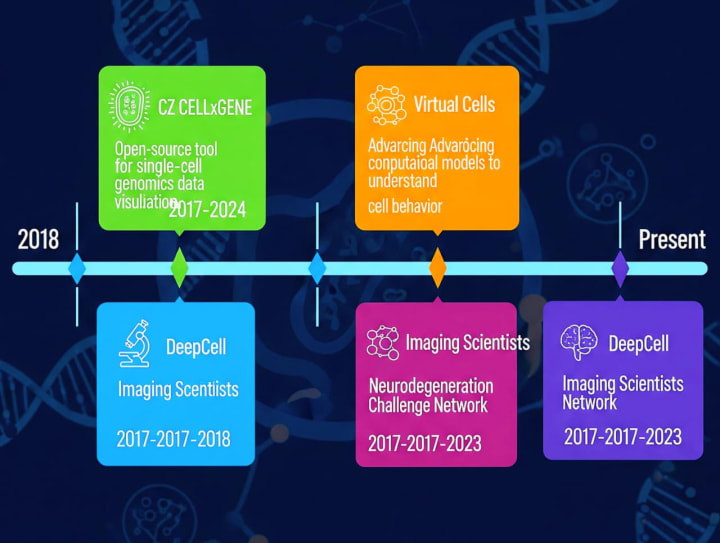
These efforts rely on huge datasets, like the Human Cell Atlas and the Billion Cells Project, which together provide detailed maps of how cells behave. All of this laid the foundation for rBio.
How rBio Works
Traditionally, AI models in biology need enormous amounts of real lab data which is expensive and time-consuming to collect. rBio changes that by learning from virtual cells instead. This method uses a concept called “soft verification.” Instead of needing real experiments for every step, rBio is trained using simulated predictions from virtual models. One such model is TranscriptFormer, a transformer-based AI trained on more than 100 million cells from different species. TranscriptFormer can predict things like cell type, health state, and reactions to genetic changes.
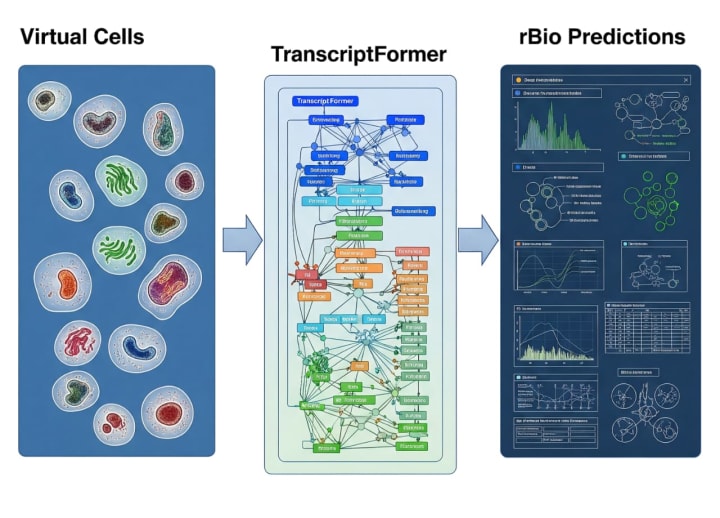
Using this virtual data, rBio can explore millions of “what if” scenarios about genes and cells, without requiring new experiments each time.
Answering Biological Questions in Plain Language
One of rBio’s most exciting features is its ability to respond to natural language questions. For example, a scientist can ask:
- What happens if gene A is suppressed does gene B become more active?
rBio then simulates the likely outcomes, such as whether a cell shifts from a healthy state to a diseased one. It can do this by drawing on models of gene regulation, co-expression patterns, and disease pathways.

Enhanced with advanced reasoning techniques, rBio has already outperformed older models like SUMMER, proving it can generalize well even when asked about cell types it hasn’t directly “seen” before.
Why It Matters
Currently, about 90% of biology research is done in the lab and only 10% through computation. rBio has the potential to flip that balance. According to Ana-Maria Istrate, senior research scientist at CZI, virtual simulations could save billions of dollars and cut years off the timeline for discoveries. For example:
- In Alzheimer’s research, rBio could uncover how genes interact, leading to earlier and better treatments.
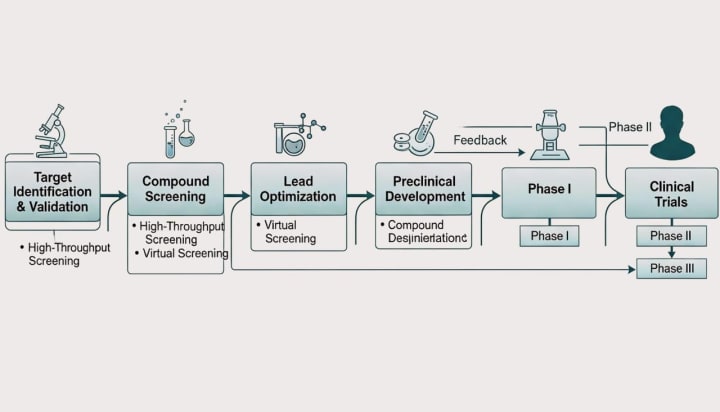
- In drug discovery, it could quickly test hypotheses about how potential medicines affect cells.
Other tools, like Cytoland (which uses AI for “virtual staining” in microscopy), also reduce the need for costly and invasive lab procedures.
Part of a Bigger Movement
rBio is not alone. Other AI models, such as SubCell (which maps where proteins are located in cells) and GREmLN (which studies gene networks), are part of this growing shift toward AI-powered biology. rBio is now available on CZI’s early access platform, allowing biologists and AI experts to collaborate. Importantly, CZI is keeping datasets open source, so researchers worldwide can contribute and benefit.
The Road Ahead
Challenges remain. The accuracy of virtual cells depends on the quality of the data used, and biases in simulations must be carefully addressed. But the progress so far shows enormous promise. As Priscilla Chan highlighted at the SXSW conference, virtual cells could help us answer biology’s toughest questions and bring us closer to a world free from disease.
About the Creator
Muzamil khan
🔬✨ I simplify science & tech, turning complex ideas into engaging reads. 📚 Sometimes, I weave short stories that spark curiosity & imagination. 🚀💡 Facts meet creativity here!
Keep reading
More stories from Muzamil khan and writers in Futurism and other communities.
Do Smartphones Spy on You Even When Turned Off?
Privacy has become one of the biggest concerns of our time. With smartphones in our pockets every day, many people wonder if these devices could still be listening or tracking us even when powered off. It sounds like something straight out of a spy movie, but the question keeps coming up: do phones actually spy on you when they’re switched off?
By Muzamil khan5 months ago in Futurism
About Binding Prometheus
I want to start actively advocating on behalf of my own work, and the most valuable part of my canon is, without a doubt, Binding Prometheus, the play I have been working on since 2019 and only finished in 2023 as part of my MA. The play itself is an amalgamation of a million different inspirations. On one end, it evokes the Ancient Greek myth-play, deriving its own title from the earliest extant work of Western drama we have, Aeschylus’s Prometheus Bound. On the other end, it borrows significantly from the sci-fi bulwarks from over the years, namely Mary Shelley’s Frankenstein and Karel Capek’s Rossum’s Universal Robots. The play could be an episode of Black Mirror, I fear. I don’t know. I’ve only ever seen one episode of Black Mirror.
By Steven Christopher McKnight18 days ago in Futurism
Saudi Arabia Hospitality Market: Tourism Growth, Vision 2030 & Demand Expansion
According to IMARC Group's latest research publication, Saudi Arabia hospitality market size reached USD 53.2 Billion in 2025. The market is projected to reach USD 115.8 Billion by 2034, exhibiting a growth rate (CAGR) of 9.03% during 2026-2034.
By Suhaira Yusuf7 days ago in Futurism



Comments
There are no comments for this story
Be the first to respond and start the conversation.