Alain SUPPINI
Bio
I’m Alain — a French critical care anesthesiologist who writes to keep memory alive. Between past and present, medicine and words, I search for what endures.


Stories (312)
Filter by community
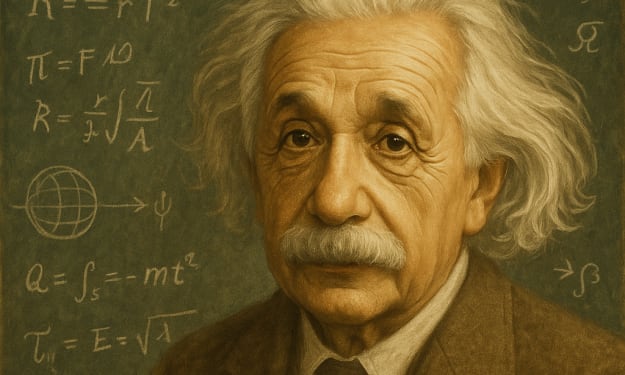
Einstein Among Shadows
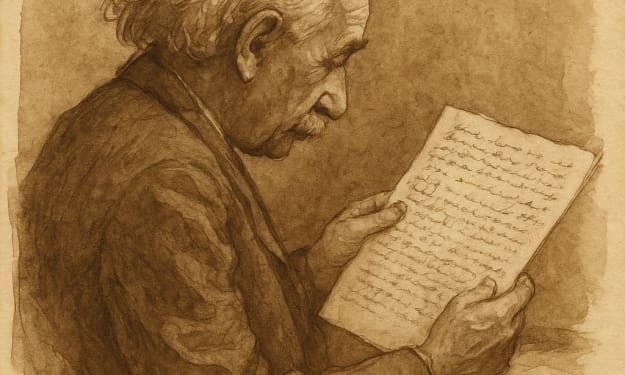
Journal Entry – February 2, 1936 – Brussels A thin frost has clung to the iron rails outside my apartment window all morning. The city moves beneath a veil of cold, silent mist, muffling even the clatter of the trams. I watch from the desk in my small room, papers scattered and forgotten, as the Belgian winter folds over the rooftops. These days I find myself writing less about physics and more about people.
By Alain SUPPINI7 months ago in Chapters
The Unbroken Equation
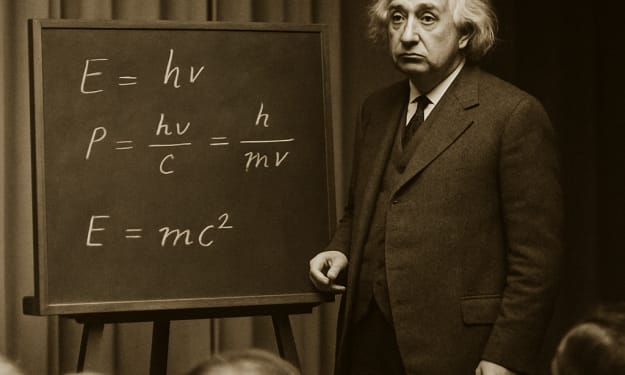
May 3, 1937 The chill of Lake Geneva drifted through the open window of Einstein’s modest apartment. A kettle hissed on the stovetop while chalk dust floated lazily in the morning sun. He stood before a blackboard crowded with dense notations, pausing only to sip the now-cold tea forgotten on the sill. The room was quiet save for the soft scratch of chalk and the distant clatter of streetcars below. Europe, meanwhile, was anything but quiet.
By Alain SUPPINI7 months ago in Chapters
The Quiet Rebellion of Genius
May 1941. The air over Zürich trembles with the dull unease of wartime proximity. Switzerland remains officially neutral, but neutrality is fragile when flanked by fascism. Einstein walks through the corridor of the Federal Polytechnic, now adorned with blackout curtains and guarded entrances. His gait is slower than it was a decade ago, but his eyes remain sharp—burning with restlessness and responsibility.
By Alain SUPPINI7 months ago in Chapters
The Quiet Revolution
May 1943 — Geneva I write tonight with a heavy hand and a restless heart. The war has swallowed much of Europe, yet Switzerland—like a rock in a torrent—remains outwardly calm. Behind the diplomatic neutrality, though, I feel the pressure mounting, not only on my nation, but within me. The work we began to stop the atomic catastrophe before it starts has taken a darker turn.
By Alain SUPPINI7 months ago in Chapters
The Copenhagen Accord
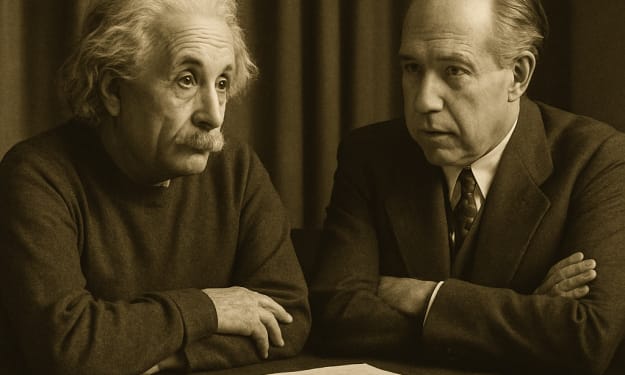
May 2, 1936 – Copenhagen The morning sky over Copenhagen was washed in grey. Einstein sat in the small breakfast room of Niels Bohr’s modest home, stirring his tea with the absentmindedness of a man whose thoughts danced between atoms and the future of civilization.
By Alain SUPPINI7 months ago in Chapters
The Zurich Cipher
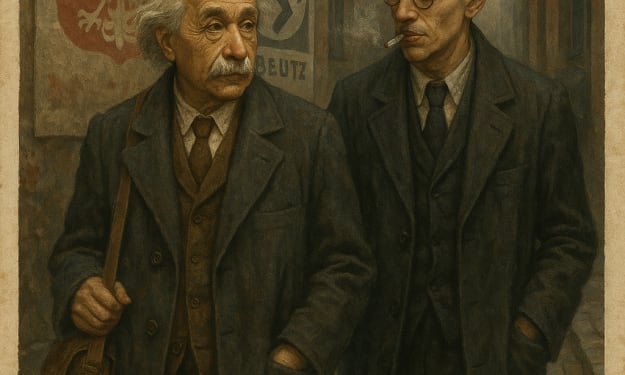
May 1937 – Warsaw The Polish air was crisp, bitter even in May, as Albert Einstein stepped off the overnight train from Prague. He wore the same worn wool coat, the same leather satchel heavy with annotated drafts and diagrams — though now its contents were more dangerous than ever: not formulas, but agreements, whispers, and warnings. Warsaw was no longer just a city on the map of occupied minds — it had become a strategic battleground in the clandestine war of ideas.
By Alain SUPPINI7 months ago in Chapters
Einstein Remains in Europe
May 22, 1942 Prague The weight of war settled heavily upon the continent, and yet, from within the embers of ruin, a new kind of light flickered. Einstein had not merely survived in Europe—he had become a guiding constellation in a night otherwise starless.
By Alain SUPPINI7 months ago in Chapters
Einstein’s Choice
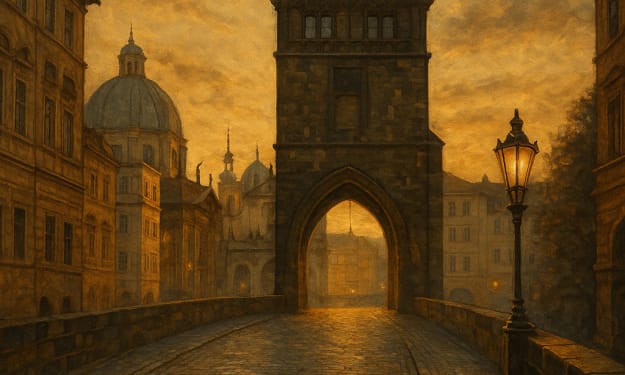
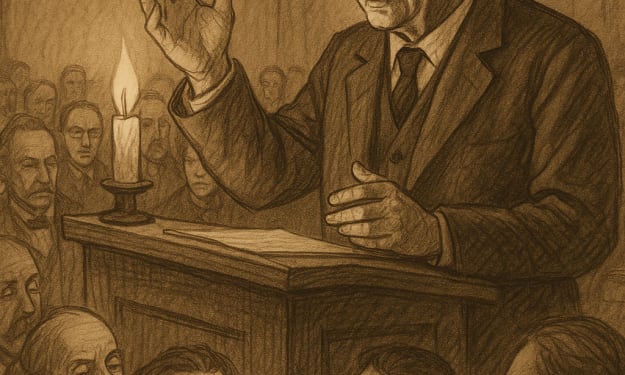
May 18, 1935 Prague I arrived in Prague under a veil of unease. The city, a cradle of intellect and resistance, shimmered beneath gray spring clouds, its spires rising like quills of memory against the troubled European sky. I had been invited to address the philosophical faculty at Charles University, ostensibly to discuss the intersection of physics and ethics — but all of us knew there was something deeper at stake.
By Alain SUPPINI7 months ago in Chapters
Einstein in Europa
May 12, 1935 Prague, Czechoslovakia I arrived in Prague just before dusk, the air thick with lilac and the memory of rain. The Vltava flowed like molten silver beneath the bridges, and the rooftops, slick from earlier showers, glistened under a hazy sun. Prague has always felt like a city suspended between times—Gothic spires reaching for the heavens and Kafkaesque alleyways pulling you inward, toward thought, toward unease. It felt fitting that such a place would become the cradle of a quiet resistance.
By Alain SUPPINI7 months ago in Chapters
The Equations of Fate
March 1934. The chill of late winter lingered in the air as Albert Einstein arrived in Prague, his steps slow but determined. This time, he was not just a physicist or a philosopher of peace—he was an emissary between old and new worlds. The cafés still bore the scent of roasted coffee and aged wood, but the conversations had changed. Scientists, students, refugees—everyone whispered about the shifting tides in Europe.
By Alain SUPPINI7 months ago in Chapters
Einstein's Europe
In the spring of 1934, Einstein had settled into a rhythm in Zürich, teaching occasionally at the ETH (Eidgenössische Technische Hochschule) and frequenting a modest café tucked along the Limmat River. Its interior was perpetually smoky, the tables often cluttered with books, pipes, and the impassioned hands of those arguing ideas. It was there, in the Café Morgenstern, that a new kind of resistance began to form—not one of arms, but of thought.
By Alain SUPPINI7 months ago in Chapters
Einstein in the Shadow of War
Zurich, Switzerland — October 1939 The autumn air in Zurich carried a sharpness that matched the tension humming beneath the surface of Europe. In a modest study filled with the scent of pipe smoke and old paper, Albert Einstein stared at the unfinished letter before him. Its edges curled slightly from the weight of his indecision. Meant for President Roosevelt, the letter warned of the possibility of Nazi Germany developing a nuclear bomb. It was a letter that, in another timeline, would change the world. But here, Einstein had not signed it.
By Alain SUPPINI7 months ago in Chapters