Abdul Barik
Bio
Stories (146)
Filter by community
The 2002 Godhra train tragedy and the Gujarat riots.
The year 2002 is marked as a bloody and controversial chapter in India's post-independence history. On the morning of February 27 of that year, a terrible incident took place at the Godhra railway station—a fire broke out in the S-6 coach of the Sabarmati Express, killing 59 Kar Sevaks who were returning from Ayodhya. Immediately after this incident, terrible riots spread across the state of Gujarat, in which about 2,000 Muslims were killed, thousands of Muslim women were raped, mosques were destroyed, businesses were ruined, and millions of people were displaced. This riot was not just a communal outrage—behind it was a dazzling political tableau, state silence, and purposeful administrative inaction. The Godhra incident and the subsequent riots are still controversial, questionable, and symbolize the darkest chapter in politics.
By Abdul Barik8 months ago in History
The 2008 Mumbai attacks (26/11).
November 26, 2008—Another terrible evening in the history of India. That evening, ten armed militants from Pakistan entered Mumbai by sea and carried out an unprecedented act of terror in various parts of the city. The attack, which lasted for 60 hours, killed about 170 people and injured hundreds. The targets were the city's main railway station CST, the elite Taj and Oberoi hotels, Leopold Cafe, Nariman House and several other places. This is a terrifying scene—live television shows how a group of militants have taken the entire city hostage.
By Abdul Barik8 months ago in Writers
The 2001 Indian Parliament attack.
Thursday, December 13, 2001—the day has become a nightmare in the history of Indian democracy. That day, the Parliament building in the heart of Delhi was attacked. Multiple gunmen in a heavily fortified area detonated an explosive at the entrance to the Parliament building and opened fire. Five Delhi Police personnel, a CRPF jawan, two Parliament security guards and a gardener were killed in the attack. The security forces also killed five attackers in a counter-attack. The entire country was stunned by the incident. The government quickly announced that Pakistan-backed Kashmiri militant groups ‘Jeesh-e-Mohammed’ and ‘Lashkar-e-Taiba’ were behind the attack. Soon, a nationalist roar, deployment of troops, threats of war—and a silent process of political profiteering began.
By Abdul Barik8 months ago in Writers
Pulwama attack 2019
February 14, 2019—the date has come to symbolize a dramatic turning point in India’s modern history. A suicide car bomb attack on a Central Reserve Police Force (CRPF) convoy in Lethpura area of Pulwama district in Jammu and Kashmir killed more than 40 jawans. An atmosphere of grief, anger and demands for revenge was created across India. A Pakistan-based militant group called Jaish-e-Mohammad claimed responsibility for the incident. Thus began a whirlwind in India’s security, diplomacy and politics—in which the lines between truth and falsehood became increasingly blurred.
By Abdul Barik9 months ago in Journal
India's 'False Flag Operation'
A ‘false flag operation’ is a military and intelligence tactic in which a state or group organizes an attack or violent incident, the responsibility of which is attributed to another group, in order to gain political, diplomatic or military advantage through the incident. Many powerful states in history, such as the United States, Israel, and Russia, have used this tactic, and India has also been accused of using this method many times. Although the Indian government has never admitted such allegations, at various times, some high-ranking officials, international journalists, and even former intelligence officers have publicly highlighted the suspicious aspects of these operations. In this discussion, we will analyze the reality, political motives, and potential effects behind the incidents in Indian history that have been considered ‘false flag operations.’
By Abdul Barik9 months ago in Criminal
Who is actually involved in the Pahalgam incident?
The horrific attack in Pahalgam on May 5, 2025, has once again created a sense of instability in India's security and politics. Several people were killed and injured in a shooting and explosion targeting a vehicle carrying tourists. No one has officially claimed responsibility for the incident so far. However, while the Indian media is pointing fingers at Kashmiri militant groups, some independent analysts and political commentators have raised the question of what the real motive behind the attack was. This question raises another important perspective: is this mere terrorism, or is there a deep political calculation behind it?
By Abdul Barik9 months ago in Criminal
The flower of repentance.
A young man named Yasin lived in a village on the border of West Bangladesh. His life was like a storm—reckless, uncivilized, and devoid of the fear of God. The villagers knew him as a bad boy; at a young age, he got involved in drug dealing, extortion, and many even said that he would sneak into someone's yard at night and steal. But the surprising thing was that his mother Khadija was a pious woman, a memorizer of the Holy Quran. She prayed five times a day, read the Quran, and cried every night for her son's guidance.
By Abdul Barik9 months ago in Motivation
Caste system in Hinduism
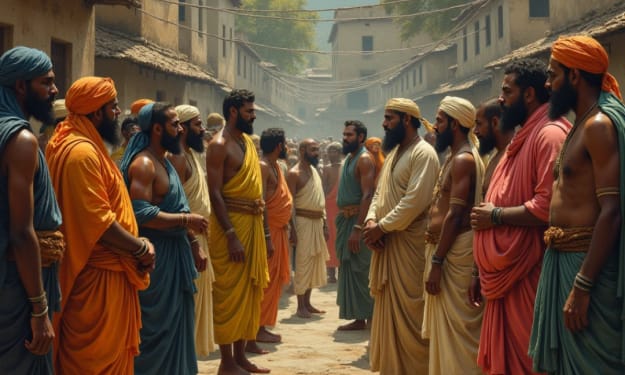
Caste system in Hinduism and the history of oppression of lower castes for millennia The caste system has survived for centuries as one of the most complex and tragic realities in the ancient religious, social and political structures of India. It is not only a social structure, but is embedded in the scriptures, rituals and philosophy of Hinduism in such a way that its influence has not weakened even after centuries, but rather it is still present in new forms. The caste system is basically based on the Varnashrama system, the origins of which can be found in Hindu scriptures such as the Rigveda and the Manusamhita. It states that the four main castes—Brahmin, Kshatriya, Vaishya and Shudra—determine the social duties of a person, and the Shudras are the lowest in society, whose purpose in life is to serve the upper classes.
By Abdul Barik9 months ago in History
The surprising trend of converting to Islam around the world: Why people are choosing Islam despite Islamophobia.
The Surprising Trend of Islam Conversions Across the World: Why People Are Choosing Islam Amidst Islamophobia A very remarkable and significant social phenomenon in the current world is the rate of conversions to Islam that is continuously increasing. This is at a time when Islamophobia has spread all over the world. The media, politics and a large part of the Western state system have long portrayed Muslims as the embodiment of “terrorism”, “extremism” and “anti-socialism”. Yet, despite all this propaganda, Islam is finding a place in the hearts of millions of people every year. This contradiction proves that Islamophobia is a kind of artificial bubble, outside of which seekers of truth and humanity are still returning to the light of Islam.
By Abdul Barik9 months ago in Motivation
The Fall of the Caliphate: The History of the Division of the Muslim Ummah and the Brutal Reality of Western Geopolitics.
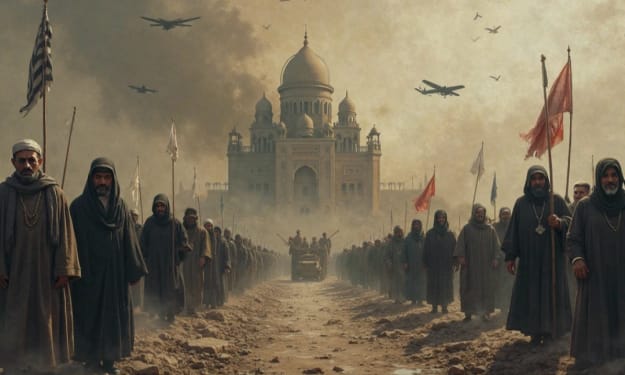
No moment in history is ever isolated or isolated. Behind every political catastrophe, every collapse lies the combined shadow of centuries of preparation, internal breakdown and external intrigue. The fall of the Caliphate was such a historical catastrophe—not just the end of a regime, but also the extinction of an ideal, a worldview and a collective ummah.
By Abdul Barik9 months ago in History
Debt and interest: The pitfalls of the current world order and the Islamic alternative.
Credit and interest are a central pillar of the modern economy, which controls the economic flow of the entire world. From individuals to states — everyone is in debt in one way or another. But this debt is never just help; it has an inherent interest rate, which over time bankrupts the borrower. Especially the poor people, the middle class, small businesses and economically weak countries — their backs are against the wall due to this interest cycle.
By Abdul Barik9 months ago in Motivation
The migration and the establishment of the state of Medina.
A turning point in the history of Islam is the migration of the Prophet Muhammad (peace be upon him) from Mecca to Medina, which was not just a geographical shift, but the beginning of a new political, social and religious reality. This migration marked the beginning of the first full-fledged Islamic state, where Islam was not limited to personal beliefs and practices; rather, it became a complete state ideology and social system. This context remains a unique milestone in the history of Islam.
By Abdul Barik9 months ago in Writers