
Pulwama attack 2019
Pulwama Attack 2019: An in-depth analysis and possible behind-the-scenes insights into state strategy.

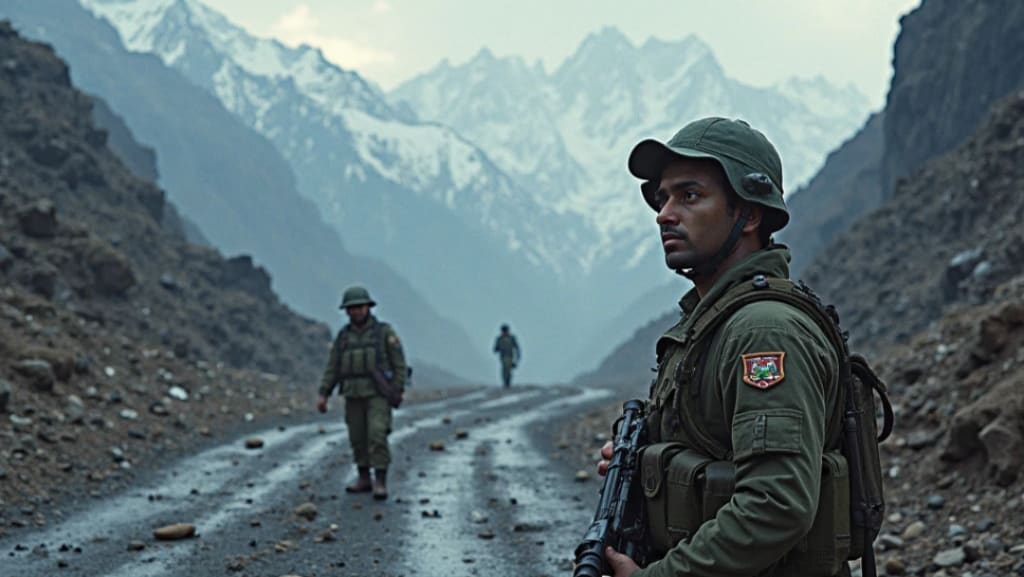
February 14, 2019—the date has come to symbolize a dramatic turning point in India’s modern history. A suicide car bomb attack on a Central Reserve Police Force (CRPF) convoy in Lethpura area of Pulwama district in Jammu and Kashmir killed more than 40 jawans. An atmosphere of grief, anger and demands for revenge was created across India. A Pakistan-based militant group called Jaish-e-Mohammad claimed responsibility for the incident. Thus began a whirlwind in India’s security, diplomacy and politics—in which the lines between truth and falsehood became increasingly blurred.
The timing of the Pulwama attack was highly significant. India’s 2019 Lok Sabha elections were knocking on the door, and the Modi government’s popularity was relatively low. The economy was faltering, discontent was rife in agriculture and employment, and opposition parties were loudly highlighting the Modi government’s failures. This horrific attack came at a time when the political landscape of the country was dramatically changed. National security suddenly became the main issue, and Modi began to present himself as the ‘savior’ of the nation.
Immediately after the attack, the Indian government claimed that Pakistan was behind the attack. Later, on February 26, the Indian Air Force carried out a ‘surgical strike’ in Balakot, Pakistan—which became the most important political response of the Modi government. Although the success of this operation was debated, it was campaigned as a ‘historic revenge’ through which the BJP once again rode the nationalist wave to build electoral public opinion.
However, questions began to be raised in various quarters about some important aspects of the Pulwama attack, especially the evidence, security lapses and the nature of the state response that aroused such suspicions.
First, the questions that arise around the movement and security of the convoy are very serious. On the day of the attack, about 2,500 CRPF personnel were travelling from Jammu to Srinagar in 78 vehicles. The highest level of intelligence alert and security measures are usually taken during the movement of such large convoys. But the question of how a vehicle loaded with explosives was able to enter the convoy of so many soldiers and carry out the attack that day has not been answered yet.
Secondly, the question of intelligence alert. It is reported that the central intelligence agencies and the state police had given warnings about a possible attack before the attack. So why was it ignored? Who was responsible for not changing the time and route of the convoy? The answers to these questions remain in the dark even today.
Thirdly, a video of the attacker, Adil Ahmed Dar, went viral just before the attack, in which he announced a suicide attack and declared his 'jihadi intentions'. But despite such a clear message, how could he not be stopped? It is doubtful that despite such a large intelligence and surveillance system, how did this video not come to the attention of the Indian administration before the attack?
Fourthly, the media coverage after this attack was completely one-sided and unquestioned. The country's mainstream media immediately started blaming Pakistan, without any independent investigation or evidence. Instead, those who questioned the authenticity of the attack were called 'traitors'. The way the media fueled nationalist sentiments, the space for dissent or analysis in a democracy had almost disappeared.
The most frightening and clear outline of suspicion became after Arnab Goswami's WhatsApp chat was leaked. In 2021, the chats investigated by the Mumbai Police showed that he knew about the Pulwama attack in advance and said, "This will be bigger than a war." How could a journalist know state secrets in advance? And if the government leaked it, why? Many have identified this leak as a political ploy.
Another aspect of this incident is its political consequences. The attack and the subsequent 'revenge' campaign played a huge role in the BJP's huge majority in the 2019 elections. In this emotional pre-election atmosphere, economic weakness, religious divisions, and policy failures became secondary. Pulwama, then Balakot, and Modi was portrayed as a ‘chowkidar’ as if he were the ‘sole savior of the country’.
The long-term impact of the attack was different. Repression on the Kashmiri people intensified. Mass arrests of ordinary Kashmiri youth, internet shutdowns, and restrictions on independent journalism increased. Anti-Muslim sentiment intensified across India, and a new politics of division along the lines of Partition gained momentum.
Finally, a proper investigation into the Pulwama attack has not yet taken place. An investigation that could have been the basis for mutual trust between the state and the people has been deliberately avoided. The real reasons for the attack, the security lapses, and the motives behind the state’s response have never been scrutinized by an independent judiciary. As a result, many analysts see this as a possible 'false flag operation'—one that may not have been directly orchestrated, but was 'knowingly allowed to happen' by the state in the hope of political gain.
About the Creator
Keep reading
More stories from Abdul Barik and writers in Journal and other communities.
Religion and reason
Averroes vs. European Philosophy: A Philosophical Review of the Conflict between Religion and Reason There are few thinkers in history who have managed to carve out a niche for themselves in the three-dimensional terrain of science, religion, and philosophy. Among them, Averroes is a unique exception. He played an unforgettable role in the renaissance of knowledge not only in the Islamic world, but also in Christian Europe. Averroes was a philosopher who sought to prove that rationalism and religious faith are not contradictory—but complementary.
By Abdul Barik8 months ago in Journal
The goals I did not achieve
Every writing goal I made for the year is a wash. It has been this way for a while, but I think it's important to be open about my failures and the reality of how life can get in the way. This is especially true considering the several times I have posted on Vocal about my writing goals, how I was changing my approach, and where I was hoping to be for the upcoming year. I will probably do that again in a couple months, but for now, it is time to acknowledge where I am today.
By Kay Husnick23 days ago in Journal



Comments
There are no comments for this story
Be the first to respond and start the conversation.