
India's 'False Flag Operation'
India's 'False Flag Operation': A Historical and Analytical Perspective.

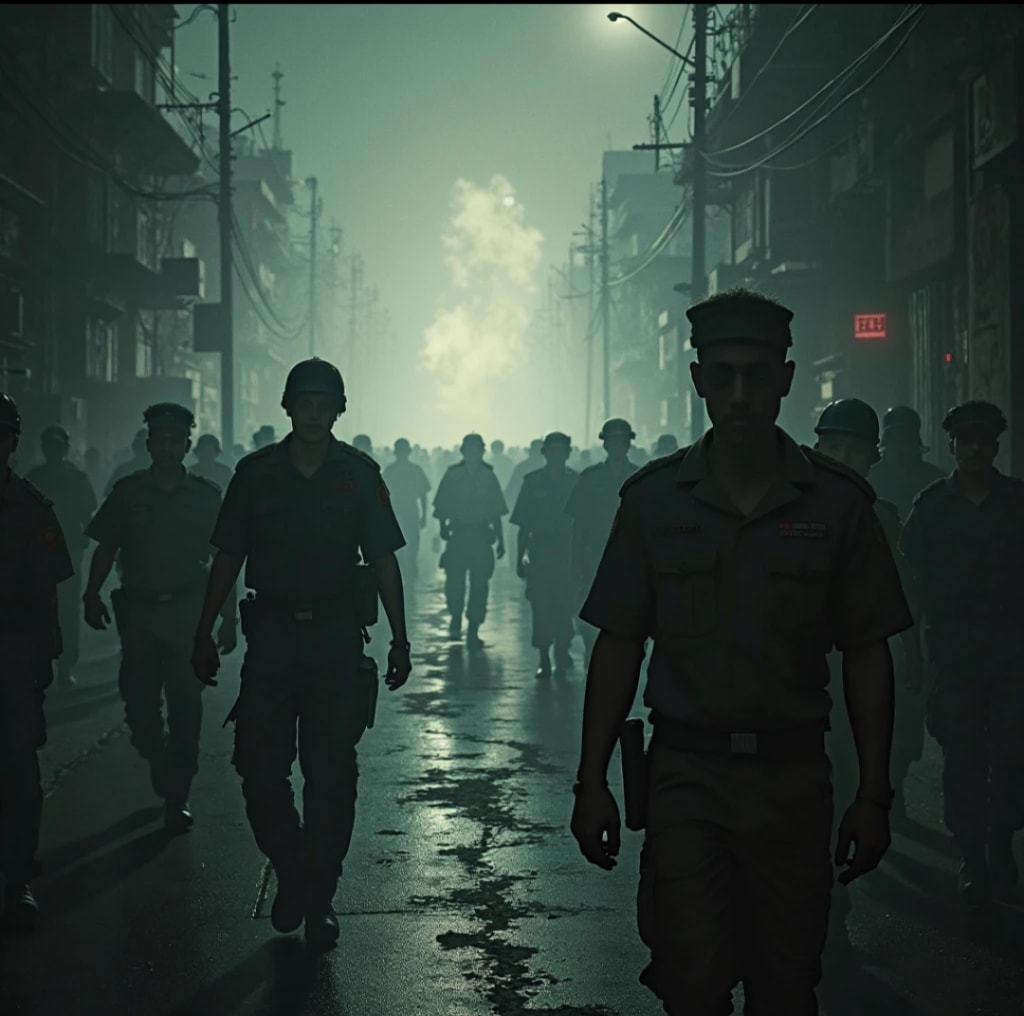
A ‘false flag operation’ is a military and intelligence tactic in which a state or group organizes an attack or violent incident, the responsibility of which is attributed to another group, in order to gain political, diplomatic or military advantage through the incident. Many powerful states in history, such as the United States, Israel, and Russia, have used this tactic, and India has also been accused of using this method many times. Although the Indian government has never admitted such allegations, at various times, some high-ranking officials, international journalists, and even former intelligence officers have publicly highlighted the suspicious aspects of these operations. In this discussion, we will analyze the reality, political motives, and potential effects behind the incidents in Indian history that have been considered ‘false flag operations.’
The most talked about incident was the Parliament attack on December 13, 2001. A few gunmen attacked the entrance of the Indian Parliament, killing six security guards. The Indian government quickly blamed the Pakistan-based militant groups Lashkar-e-Taiba and Jaish-e-Mohammad for the attack. Afzal Guru was later arrested for his involvement in the attack and hanged in 2013. But there is a lot of controversy surrounding the entire trial. Many lawyers and human rights activists claim that there was not enough evidence against Afzal Guru, and that his statement was the result of police torture. More importantly, the then government of India (BJP-led NDA coalition) was under political pressure at the time of the incident, and it was only after this attack that they were able to promote ‘nationalism’ and ‘anti-terror toughness’ among the people.
Then the Malegaon blast of 2008 set a different precedent. Initially, many were arrested in this incident, blaming Muslim youths, but later the NIA (National Investigation Agency) investigation showed that the Hindutva extremist group Abhinav Bharat and its associated officials were behind the attack. Major Swaminathan Prasad, Pragya Thakur (current BJP MP), Colonel Purohit, etc. were accused in this case. This incident is a turning point in Indian history, where biased investigations by state intelligence agencies and conspiracy allegations against Muslims became evident.
Similarly, the 2006 Malegaon mosque bombing in Maharashtra was initially promoted as the work of ‘Islamic militants’. The media, police and the ruling party directly portrayed Muslim youth as a ‘sleeper cell’. But later investigations again showed that radical Hindutva circles were behind the blasts. Such ‘false accusations’ not only ruined the lives of innocent people, but also created a terrible public opinion against the country’s minorities.
The most controversial example of a ‘false flag operation’ is undoubtedly the Pulwama attack of 2019. An explosive-laden vehicle attacked a CRPF convoy, killing 40 jawans. This was followed by an anti-Pakistan frenzy across India, with the Modi government responding with ‘Surgical Strike 2.0’ in Balakot. Just before this incident, the Lok Sabha elections were ahead, and the anti-government sentiment was growing stronger. The scene changed after the Pulwama attack—people were roused to nationalism and the BJP once again headed for a huge victory. Many questions arose around this incident: Why was the route of this convoy already unsafe? Why was such a large explosive vehicle able to bypass security checkpoints and carry out the attack? Why was Jaish-e-Mohammed able to release a video on social media before the attack, while intelligence agencies were unable to give any advance warning?
These questions remain unanswered. Rather, those who raised these questions were branded as traitors. Most importantly, many international and independent journalists later described the attack as a ‘state sympathy tactic’.
The ‘WhatsApp leak’ of renowned journalist Arnab Goswami further strengthened this suspicion. In the leaked chats in 2021, it is seen that he knew about the terror attack before the Pulwama attack, and said, “This will be bigger than a war.” This comment and his timely media coverage of the news clearly demonstrate the nature of the state propaganda.
Similarly, the 2007 Samjhauta Express attack, in which a bomb exploded on a train carrying passengers from Pakistan to India, killing around 68 people, was initially presented as a ‘Pakistani terrorist’ attack. However, later investigations revealed that a Hindutva group was behind the blast. Surprisingly, the accused in this case were later acquitted by the court, and the trial process was marred by many irregularities and ‘lack of evidence’.
The pattern of these incidents clearly demonstrates a specific political and strategic objective: to create fear in the minds of the people, to instill hatred against Muslims, to portray neighboring Pakistan as the eternal enemy, and to present the government as the ‘national savior’. Each time, there was an election coming up, and after these incidents, the government was able to sway public opinion in its favor.
False flag operations are not the product of the state alone, but of a political staging by the state-run media, police, intelligence agencies, and judiciary. These incidents pose a major challenge to public awareness, independent journalism, and the human rights movement.
Ultimately, India’s ‘false flag operations’ are not just a state conspiracy, but part of a larger political culture—where emotion replaces truth, vengeance replaces justice, and the preservation of rule replaces democracy.
About the Creator
Keep reading
More stories from Abdul Barik and writers in Criminal and other communities.
Who is actually involved in the Pahalgam incident?
The horrific attack in Pahalgam on May 5, 2025, has once again created a sense of instability in India's security and politics. Several people were killed and injured in a shooting and explosion targeting a vehicle carrying tourists. No one has officially claimed responsibility for the incident so far. However, while the Indian media is pointing fingers at Kashmiri militant groups, some independent analysts and political commentators have raised the question of what the real motive behind the attack was. This question raises another important perspective: is this mere terrorism, or is there a deep political calculation behind it?
By Abdul Barik8 months ago in Criminal
The $23,000-a-Day Question: Ephrata spends $8.5 million a year for police. What are we actually buying?
The Invoice Arrives Every year, Ephrata property owners receive a tax bill. A massive chunk of that bill goes to one place: The Police Department. We are told this is the price of safety. We are told that we have a "Gold Standard" department that warrants premium funding.
By Sunshine Firecracker2 days ago in Criminal
Wild Card Weekend Recap: What Happens Now?
I think I figured out why I love Wild Card Weekend so much. It's because it's the first playoff anything of the calendar year. The NFL season starts in the fall, and once upon a time, the champion was crowned either on or slightly before New Year's. The evolution of the NFL schedule has resulted in the playoffs starting just into the New Year, and currently, the final week of the season falls on the first weekend of the New Year, with Wild Card Weekend coming a week after that. So yes, chronologically, the NFL's Wild Card Weekend serves as the first playoff anything of the calendar year.
By Clyde E. Dawkins5 days ago in Unbalanced



Comments
There are no comments for this story
Be the first to respond and start the conversation.