
The 2008 Mumbai attacks (26/11).
2008 Mumbai attacks (26/11): A multidimensional act of terrorism, or a state-sponsored deception?

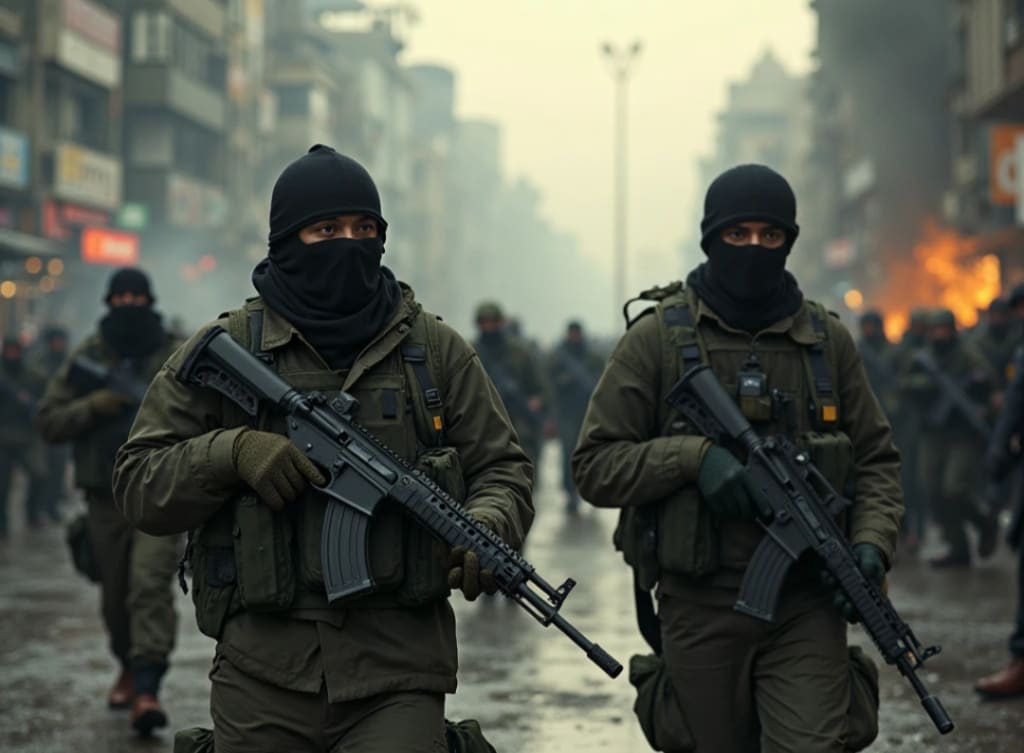
November 26, 2008—Another terrible evening in the history of India. That evening, ten armed militants from Pakistan entered Mumbai by sea and carried out an unprecedented act of terror in various parts of the city. The attack, which lasted for 60 hours, killed about 170 people and injured hundreds. The targets were the city's main railway station CST, the elite Taj and Oberoi hotels, Leopold Cafe, Nariman House and several other places. This is a terrifying scene—live television shows how a group of militants have taken the entire city hostage.
Lashkar-e-Taiba claimed responsibility for the attack, and according to Indian authorities, the mastermind of the attack was Pakistani citizen Hafiz Saeed. After this incident, diplomatic relations between India and Pakistan reached extreme tension, and serious questions were raised about the negligence of the national security and intelligence system within India. But does the scope of analysis stop here? Is it enough to see this as a one-sided terrorist attack? Or is it a deep state strategy, ambiguous political opportunism, and the shadow of international cooperation?
First, the initial characteristics of this attack were unusual. Usually, in a suicide attack, the militants quickly inflict casualties and then kill themselves. But here, ten armed militants were seen fighting day after day in isolated positions in multiple locations. Such professional tactics, long-term presence, sufficient ammunition stockpiles, and the use of internal maps indicate that they were specially trained. This means that the attackers were not just ‘homegrown jihadists’ driven by religious fanaticism—but rather were trained and directed at the state or quasi-state level.
Second, the most significant was the capture of Ajmal Kasab alive. He was the only surviving attacker, whom the state used as ‘evidence’. But his account has also been questioned many times. In the confession video released by the media, he is seen giving almost scripted speeches. Some experts, such as Bollywood director Mahesh Bhatt's brother Kamal Bhatt, claim that Kasab was a fake character. His accent, usage, and body language seemed 'acted'. Although these claims were dismissed at the state level as 'conspiracy theories', doubts remain.
Third, the extreme lack of coordination among India's internal intelligence agencies became clear in this attack. In October 2008, the US intelligence agency CIA gave a clear message to Indian intelligence that a terrible attack could be carried out by sea, even mentioning the 'Taj Hotel'. But there was no coordination between the Indian Navy, Coast Guard and the internal intelligence agency IB. As a result, the attackers reached the Mumbai coast before the attack. The question is, is this failure mere negligence? Or a deliberate 'negligence' so that a specific strategy could be implemented as a state response to the attack?
Fourth, the death of Hemant Karkar gives this attack a mysterious twist. Maharashtra ATS chief Hemant Karkare was the lead investigator in the Malegaon blast case, where he was gathering irrefutable evidence against Hindutva extremists. He was shot dead under suspicious circumstances at CST station during the 26/11 attacks. The question is, why did he go to the epicentre of the attack without a bulletproof vest? Why are the bullet wounds on his body suspiciously inconsistent? Many believe that Karkare was an ‘uncomfortable’ officer who was putting the state’s Hindutva forces on the legal dock—his removal was probably an opportunistic killing in the shadow of the attacks.
Fifth, the media coverage of the attack was unquestionably pro-state. The information that commercial media was conveying to the enemy through live broadcast raises suspicions that it was a deliberate ‘mass psychology manipulation’. Many see the media’s one-sided and uncensored propaganda system as a strategic state propaganda to create fear, anti-Pakistanism, and political consensus among the people.
Question number six—The role of the United States. Immediately after the attack, the United States provided India with various intelligence information and helped in internationally blaming Hafiz Saeed and Dawood Ibrahim. But to this day, they have never taken effective action by directly blaming Pakistan’s military and intelligence forces. Rather, at that time, the US alliance was waging a ‘War on Terror’ with Pakistan in Afghanistan. As a result, India was also pressured to be soft. This means that this attack was used in the parallel interests of many states, and brought a nationalist euphoria to Indian politics.
The political consequences of this attack were noticeable. The Congress government came under immense pressure, and the then Home Minister Shivraj Patil resigned. The security structure was reshuffled for the coming period. But on the other hand, the BJP used this incident as a tool to highlight the Congress's 'security failure' and sowed the seeds of a nationalist trend even before the 2014 elections. Although the Congress was still in power, the memory of 26/11 generated public support for the BJP's security and Hindutva politics.
Finally, it can be said that the 26/11 attack was a multi-dimensional tragedy. Although it was undoubtedly carried out by a terrorist group close to Pakistan, the mysteries, negligence, political opportunism and electoral influence that it gave rise to within the state, calling it a 'terrorist attack' only captures one side of the truth. Many questions remain unanswered even today - who did not take effective action despite being warned of this attack? Why did Karkar die? Why was Kasab's video used so politically?
In this context, many believe that 26/11 was a real attack, in which 'state motives and political persecution' were actively at work. It is difficult to call it a fully-fledged conspiracy, but evidence of an 'internal opportunistic support' is found in many analyses.
About the Creator
Keep reading
More stories from Abdul Barik and writers in Writers and other communities.
The 2001 Indian Parliament attack.
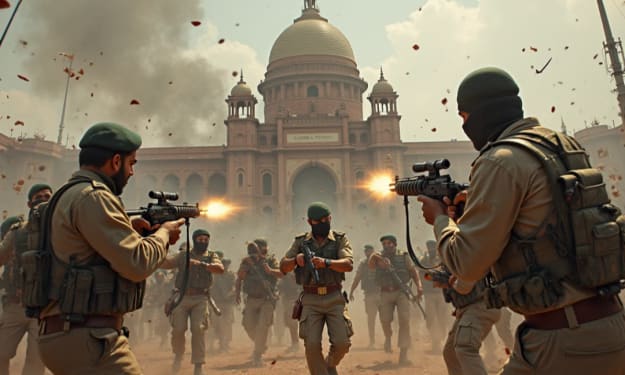
Thursday, December 13, 2001—the day has become a nightmare in the history of Indian democracy. That day, the Parliament building in the heart of Delhi was attacked. Multiple gunmen in a heavily fortified area detonated an explosive at the entrance to the Parliament building and opened fire. Five Delhi Police personnel, a CRPF jawan, two Parliament security guards and a gardener were killed in the attack. The security forces also killed five attackers in a counter-attack. The entire country was stunned by the incident. The government quickly announced that Pakistan-backed Kashmiri militant groups ‘Jeesh-e-Mohammed’ and ‘Lashkar-e-Taiba’ were behind the attack. Soon, a nationalist roar, deployment of troops, threats of war—and a silent process of political profiteering began.
By Abdul Barik8 months ago in Writers
It's Winter
Anne Bernays and Pamela Painter — What If? Writing Exercise for Fiction Writers prompts The Exercise —Write a scene involving two characters. Have the point-of-view character presume something entirely different about the situation from what the other character's overt behavior seems to imply. For example, a landlord comes to visit, and the tenant suspects that it isn't a visit but an inspection. Make up several situations in which one character can fantasize or project or suspect or even fear what another character is thinking. The Objective - To show how your characters can use their imaginations to interpret the behavior and dialogue of other characters.
By Denise E Lindquist17 days ago in Writers
When a Request for Evidence Changes the Direction of an Immigration Case
For many people navigating the United States immigration system, a Request for Evidence can arrive unexpectedly. The notice often brings worry, even when the application has been prepared carefully. In reality, an RFE is a pause in the review process, not a rejection. It signals that an officer needs more clarity before moving forward.
By Sheila Danzig5 days ago in Writers
How, Too
Many people wonder how, too. You are not alone, and I am an expert. I will teach you how, too! First, you need to remit a small application fee and fill out an application describing the nature of your financial situation and how often payments will be made, as this will have great bearing on how well I teach you how, too.
By Harper Lewis3 days ago in Fiction



Comments
There are no comments for this story
Be the first to respond and start the conversation.