Abdul Barik
Bio
Stories (146)
Filter by community
Story Name: “Light of the Path”
A small village on the outskirts of the city of Medina—Al-Haya. In that village lived a young man, his name was Saleh. Growing up in the arms of his mother, Saleh was lonely from birth. His father Ali was a woodcutter, who went to the mountains every day to cut wood. One day, Ali was killed in an attack by a wild fox in the forest. Saleh was only six years old at that time. That small hut was wet day and night with his mother's tears. But poverty, sorrow, and deprivation could not extinguish the light of faith in Saleh's heart. On the contrary, from a young age, he was a prayerful, truthful, and unusually patient.
By Abdul Barik9 months ago in Writers
Moral degradation and the spread of obscenity in society: Prevention and reform in the Islamic state.
The foundation of society is morality. A nation's economic, political or technological progress is sustainable only when its moral foundation is strong. But when morality collapses, society falls into the abyss of corruption, smuggling, violence against women, drug addiction, and moral degradation. In the current world, this moral degradation is heading towards a bottomless pit, where individuals, families and society are all victims. And the main fuel of this degradation is obscenity, sexual perversion, pornography, anti-marriage culture and the commodification of women.
By Abdul Barik9 months ago in Writers
If Islam is truly a humane religion, then why did it allow slavery?
One of the biggest complaints of atheists and non-Muslims about the permission of slavery in Islam is—“If Islam is truly a humane religion, then why did it allow slavery? How can one person own another?” This question is often raised without understanding it simply, but rather with the intention of belittling Islam. But those who study slavery in detail in the context of history and Islam know that Islam not only did not allow slavery, but it was Islam that took the first effective and planned step to abolish it in human history. Therefore, in today's discussion, we will find the answer to this complaint in the light of the Quran and authentic Hadith, keeping in mind the reality of history.
By Abdul Barik9 months ago in Writers
The Quran has so accurately revealed this original mystery of creation.
We will begin our discussion with an ancient and famous verse of the Quran, which sheds light on the subject of creation and the universe. This verse is in Surah Al-Anbiya (21:30): “Do not the disbelievers see that the heavens and the earth were joined together, then We separated them; and We created from water every living thing. Will they not then believe?”
By Abdul Barik9 months ago in Writers
"Doesn't he know that God is watching him?"
The verse we are starting our discussion with today takes us to a deep sense of existence. This verse raises a question that resonates within the heart of every human being in his loneliness, solitude, and the deepest level of his being.
By Abdul Barik9 months ago in Writers
“Islam and Democracy: Conflict, Coexistence, or Alternative?”
“Islam and Democracy: Conflict, Coexistence or Alternative?” A profound question returns again and again in the court of history today—Can Islam coexist with democracy? Or is Islam itself a complete system of government that is an alternative to democracy? The Western world uses this question to establish a ‘political exception’ against Islam. But even in the Muslim world, many thinkers and intellectuals are divided on this question—for some, democracy and Islam are complementary, while for others, they are opposed to each other. In today’s discussion, we will go to the root of this debate—in the context of history, ideology, structure, and reality.
By Abdul Barik9 months ago in Writers
European colonialism and the beginning of Western domination in the Muslim world: a silent war of conquest
There is a chapter in history where, not with the blood of the sword, but under the guise of agreements, trade, education and culture, a terrible war of conquest is going on. The name of this war is colonialism. And the most silent victim of this war was the Muslim world. When Europe began to dominate the economy, technology and trade through the Industrial Revolution, the Muslim world gradually lost its political unity, weakened its military power, and most terribly, began to be defeated psychologically. This discussion is a picture of that long, suffocating history.
By Abdul Barik9 months ago in Writers
“Hijrah and Islamic Revolution: The Prophet’s Strategy for State Building in Medina”
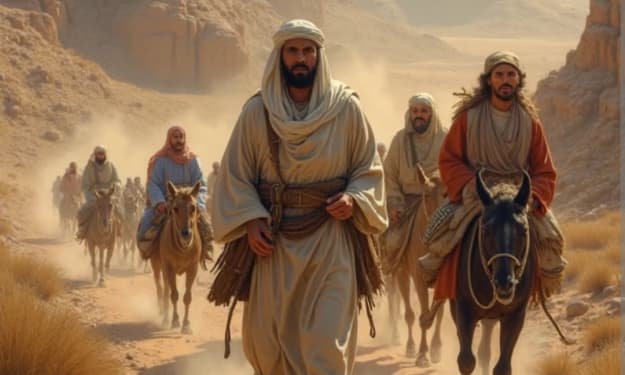
There are moments in history that change not just the life of an individual, but the course of an entire civilization. The Hijrah—the migration of the Prophet Muhammad (peace and blessings of Allah be upon him) from Mecca to Medina—is a turning point. On the one hand, it was an attempt to protect himself, and on the other, it was the beginning of the building of a visionary state for the future. Today, when we talk about political, cultural, and social Islamic ideals, we think of the state of Medina, because the state established by the Prophet (peace and blessings of Allah be upon him) was the first practical example of a society based on faith and justice.
By Abdul Barik9 months ago in Writers
The role and conspiracy of the state behind the anti-Muslim riots in India
The role and conspiracy of the state behind anti-Muslim riots in India In the history of India, riots have become an inevitable social disease, which always falls on a specific group of society - Muslims. But these are not simply the result of sudden excitement of the public, but rather the result of the active role, planned neglect and sometimes direct provocation of the state. Anti-Muslim riots in India have never been neutral social conflicts; rather, it has been seen that the administration, police and political leadership have somehow tolerated it, remained indifferent or directly led it. To understand this trend, we need to look at some of the most discussed riots in Indian history, the real context behind them, and how the state played a role in causing, continuing and later covering up this violence.
By Abdul Barik9 months ago in Writers
“Muslim hatred in India”
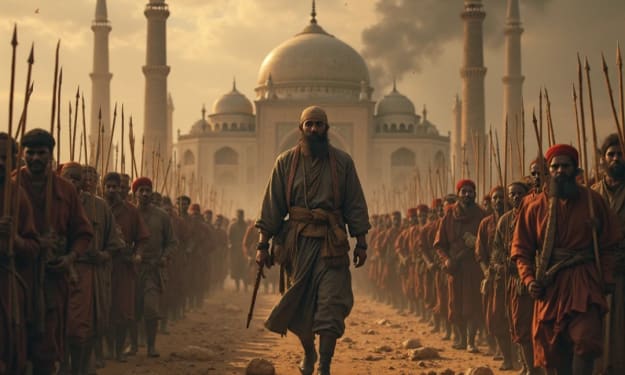
Muslims arrived in India more than a thousand years ago. They did not only come here as rulers or conquerors but also as soldiers, Sufis, poets, architects, farmers, traders and workers. For many centuries, including the Mughal period, Indian Muslims have contributed equally to the economy, culture, art, language, music and architecture of this land. But the colonial British made the Hindu-Muslim divide manifest through the policy of ‘Divide and Rule’. Using the historical fact that Muslims were rulers in some places, they tried to create a kind of hostility of the Hindu majority towards Muslims. This view was later systematically transformed into a part of state policy by Hindutva organizations—especially political forces like the RSS, the Vishwa Hindu Parishad and the BJP.
By Abdul Barik9 months ago in Writers
Islam and the Modern Nation-State: An Ethical, Political, and Historical Review
Throughout the long course of world history, the state has been a changing concept. Sometimes it was tribal, sometimes imperial, and sometimes religious. But at the beginning of the 20th century, especially after the First World War, a concept called ‘Nation-State’ spread from the Western world to different parts of the world. This concept of nation-state was enforced in almost all countries in the post-colonial era, and the Muslim world was no exception. But the question is—to what extent is this concept of nation-state compatible with Islamic thought? Does Islam advocate the formation of a state on the basis of ethnicity, geographical boundaries, and national flags? Or is its vision based on a universal ummah? In this article, we will analyze that philosophical and political conflict.
By Abdul Barik9 months ago in Writers