
Who is actually involved in the Pahalgam incident?
Who is really involved in the Pahalgam incident? — An analytical perspective

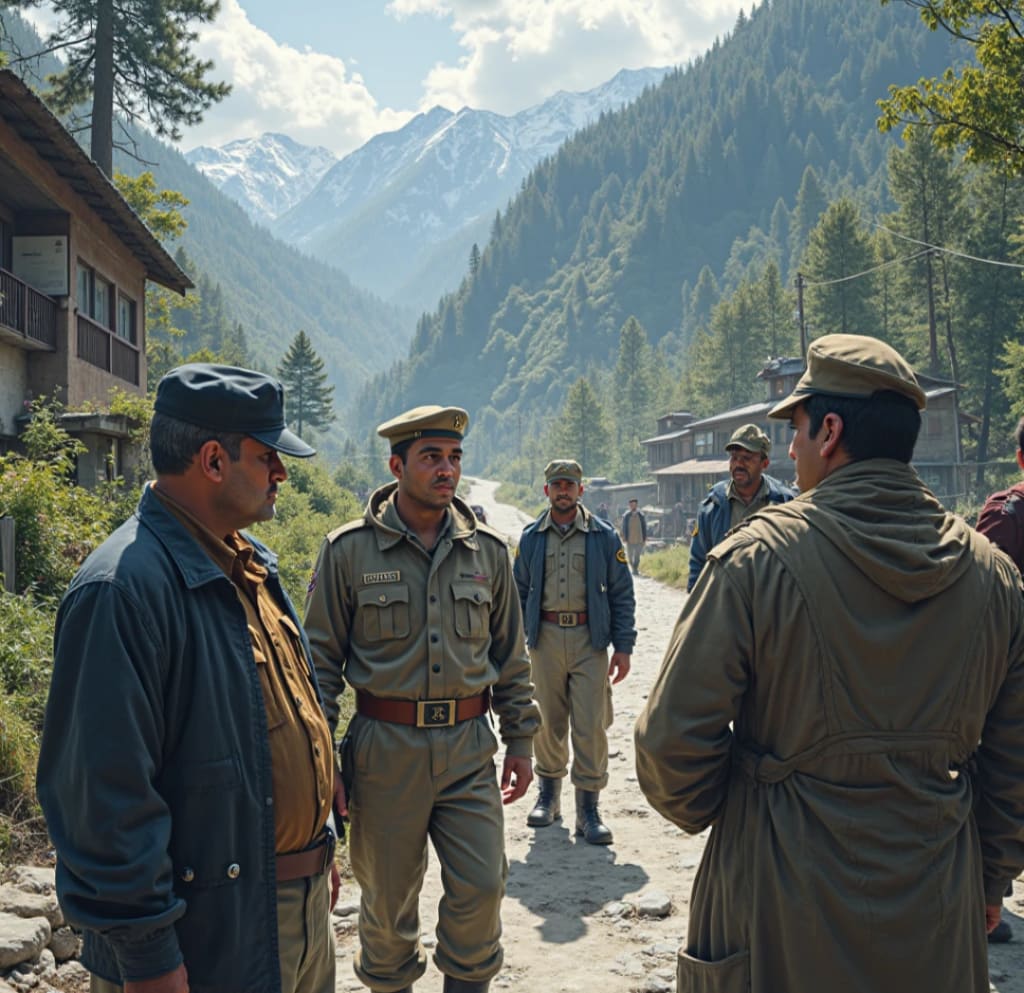
The horrific attack in Pahalgam on May 5, 2025, has once again created a sense of instability in India's security and politics. Several people were killed and injured in a shooting and explosion targeting a vehicle carrying tourists. No one has officially claimed responsibility for the incident so far. However, while the Indian media is pointing fingers at Kashmiri militant groups, some independent analysts and political commentators have raised the question of what the real motive behind the attack was. This question raises another important perspective: is this mere terrorism, or is there a deep political calculation behind it?
The Indian central government, especially the BJP-led ruling coalition, has long portrayed Kashmir as a "base of terror". Especially since the abrogation of Jammu and Kashmir's special constitutional status (Article 370) in 2019, the central government has claimed that the situation in Kashmir has returned to normal and that the 'new Kashmir' is now on the path of development. In this context, such a sudden attack on tourists calls into question the claims and propaganda of the centre. Because, Pahalgam is one of the most popular tourist destinations in Kashmir, where the Indian government wanted to present a new image of ‘peace and normalcy’ of Kashmir to the world by attracting lakhs of tourists.
A closer look at the timing and nature of this attack reveals multiple possibilities regarding political motives. First, India’s Lok Sabha elections are now in their final stages, and the BJP is relatively under pressure in various parts of North India. The Kashmir issue is usually a tried and tested political tool of the BJP—inciting nationalist sentiments, strengthening anti-Muslim sentiments, and promoting a strong stand against “traitors”. Therefore, the possibility of gaining electoral advantage during such an incident cannot be ruled out. Such attacks create an opportunity for the Modi government to further strengthen its hardline defense policy, “surgical strikes”, and national security propaganda.
Secondly, there is no dearth of examples of ‘false flag operations’ in Indian history. Whether it was the 2001 Parliament attack or the 2019 Pulwama blast, there has been considerable doubt and controversy surrounding such incidents. Many observers and even former security officials have said that these incidents were never fully and transparently investigated. The way the Modi government blamed Pakistan immediately after the Pulwama attack and incited nationalist sentiments before the elections in the name of surgical strikes bears some resemblance to the current situation.
However, it is also true that there are still some armed groups active in Kashmir today, who are continuing to resist India's presence and rule. If this attack was indeed an act of theirs, the question arises - why did they carry out such an attack now, at this very moment, which has created an opportunity to legitimize the repressive policy among the people again? Many say that this could actually be part of the central government's strategy to maintain the repressive policy. On the other hand, it can also be said that many Kashmiri youth are today disoriented due to despair, insecurity, and political instability - and some violent reactions are actually taking place in such a reality.
This incident is also important from an international perspective. Recently, some observer groups from the European Union and the United Nations have been expressing concern about the human rights situation in Kashmir. At a time when such an attack occurs, India can easily say, "Look, there is still terrorist activity going on here, so our security policy is necessary and justified." As a result, international pressure on human rights violations, political prisoners, internet shutdowns, etc. may be greatly eased.
Another important aspect is the role of the media. The mainstream media in India has already started pointing fingers at Pakistan in reporting the attack, although no impartial investigation or information has been found so far. This trend is nothing new; rather, it has become part of a political campaign, where "terrorism" is associated with Muslim identity, and it becomes a political platform for the BJP. In this way, on the one hand, the public's trust is broken by making political opponents traitors, and on the other hand, the persecution of the Muslim community is legitimized.
Finally, the Pahalgam incident can be analyzed on multiple levels. Local frustration, possible militant activity, central government political strategy, and international narrative control may all be intertwined. But most importantly, independent investigation and transparent reporting, which are often impossible in India's lack of a real democratic framework, are essential. As a result, the doubts and questions that have arisen in the minds of the public about this incident are quite natural and logical.
About the Creator
Keep reading
More stories from Abdul Barik and writers in Criminal and other communities.
India's 'False Flag Operation'
A ‘false flag operation’ is a military and intelligence tactic in which a state or group organizes an attack or violent incident, the responsibility of which is attributed to another group, in order to gain political, diplomatic or military advantage through the incident. Many powerful states in history, such as the United States, Israel, and Russia, have used this tactic, and India has also been accused of using this method many times. Although the Indian government has never admitted such allegations, at various times, some high-ranking officials, international journalists, and even former intelligence officers have publicly highlighted the suspicious aspects of these operations. In this discussion, we will analyze the reality, political motives, and potential effects behind the incidents in Indian history that have been considered ‘false flag operations.’
By Abdul Barik8 months ago in Criminal
Two Teens, One Bus, and a Nation Watching
Hello, and welcome to “The True Crime Reader,” where we dig beneath the headlines to unravel the stories that shape our understanding of crime, justice, and society. Today’s episode takes us to Oakland, California, for the story behind Dashka Slater’s powerful nonfiction book, “The 57 Bus”—a case that stunned the Bay Area and reverberated across the country.
By Kristen Barenthaler2 days ago in Criminal
A Real Story: The Day Ameneh Bahrami Lost Her Sight
In 2005, Tehran woke up to what seemed like an ordinary morning. Buses were running, offices were opening, and students were heading to their universities. The city was moving through its usual routine. No one knew that, in one small part of the city, a tragedy was about to occur—one that would later shock the entire world.
By shakir hamid3 days ago in Criminal




Comments
There are no comments for this story
Be the first to respond and start the conversation.