Fiction
Sekhmet: The Lioness of Flame and Fury
In the burning deserts of ancient Egypt, where the sun scorches the sands and life clings to the Nile, there roared a goddess of fire and blood: Sekhmet, the lion-headed warrior deity whose power could both destroy and heal. She was not a gentle goddess of grain or love—Sekhmet was born of wrath, her breath the desert wind, her eyes burning with the heat of Ra himself. She was feared and revered, invoked in both war and plague, and her name—meaning “The Powerful One”—echoed through the temples like a growl from the divine.
By Kristen Orkoshneli7 months ago in History
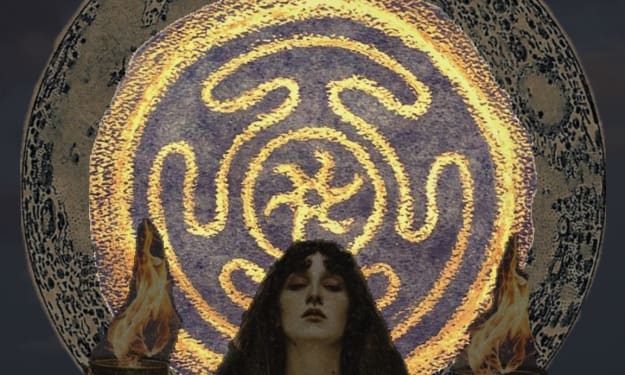
Hekate: Guardian of the Threshold, Goddess of Shadows and Sorcery
In the flickering light of ancient torches, standing at the crossroads where choices are made and fates are sealed, Hekate waits. Neither wholly light nor dark, she is the Greek goddess of magic, the moon, necromancy, and transitions. Revered and feared in equal measure, Hekate is a guardian of liminal spaces—the in-between realms of dusk and dawn, life and death, body and spirit.
By Kristen Orkoshneli7 months ago in History
Inanna (Ishtar): Queen of Heaven and the Dark Divine
Long before the rise of Olympus or the thrones of Valhalla, there reigned a goddess of immense power and contradiction in the ancient cities of Sumer: Inanna, later known as Ishtar by the Akkadians and Babylonians. She was the Queen of Heaven, the goddess of love and war, creation and destruction, fertility and death—a figure so complex and vast that no single definition could contain her.
By Kristen Orkoshneli7 months ago in History
Athena - Goddess of Strategy, Wisdom and War
Among the glittering pantheon of Greek gods and goddesses, none stands taller in intellect, strategy, and justice than Athena, daughter of Zeus. A deity of paradox and balance, she embodies both wisdom and warfare, thought and action, discipline and creativity. Revered not just as a goddess of battle but as a protector of civilization itself, Athena’s influence reached far beyond myth, shaping art, politics, and philosophy in both ancient and modern minds.
By Kristen Orkoshneli7 months ago in History
Murder, Marriage, and the Throne: Hürrem Sultan’s Ruthless Ascent
She arrived in chains—nameless, powerless, just another terrified girl ripped from her homeland and thrust into the opulent prison of the Ottoman harem. But behind her wide eyes and fiery red hair burned something no chains could hold: ambition.
By Kristen Orkoshneli7 months ago in History
Time Allowed
Not long-ago, and to be precise, last century, Jacob Bruin donned a historical military friendly revolutionary war uniform then competed on the ‘Cement Jungle Island Garden Stage’. Saluting, discharging summer beachgoers, inviting them to holiday shopping festivities the one-time junior amateur owner horseman pilot lured patrons into an exciting entertaining romantic evening, where anything seemed possible, unlike dreaming executive's thin ice-skating, board crashing, just to set off a red light, signaling a goal has been achieved during mandatory attended afternoon conferences.
By Marc OBrien7 months ago in History
Why World War 1 Happened: The Spark That Ignited the World
The First World War was not just a sudden eruption of violence—it was a storm that had been brewing for decades. Often remembered for its massive scale and horrific trench warfare, World War 1 (1914–1918) was caused by a complex web of political tensions, alliances, nationalism, and a single, fatal spark. But what exactly triggered this global conflict? Why did the world plunge into war? Let’s break it down.
By Engr. Mansoor Ahmad7 months ago in History
The Star of Samarkand: The Story of Al-Biruni
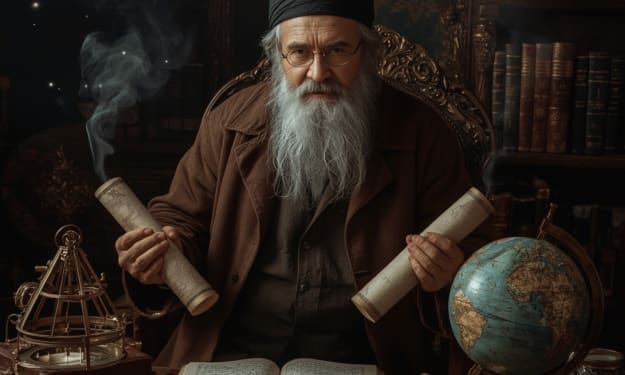
By Ikhtisham Hayat In the golden age of Islamic civilization, when cities like Baghdad, Cordoba, and Samarkand sparkled with knowledge and innovation, a curious mind was born in the heart of Khwarezm (modern-day Uzbekistan). His name was Abu Rayhan Al-Biruni (973–1048 CE). History remembers him not just as a Muslim scientist but as one of the greatest polymaths the world has ever known. From a young age, Al-Biruni displayed an unusual fascination with the natural world. While other children played, he was measuring shadows to understand the movement of the sun. With no formal university or mentor in his early years, Al-Biruni’s thirst for knowledge led him to learn Greek, Sanskrit, Persian, Hebrew, and Syriac—languages that would later become keys to unlocking ancient texts and lost sciences. Al-Biruni lived during a time when the Islamic world was a melting pot of cultures and philosophies. Under the patronage of rulers who appreciated scholars, he had access to some of the best libraries in the world. One such opportunity came when the sultan Mahmud of Ghazni invited him to join his court. Though the invitation wasn’t entirely optional—Mahmud conquered Al-Biruni’s homeland—Al-Biruni accepted it with grace, seizing the chance to travel across the Indian subcontinent. What could have been a period of bitterness turned into one of his most fruitful eras. While in India, Al-Biruni learned Sanskrit and studied Hindu philosophy, mathematics, astronomy, and medicine. His respect for Indian culture was rare for his time. He translated important Indian texts into Arabic and wrote his own masterpiece: "Kitab fi Tahqiq ma li’l-Hind" (The Book of India)—a detailed and respectful account of Indian society, science, and beliefs. But Al-Biruni’s legacy was not confined to travel writing. He was a master of multiple sciences: Astronomy: He calculated the radius of the Earth with remarkable precision using trigonometry and shadows—centuries before modern satellites. Geography: He believed the Earth rotated on its axis, a concept not widely accepted in his time. Physics: He proposed theories about gravity and the behavior of water that predated Newton’s laws. Mathematics: He worked on spherical trigonometry, used in modern navigation and astronomy. Pharmacology: He compiled hundreds of medicinal plants and minerals in his book “Kitab al-Saydalah” (The Book of Drugs), which served doctors for centuries. One of his most remarkable qualities was his scientific method. Al-Biruni didn’t just believe something because it was written in a holy book or ancient text. He emphasized observation, experimentation, and logic—principles that would later become the foundation of modern science. He once wrote, "We must investigate everything to its depth, and not merely follow tradition." He even debated religious and philosophical ideas with remarkable tolerance. Though a devout Muslim, Al-Biruni believed that truth must be pursued wherever it is found. In a time when religious tension was common, he respected other beliefs and cultures, embodying the Quranic verse, “O mankind! We created you from a single (pair) of a male and a female, and made you into nations and tribes, that you may know each other” (Surah Al-Hujurat, 49:13). Despite all his achievements, Al-Biruni remained humble. He died at the age of 75, surrounded by books and instruments, still asking questions about the universe. It is said that on his deathbed, he asked a visiting scholar about an obscure point of Islamic law. When the man said, “Is this the time for such questions?” Al-Biruni replied, “Which is better, to die knowing or to die ignorant?”
By Ikhtisham Hayat7 months ago in History