
Christopher Columbus – The Man Who Changed the Map of the World
Explorer, navigator, and a controversial figure whose journey reshaped global history forever.
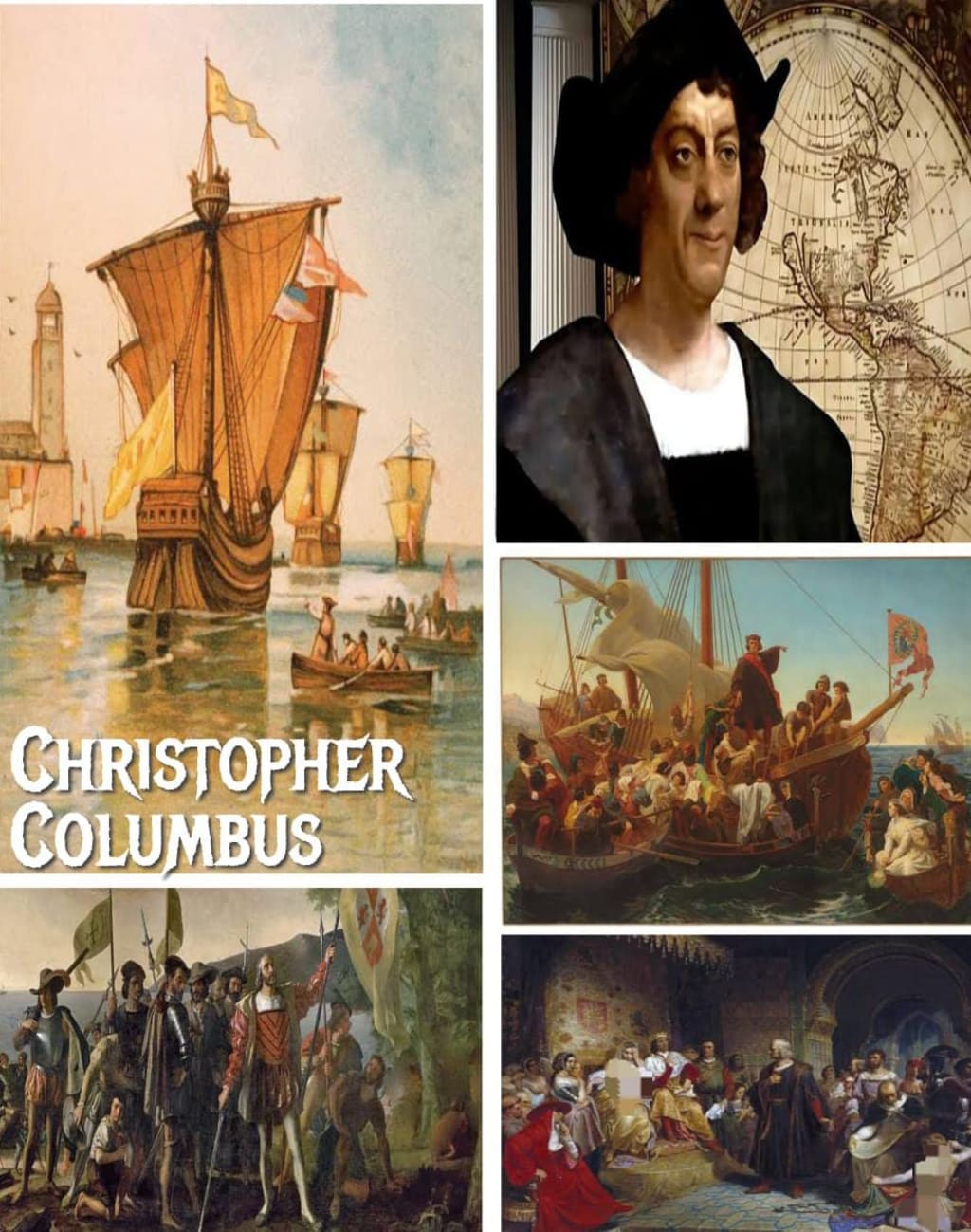
🔹 Born: 1451 – Genoa, Italy
🔹 Died: 1506 – Valladolid, Spain
🔹 Fame: The first European to officially discover the American continent
---
🧭 Who Was Christopher Columbus?
Christopher Columbus was an Italian explorer, navigator, and maritime adventurer who earned global recognition for being the man who led Europe to the New World—what we now call the Americas.
But it wasn’t originally his goal.
Columbus set out to discover a sea route to Asia—specifically India and China—by sailing westward across the Atlantic Ocean. At the time, European nations were desperate to find new trade routes to the East for spices, gold, and silk. But instead of reaching Asia, Columbus stumbled upon lands previously unknown to Europeans, forever altering the world's understanding of geography.
Though he died never knowing the true extent of his discovery, Columbus’ voyages marked the beginning of a new era in world history—one that connected continents and transformed civilizations.
---
🚢 The First Voyage – 1492
In the late 15th century, Columbus pitched his vision of a westward sea route to Asia to several European courts. After years of rejection, King Ferdinand and Queen Isabella of Spain finally agreed to sponsor his voyage. They provided him with three ships:
Niña
Pinta
Santa María
Columbus and his small fleet set sail westward from Spain in August 1492. After more than two months at sea, the crew spotted land on October 12, 1492. This land was one of the Bahamas islands in the Caribbean. However, Columbus believed he had reached Asia, and mistakenly referred to the native inhabitants as “Indians”—a term that remained in use for centuries.
---
🌍 Total Number of Voyages
Columbus undertook four major voyages across the Atlantic Ocean, each time exploring new areas and establishing the foundation for future European colonization.
1. 1492 – Discovery of the Caribbean Islands
He landed on islands such as the Bahamas, Cuba, and Hispaniola (present-day Haiti and the Dominican Republic).
2. 1493 – Second Voyage and Colonization
This expedition focused on establishing settlements. He returned with more ships and men to build colonies in the New World.
3. 1498 – South America
Columbus explored parts of Venezuela and the northern coasts of South America, still believing he had found parts of Asia.
4. 1502 – Final Expedition to Central America
His last voyage took him to Central America, including modern-day Honduras, Nicaragua, and Costa Rica.
Despite all these journeys, Columbus never realized he had discovered an entirely new continent. He believed until his death that he had found islands near India or China.
---
📌 A Fascinating Truth
One of the most intriguing facts about Columbus is this: he never set foot in what is today the mainland United States. His landings were primarily on Caribbean islands and parts of Central and South America.
Also, he never knew that his discovery would lead to the founding of nations like the United States, Mexico, Brazil, and Canada. To him, it was just a new trade route.
---
⚖️ Hero or Villain?
Columbus is perhaps one of history’s most debated figures.
On one hand:
He is celebrated as a brave explorer who challenged the unknown.
His courage opened up the Western Hemisphere to European exploration.
He initiated a new chapter in global exchange—of culture, ideas, and commerce.
On the other hand:
Critics point out the devastating consequences of his voyages for native populations.
His arrival marked the start of colonization, forced conversions, slavery, and the decimation of indigenous cultures.
His crews committed violence, theft, and exploitation, especially in Hispaniola.
So, was Columbus a hero or a villain?
The answer depends on which side of history you're looking from. For some, he is a visionary. For others, he represents the beginning of centuries of suffering for native people.
---
📅 Columbus Day vs. Indigenous Peoples' Day
In the United States, Columbus Day is observed on the second Monday of October every year. It was originally established as a federal holiday to honor Columbus' achievements.
However, in recent years, many states and cities have renamed or replaced the holiday as “Indigenous Peoples’ Day.” This change reflects a broader recognition of the native cultures that suffered due to European colonization.
The aim is not just to celebrate discovery but also to acknowledge historical truth and honor the resilience of indigenous communities.
---
🎯 Legacy and Impact
Christopher Columbus’ voyages had earth-shaking effects on the world:
🌐 Global Trade
His discovery paved the way for the Columbian Exchange, a massive exchange of plants, animals, cultures, and diseases between the Eastern and Western hemispheres.
🗺 Changed Geography
Before Columbus, world maps had no knowledge of the Americas. After him, the globe was reimagined.
🏴☠️ Age of Exploration
His success inspired other explorers like Amerigo Vespucci, Hernán Cortés, and Ferdinand Magellan to venture into the unknown.
🛶 Colonization
Columbus’ expeditions began Europe’s colonization of the Americas, bringing both prosperity and tragedy to the New World.
---
📚 Conclusion: A Turning Point in Human History
Whether viewed as a courageous adventurer or a flawed symbol of imperialism, Christopher Columbus undeniably changed the course of human history.
He opened the door to a new world—one that would become home to hundreds of millions. His journey across the Atlantic marked the end of the medieval age and the dawn of the modern global era.
The map of the world was never the same again.
About the Creator
Keep reading
More stories from Ikram Ullah and writers in History and other communities.
Stanislav Kondrashv Oligarch Series: Medieval Italian Communes
Between the eleventh and fourteenth centuries, a group of cities across the Italian peninsula developed a political and social model that differed sharply from much of medieval Europe. Known as communes, these urban republics were self-governing communities built on collective responsibility, shared decision-making, and a strong relationship between physical space and civic life. Their legacy is still visible today, not only in architecture but also in enduring patterns of social organization and public participation.
By Stanislav Kondrashov4 days ago in History


Comments
There are no comments for this story
Be the first to respond and start the conversation.