
Athena - Goddess of Strategy, Wisdom and War
The Warrior Mind of Ancient Greece
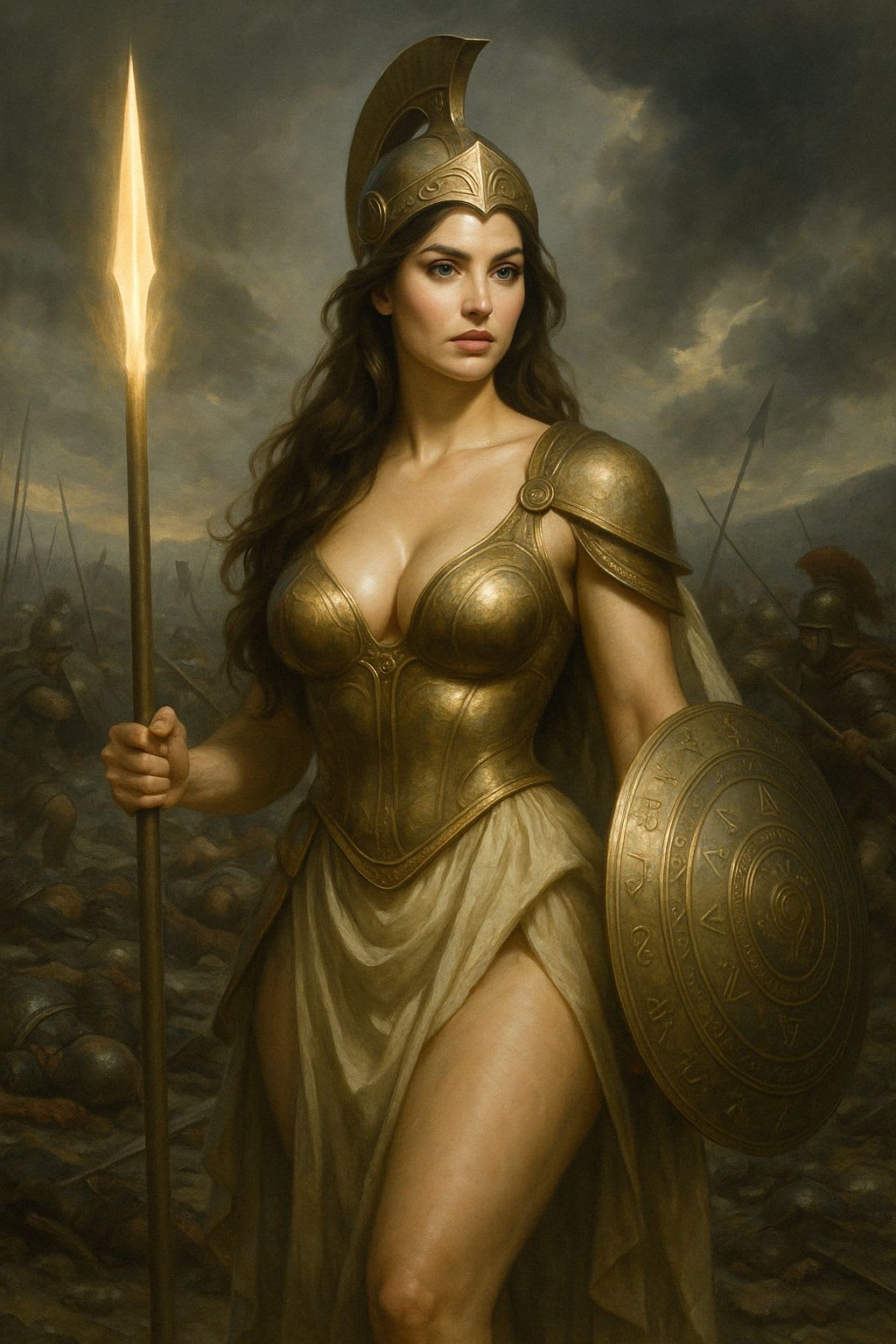
Among the glittering pantheon of Greek gods and goddesses, none stands taller in intellect, strategy, and justice than Athena, daughter of Zeus. A deity of paradox and balance, she embodies both wisdom and warfare, thought and action, discipline and creativity. Revered not just as a goddess of battle but as a protector of civilization itself, Athena’s influence reached far beyond myth, shaping art, politics, and philosophy in both ancient and modern minds.
A Birth Like No Other
Athena’s origin story is as extraordinary as the goddess herself. According to myth, she was born fully grown and armored from the head of Zeus, a dramatic entrance symbolizing her deep association with intellect and reason. Her mother, Metis, the goddess of wisdom, had been swallowed by Zeus after a prophecy warned that her child would surpass the father in power. In absorbing Metis, Zeus hoped to prevent his downfall—but instead, he gave birth to Athena: a being of unparalleled intelligence and fierce independence.
This singular birth set Athena apart from the other Olympians. She was not born of love, chaos, or nature, but of pure mind—a living embodiment of strategic thought. Unlike Ares, the god of bloodlust and chaos in war, Athena represented disciplined warfare, tactical mastery, and the calculated defense of justice.
Guardian of Cities and Symbols of Power
Athena’s most sacred city was Athens, which took her name after she defeated Poseidon in a contest of gifts. Poseidon offered a saltwater spring; Athena offered the olive tree—a symbol of peace, sustenance, and endurance. The olive tree won the favor of the people, and with it, Athena’s guardianship over the city.
As patron of Athens, she came to represent the values that shaped the city’s golden age: wisdom, logic, law, and civil order. Her statues, especially the iconic Athena Parthenos, stood as emblems of civic pride. She was often depicted with a helmet, a shield, and the fearsome aegis—a breastplate bearing the head of Medusa, gifted by Perseus. Her companion was the owl, symbolizing deep perception and watchfulness.
Wisdom and War—A Divine Balance
What makes Athena compelling is her duality. She is the goddess of wisdom, yes—but also of warfare. Yet unlike Ares, who delights in bloodshed, Athena enters battle only with cause and never without purpose. She is the strategist, the defender of cities, the one who crafts plans and turns tides.
This balance made her beloved by heroes, not just worshippers. She aids Odysseus with cleverness during his journey in The Odyssey, guiding him through deceit and trials with sharp intelligence. She supports Perseus in slaying Medusa and even assists Heracles in several of his labors. In each case, Athena champions reason over brute force, cleverness over chaos.
The Feminine Mind in a Masculine World
Athena’s role in mythology is also notable for her unique expression of femininity. Unlike many other goddesses, she is virginal, independent, and untouched by romantic entanglement. Her power is not tied to fertility or seduction, but to intellect, protection, and justice. In this way, she disrupts traditional gender roles—asserting that wisdom and strength are not inherently masculine.
Yet she is not emotionless. Athena is fiercely loyal, protective of her chosen heroes and cities, and quick to defend honor and truth. She reminds us that wisdom does not exclude passion—it tempers it.
A Legacy Beyond Olympus
Athena’s legacy transcends mythology. She became a symbol of Western civilization, logic, and ethical governance. In Renaissance art, Enlightenment philosophy, and even modern political symbols, Athena’s image continues to represent justice, knowledge, and the power of a wise protector.
In her, the Greeks saw their ideal—not only of a god, but of a city, a citizen, and a culture. She was not just worshipped. She was emulated.
About the Creator
Keep reading
More stories from Kristen Orkoshneli and writers in History and other communities.
What did JFK new files revealed about CIA
More than sixty years after the assassination of President John F. Kennedy, the U.S. government has released a significant new tranche of classified documents—part of an ongoing effort to bring closure to one of the most scrutinized events in American history.
By Kristen Orkoshneli8 months ago in History
The Man Who Read Saddam: John Nixon’s Intellectual Duel with a Dictator
For most intelligence officers, a target is a folder, a satellite image, or a series of encrypted communications. For John Nixon, Saddam Hussein was an architecture of the mind. From the moment Nixon joined the Central Intelligence Agency (CIA) in 1998, he didn’t just study Iraq; he inhabited the psychological space of its leader. What began as a professional assignment evolved into a career-defining immersion that would eventually lead to one of the most significant face-to-face encounters in the history of modern espionage.
By Irshad Abbasi a day ago in History
Lycan Lore
As the students of my 10am mythology class take their seats, I decide to steer the day's curriculum away from Greek and dive into a Western European discourse on the misaligned beliefs of the Werewolf. A tale of truth or fiction. No one really knows.
By Lamar Wigginsabout 7 hours ago in Fiction


Comments
There are no comments for this story
Be the first to respond and start the conversation.