
Why World War 1 Happened: The Spark That Ignited the World
The Shocking Chain of Events That Ignited the First Global War

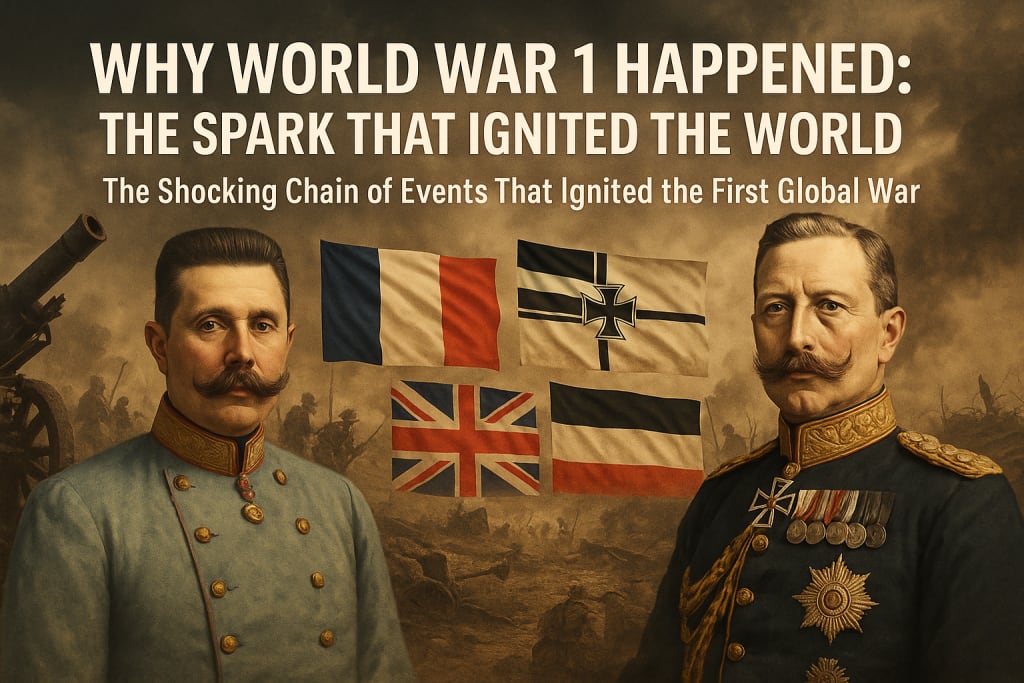
The First World War was not just a sudden eruption of violence—it was a storm that had been brewing for decades. Often remembered for its massive scale and horrific trench warfare, World War 1 (1914–1918) was caused by a complex web of political tensions, alliances, nationalism, and a single, fatal spark. But what exactly triggered this global conflict? Why did the world plunge into war? Let’s break it down.
The Ticking Time Bomb: Europe Before 1914
By the early 20th century, Europe was a continent under pressure. The great powers—Britain, France, Germany, Austria-Hungary, Russia, and the Ottoman Empire—were locked in a fierce rivalry for power, colonies, and influence. Nationalism was soaring, empires were clashing, and militaries were expanding rapidly.
Four key factors made war almost inevitable:
1. Militarism
Europe was in an arms race. Nations believed that having a powerful military was the key to survival and prestige. Germany, in particular, was rapidly building its navy to compete with Britain. Military leaders gained political influence, and war plans like Germany's Schlieffen Plan were already prepared years before the first shots were fired. The mindset? War wasn’t just possible—it was expected.
2. Alliances
Europe was divided into two major alliance systems:
Triple Entente: France, Russia, and Britain
Triple Alliance: Germany, Austria-Hungary, and Italy
While these alliances were initially formed for defense, they ended up creating a dangerous domino effect. If one nation was attacked, its allies would jump in. The result? A local conflict could explode into a global war in days.
3. Imperialism
Colonial competition had long been a source of tension. European powers scrambled for overseas empires in Africa and Asia. Germany, a newer empire-builder, felt left behind and demanded its “place in the sun.” This created resentment and distrust among the old and new powers alike.
4. Nationalism
National pride was at an all-time high. Ethnic groups across Europe demanded independence. In multi-ethnic empires like Austria-Hungary and the Ottoman Empire, nationalist movements were seen as direct threats. Meanwhile, countries like Germany and France harbored deep hatred from past conflicts—especially the Franco-Prussian War of 1870–71, which left France burning for revenge.
The Spark: Assassination in Sarajevo
On June 28, 1914, the powder keg finally exploded.
Archduke Franz Ferdinand, heir to the Austro-Hungarian throne, was assassinated in Sarajevo by Gavrilo Princip, a Bosnian Serb nationalist connected to the group Black Hand. His goal? To free Slavic people from Austrian rule.
Austria-Hungary blamed Serbia and, with Germany’s backing, issued a harsh ultimatum. Serbia accepted most demands but not all. Austria declared war on July 28, 1914. Within days:
Russia mobilized to support Serbia.
Germany declared war on Russia (Aug 1) and France (Aug 3).
Germany invaded Belgium, prompting Britain to declare war (Aug 4).
A local crisis had escalated into a world war in less than a week.
Could It Have Been Prevented?
Many historians argue that World War 1 wasn’t inevitable—but it was very likely. Diplomacy had failed. The alliance system turned minor disputes into global crises. National leaders underestimated the scale and cost of modern warfare. And the desire for power, revenge, and honor blinded nations to the consequences.
Conclusion: A War That Changed Everything
World War 1 was a tragic result of unchecked nationalism, military ambition, and rigid alliances. It wasn’t just the assassination of an archduke—it was decades of tension finally boiling over. The war claimed over 16 million lives, redrew borders, and set the stage for even more destruction in World War 2.
Understanding why World War 1 happened is not just about knowing history—it's about recognizing the warning signs of global conflict. When nations put pride before peace, alliances before dialogue, and weapons before wisdom, the cost is always paid in human lives.
About the Creator
Keep reading
More stories from Engr. Mansoor Ahmad and writers in History and other communities.
The Main Reason Behind the Israel-Iran Conflict
The conflict between Israel and Iran is one of the most dangerous tensions in the Middle East. It is not just about religion or politics—it’s a mix of historical distrust, security concerns, nuclear weapons, and regional influence. To understand why Israel and Iran are enemies today, we must look at real events, official statements, and international reports that clearly explain the reasons.
By Engr. Mansoor Ahmad8 months ago in History
Hidden Void Discovered Inside the Great Pyramid of Khufu
For centuries, the Great Pyramid of Khufu in Egypt has fascinated historians, archaeologists, and travelers from around the world. Built more than 4,500 years ago during the reign of Pharaoh Khufu, the pyramid is the largest and oldest of the three pyramids of Giza. Despite decades of research and exploration, many secrets of this ancient structure remain hidden. Recently, scientists revealed one of the most intriguing discoveries yet — a large hidden void inside the pyramid that had remained unknown for thousands of years.
By Irshad Abbasi 2 days ago in History




Comments (1)
good bro i like your story