
Inanna (Ishtar): Queen of Heaven and the Dark Divine
Originating in ancient Mesopotamia, Inanna, also known as Ishtar, embodies love, fertility, war, and the cycle of creation and destruction.Queen of Heaven and Earth
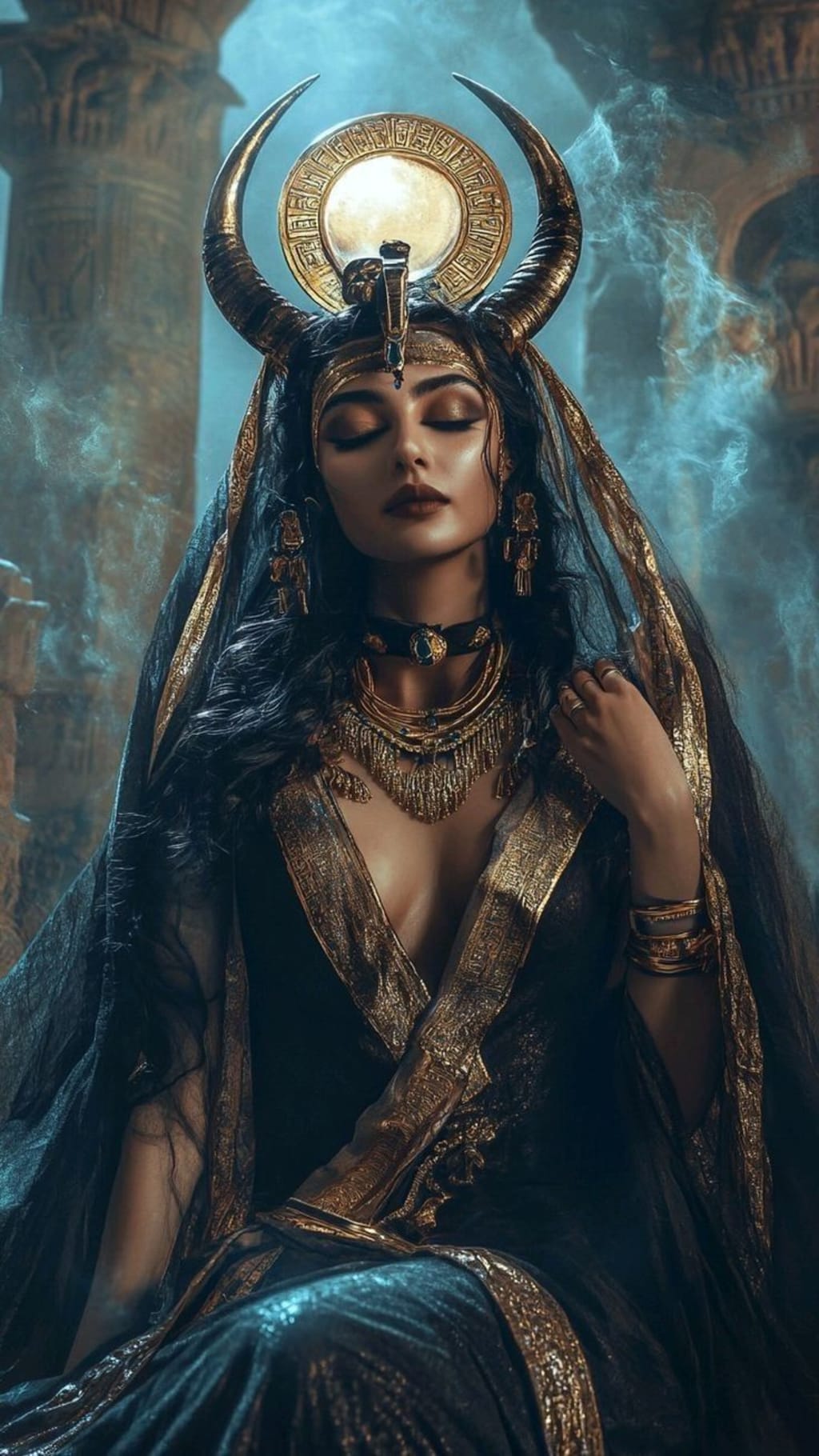
Long before the rise of Olympus or the thrones of Valhalla, there reigned a goddess of immense power and contradiction in the ancient cities of Sumer: Inanna, later known as Ishtar by the Akkadians and Babylonians. She was the Queen of Heaven, the goddess of love and war, creation and destruction, fertility and death—a figure so complex and vast that no single definition could contain her.
Inanna was not simply a deity. She was a force. She ruled not only the heavens, but the emotions, instincts, and passions that drive human life.
Goddess of Extremes
Inanna’s domain encompassed love, beauty, and sexual desire, yet she was equally feared for her ferocity in battle. She could inspire the growth of crops and the flourishing of life, then turn and summon chaos on the battlefield with the same divine authority. This duality is central to her mythos. Unlike modern ideals of divine femininity, Inanna was never passive or nurturing in a gentle sense—she was passion incarnate, unashamed, untamed, and unrelenting.
She was worshipped widely throughout Mesopotamia, with massive temples such as the Eanna Temple in Uruk dedicated in her honor. Her worship was marked by music, ecstatic rituals, sacred sexuality, and powerful hymns that speak to her beauty and wrath in equal measure.
Descent into the Underworld
Perhaps the most famous myth surrounding Inanna is her descent into the underworld, a tale that illustrates her unmatched courage and symbolic depth. Seeking to attend the funeral rites of her sister, Ereshkigal, the queen of the underworld, Inanna descends through seven gates, removing a piece of her clothing or jewelry at each one. By the time she arrives, she is naked and vulnerable.
There, she is struck dead and hung on a hook, lifeless, until her faithful servant sends help. Inanna is eventually revived, but she cannot return to the world above without sending someone in her place. In a chilling twist, she chooses her lover, Dumuzi, who had not mourned her absence.
This myth is more than a story of death and rebirth. It is a journey into the shadow self—a stripping away of power, identity, and ego. Inanna’s resurrection represents not just the cycle of seasons or fertility, but the emotional and psychological transformation through suffering, loss, and reclamation of power. She emerges not broken but more divine than before.
Ishtar: The Warrior Queen
When the Akkadians adopted Inanna into their pantheon, she became Ishtar, retaining her dual aspects but gaining even more prominence in warfare. Kings invoked her favor in battle, and she was described as a lioness, unstoppable and merciless.
Yet even in her martial form, Ishtar retained her allure and eroticism. She was often depicted nude, with wings and a crown, standing between lions. In the “Epic of Gilgamesh,” Ishtar famously proposes to the hero, only to be scorned. In rage, she unleashes the Bull of Heaven, leading to devastating consequences. This tale reminds us that love, when denied or dishonored, can transform into destruction.
A Legacy Across Civilizations
Inanna/Ishtar’s influence stretched far beyond Sumer and Babylon. Elements of her myths can be traced in Aphrodite, Astarte, Venus, and even Mary Magdalene in later traditions. She was one of the earliest goddesses to express what we now call the feminine archetype in all its rawness—sexuality, power, vengeance, grief, wisdom, and transformation.
Unlike later goddesses confined to one domain, Inanna was everything at once. She did not shrink herself to please. She did not beg to be understood.
Conclusion
Inanna is not a goddess who fits easily into modern categories. She is beauty wrapped in flame, love sharpened into a blade, death softened into rebirth. She reflects the full spectrum of human experience—desire, rage, transcendence, betrayal, and healing.
To study Inanna is to stare into the mirror of divine complexity and see a piece of ourselves staring back.
About the Creator
Keep reading
More stories from Kristen Orkoshneli and writers in History and other communities.
Athena - Goddess of Strategy, Wisdom and War
Among the glittering pantheon of Greek gods and goddesses, none stands taller in intellect, strategy, and justice than Athena, daughter of Zeus. A deity of paradox and balance, she embodies both wisdom and warfare, thought and action, discipline and creativity. Revered not just as a goddess of battle but as a protector of civilization itself, Athena’s influence reached far beyond myth, shaping art, politics, and philosophy in both ancient and modern minds.
By Kristen Orkoshneli8 months ago in History
Argentina Unearths the Remains of a Giant Prehistoric Titan
In a remarkable scientific discovery, paleontologists working in Argentina have uncovered the fossilized remains of what is believed to be one of the earliest giant dinosaurs to walk the Earth. The discovery was made in the windswept region of Patagonia, an area long known for its rich fossil deposits. The newly discovered dinosaur is thought to have been a massive plant-eating species that roamed the planet nearly 200 million years ago.
By Irshad Abbasi a day ago in History
The Solitude of The Chupacabra
Many say that the Chupacabra is a rather recent and modern tale, a mangy coyote or rabied dog. Some point out that it’s just twisted evolution. But very few know the true backstory of the shapeshifter that led to the bloodsucking legend. And perhaps once you will come to know and understand more, you might “forget” a few cattle out to wander.
By Oneg In The Arctic3 days ago in Fiction

Comments
There are no comments for this story
Be the first to respond and start the conversation.