Stories (611)
Filter by community
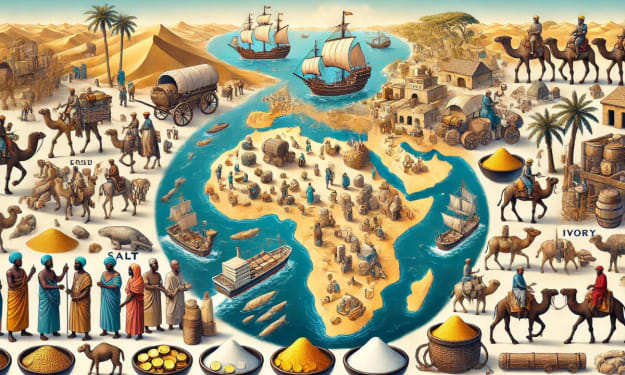
Items That Dominated African Trade Routes: A Comprehensive Overview
African trade routes have a rich history, serving as vital arteries of commerce that facilitated the exchange of goods, culture, and ideas across the continent. From the trans-Saharan routes to coastal trade networks, various items played pivotal roles in shaping economic dynamics and influencing civilizations. In this article, we will explore the key items that dominated African trade routes and their significance in historical and contemporary contexts.
By Marveline Merababout a year ago in History
The Songhai Empire: West Africa's Last Great Empire
Introduction The Songhai Empire (circa 1464–1591) was the largest and last of the three great pre-colonial empires in West Africa. At its height, it controlled vast territories, stretching from the western Atlantic coast deep into the central Sahara. Songhai's success stemmed from its dominance of the trans-Saharan trade routes, effective governance, and strong military. Despite its eventual fall, the Songhai Empire left a lasting legacy in West African history, with centers like Timbuktu and Gao standing as symbols of its wealth, intellectual influence, and Islamic culture.
By Marveline Merababout a year ago in History
The Trans-Saharan Trade: Shaping West African Empires and the Spread of Islam
Introduction The trans-Saharan trade was a network of trade routes that connected the Mediterranean world with West Africa across the harsh Sahara Desert. Active for over a thousand years, it played a crucial role in the development of West African empires and facilitated the spread of Islam in the region. More than just a network for exchanging goods, trans-Saharan trade routes served as cultural highways that linked African civilizations to the global economy and promoted religious, political, and intellectual exchange.
By Marveline Merababout a year ago in History
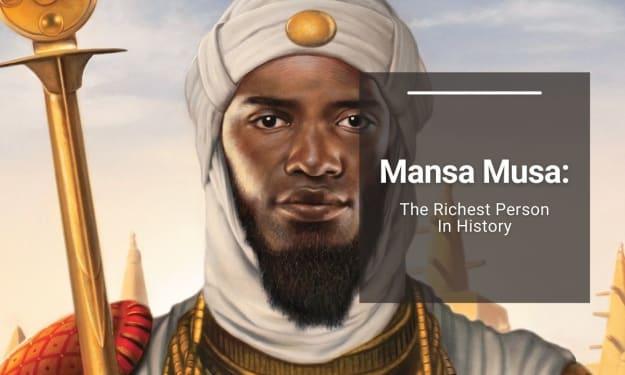
Mansa Musa: The Wealthiest Ruler in History and His Lasting Legacy
Introduction Mansa Musa, the 14th-century ruler of the Mali Empire, is often cited as one of the richest individuals in human history. His reign (c. 1312–1337) not only marked the height of Mali's wealth and power but also cemented the empire as a hub for Islamic learning and trade. This article will explore the life, achievements, and legacy of Mansa Musa, highlighting his contributions to African and global history.
By Marveline Merababout a year ago in History
Ancient African Trade Routes: The Economic Backbone of Africa’s Empires
Introduction: The Lifeblood of Ancient Africa’s Economy Ancient African trade routes were a crucial force behind the rise of powerful empires, urban centers, and cultural exchanges that connected Africa to the wider world. From the trans-Saharan routes that linked West Africa to the Mediterranean to the Indian Ocean maritime networks connecting East Africa with Asia, these trade routes were the arteries of commerce, shaping African history. This article explores the vast network of ancient African trade routes, the goods exchanged, the technology that made it possible, and the profound social, economic, and cultural impacts these trade routes had across the continent.
By Marveline Merababout a year ago in History
Himmler’s Dark Obsession: How Nazi Germany Tried to Rebrand Witches and Black Magic
Heinrich Himmler, one of the most powerful figures in Nazi Germany and leader of the SS, wasn’t just obsessed with military power—he had a bizarre fixation on occultism. In a strange and misguided project, Himmler tried to reshape the public perception of witches and black magic, turning them from symbols of evil into forces of good. This peculiar initiative became part of Nazi propaganda, woven into official SS ceremonies and rituals. Was this one of Nazi Germany's most outlandish ventures?
By Marveline Merababout a year ago in History
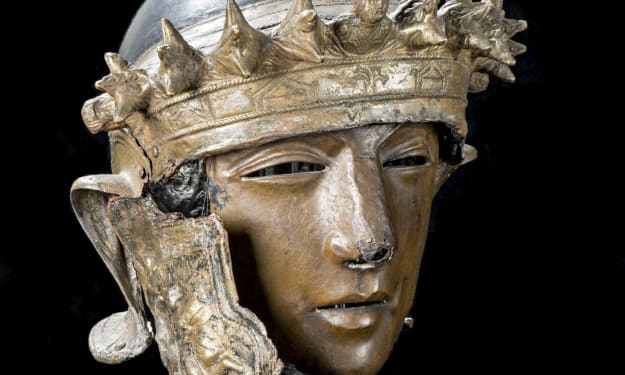
Ancient Roman Soldier's Cavalry Face Mask Discovered in Turkey
Archaeologists in Turkey have made a significant discovery: an iron mask worn by a cavalryman in ancient Rome’s army around 1,800 years ago. This ancient Roman face mask artifact sheds light on the presence and practices of Roman cavalry units.
By Marveline Merababout a year ago in History
The Siege of Syracuse: A Roman General vs. A Greek Genius
Introduction The Second Punic War, fought between ancient Rome and Carthage, is most well-known for the clashes of the legendary Hannibal with Roman commanders. An often-overlooked engagement during this war is the Siege of Syracuse, from 213-212 BC, which tested strategic military might against feats of engineering. This contest pitted Marcus Claudius Marcellus, a Roman general renowned for his power in single combat, against the Greek mathematical genius Archimedes.
By Marveline Merababout a year ago in History
Decisions: Roman Folly at Edessa
Treachery has often had a decisive impact on military operations. Great generals have founded tactical and even strategic plans upon it—and with good reason. Assassinations, betrayals, and defections, if timed properly, can turn the course of a battle or campaign. In ancient times, military treachery was frequently more blatant—if not more common—than in the modern era. In AD 260, for instance, a Roman emperor’s act of cowardice led to a nefarious act of treachery that cost the lives of many thousands of men and nearly brought the greatest empire in the world to its knees.
By Marveline Merababout a year ago in History