
The Battle of Vicksburg: A Pivotal Moment in the American Civil War
The Siege That Split the Confederacy: How the Battle of Vicksburg Changed the Course of the Civil War

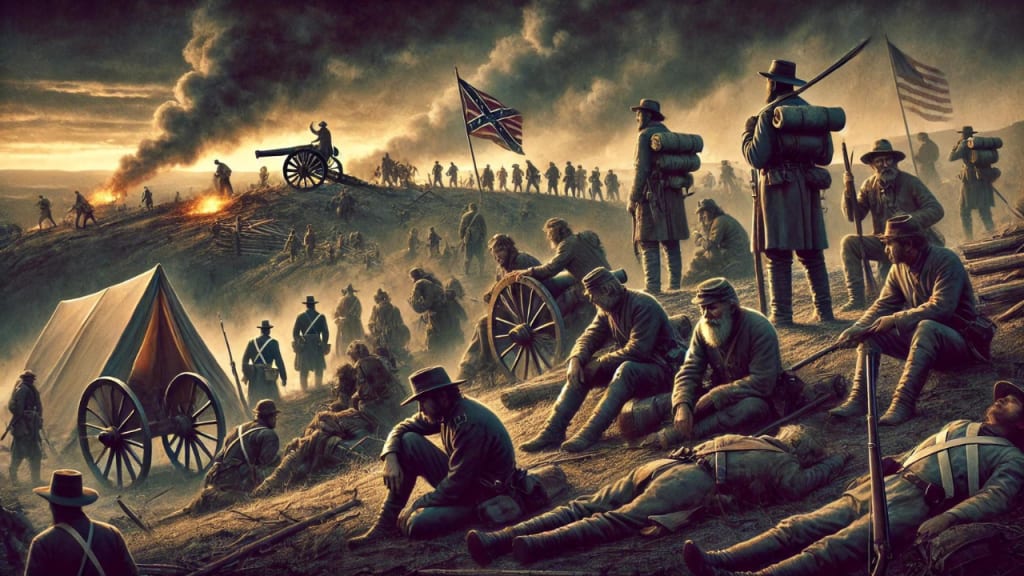
The Battle of Vicksburg, fought from May 18 to July 4, 1863, is widely regarded as one of the most significant engagements in the American Civil War.
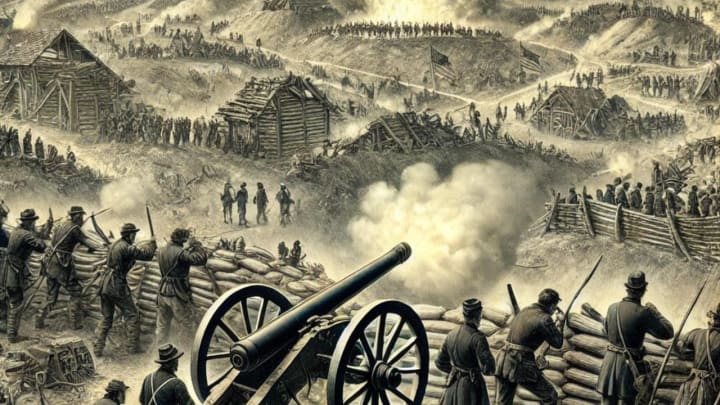
Situated on a strategic bluff above the Mississippi River in Warren County, Mississippi, the city of Vicksburg was a critical stronghold for the Confederacy. Its location allowed for control over the river, which served as the South’s main artery for transportation and supplies. Confederate President Jefferson Davis even referred to Vicksburg as "the nailhead that holds the South's two halves together." Union President Abraham Lincoln similarly viewed the city's capture as essential to the Union's success, declaring, “Vicksburg is the key! The war can never be brought to a close until that key is in our pocket.”
Through a combination of military brilliance and the Union's mastery of river warfare, Ulysses S. Grant and his forces were able to encircle the Confederate Army under Lt. Gen. John C. Pemberton, eventually forcing their surrender. This victory was crucial to the Union's overall strategy, splitting the Confederacy in two and securing control of the Mississippi River, thereby marking a turning point in the Civil War.
Before the Siege: Setting the Stage
In the spring of 1863, Ulysses S. Grant, commander of the Union Army of the Tennessee, set out to capture Vicksburg, understanding the critical nature of its position. His forces marched down the west side of the Mississippi River in preparation for a coordinated assault. The Union navy, commanded by Rear Admiral David Dixon Porter, played an essential role in providing transport for the river crossing and in running the formidable Confederate defenses that guarded the city.
On April 16, 1863, Porter’s fleet of ironclad gunboats and transports successfully navigated past Confederate batteries stationed at Vicksburg. Though their ships endured heavy fire, the majority of the fleet passed through unscathed, allowing Grant’s forces to position themselves south of the city and begin their campaign to cut off Vicksburg from the outside world.
The battle was preceded by key skirmishes at Port Gibson, Raymond, and Champion Hill, where the Confederates were consistently defeated. By mid-May, Grant’s forces had driven Pemberton’s Confederate army back to the fortified city of Vicksburg, where the Union siege began.
The Siege Begins: May 18–22, 1863
On May 18, 1863, Grant’s forces fully encircled Vicksburg, cutting off all supply lines and effectively trapping Pemberton's 33,000-strong Confederate army inside the city. Initially, Grant hoped to force a swift victory, and on May 19, he ordered an immediate assault on the Confederate defenses. The attack, led by Maj. Gen. William T. Sherman, targeted the Stockade Redan, a well-fortified position along Graveyard Road. Despite early success, Sherman’s men were met with fierce resistance and were eventually forced to retreat.
Undeterred, Grant launched another, larger assault on May 22. This time, the Union forces attacked on a three-mile front, with Sherman striking the same position as before while Maj. Gen. James B. McPherson and Maj. Gen. John A. McClernand attacked other points along the Confederate defenses. After a day of intense fighting, only a single Confederate position, the Railroad Redoubt, was breached. The Confederate defenders, led by Pemberton, managed to hold their lines, forcing Grant to settle in for a prolonged siege.
Life During the Siege: June–July 1863
As the siege dragged on, the Confederate defenders and the civilians of Vicksburg endured increasingly harsh conditions. Food and supplies dwindled, and Pemberton’s troops were plagued by illness and hunger. Civilians, caught in the middle of the conflict, sought refuge in caves carved into the hillsides to protect themselves from the constant bombardment.
Inside the city, the Confederate soldiers were on starvation rations, and the civilians were forced to make do with even less, resorting to eating mules, horses, and eventually rats. The Vicksburg Daily Citizen, the city’s only newspaper, famously printed its final edition on wallpaper, due to the lack of newsprint.
Grant’s forces, meanwhile, dug trenches closer and closer to the Confederate lines, tightening the noose around the city. On June 25, Union sappers detonated a massive mine under the Confederate works, blowing a huge hole in the defenses. Despite the explosion, the Confederate troops managed to repel the subsequent Union assault.
The Surrender: July 3–4, 1863

By early July, Pemberton’s position had become untenable. His men were exhausted, starving, and surrounded on all sides. On July 3, Pemberton met with Grant to discuss terms of surrender. Grant initially demanded unconditional surrender, but later relented, offering to parole the Confederate soldiers. On July 4, 1863, Pemberton’s army of approximately 29,000 men marched out of their fortifications, stacked their rifles, and surrendered. It was one of the largest surrenders of Confederate forces during the entire war.
This victory, coupled with the Union’s win at Gettysburg just a day earlier, marked a decisive turning point in the Civil War. With the Confederacy now split in two and the Mississippi River firmly under Union control, the South’s ability to sustain the war effort was severely compromised.
Aftermath and Significance
The fall of Vicksburg was a crushing blow to the Confederacy. President Abraham Lincoln had great cause for optimism following the victory, and the Union's control of the Mississippi River was a strategic triumph. Grant’s success at Vicksburg cemented his reputation as one of the Union’s most capable generals, and his leadership in the campaign played a significant role in his later appointment as General-in-Chief of all Union armies.
The surrender of Vicksburg and the Union victory at Port Hudson five days later completed the Union’s goal of controlling the Mississippi River. This split the Confederacy geographically, severing supply lines and isolating the states west of the river from the rest of the South.
FAQ
Why was the Battle of Vicksburg important? The Battle of Vicksburg was important because it gave the Union control of the Mississippi River, a crucial supply line, and split the Confederacy in two. This significantly weakened the South’s ability to sustain its war effort.
What happened to the Battle of Vicksburg? The Battle of Vicksburg culminated in a 47-day siege that ended on July 4, 1863, with the Confederate Army surrendering to Union forces under General Ulysses S. Grant.
How many soldiers died at Vicksburg? The Union forces suffered 4,910 casualties, while Confederate casualties were much higher, with over 32,000 soldiers either killed, wounded, or captured.
How did the Union win the Battle of Vicksburg? The Union won the Battle of Vicksburg through a combination of superior military strategy, control of the Mississippi River, and the effective use of siege tactics, which ultimately forced the Confederates to surrender.
Who won the Battle of Vicksburg? The Union Army, led by General Ulysses S. Grant, won the Battle of Vicksburg, securing a crucial victory that helped turn the tide of the Civil War in favor of the North.
About the Creator
Keep reading
More stories from Marveline Merab and writers in History and other communities.
Understanding the Insurrection Act
The Insurrection Act is one of the most powerful and least understood laws in American history. Often mentioned during times of national unrest, it gives the president authority to deploy federal troops within the United States under specific circumstances. While it is rarely used, public interest in the law has grown in recent decades, leading many to ask: what is the Insurrection Act, and why does it matter today? What Is the Insurrection Act? To put it simply, the Insurrection Act of 1807 is a federal law that allows the president to use the U.S. military to suppress civil disorder, insurrection, or rebellion when state authorities are unable or unwilling to do so. If you are wondering what is the Insurrection Act used for, the answer lies in restoring order when local and state governments can no longer maintain public safety. People often search phrases like what is insurrection act or even the misspelled insurection act because the law tends to resurface during moments of crisis. Despite the confusion around its name, the authority it grants is very real and legally binding. What Is the Insurrection Act of the U.S.? So, what is the Insurrection Act of the US in legal terms? It is a collection of statutes now codified under Title 10 of the U.S. Code. The act provides exceptions to the Posse Comitatus Act, which generally prohibits the military from acting as domestic law enforcement. Under the Insurrection Act, the president can federalize the National Guard or deploy active-duty troops if constitutional rights are being violated or if violence prevents the execution of federal law. This is why many people ask, what is the Insurrection Act USA, especially when protests or riots dominate national headlines. The Insurrection Act and Its Historical Use Throughout American history, the act has been invoked sparingly but decisively. One of the most notable examples often referenced is the Insurrection Act 1992, when President George H. W. Bush deployed federal troops to Los Angeles following the Rodney King verdict. Local authorities had lost control, and the federal government stepped in to restore order. Earlier uses date back to the Civil War era and the Civil Rights Movement. Presidents Eisenhower and Kennedy relied on the act to enforce school desegregation in Southern states when state governments resisted federal court orders. These moments illustrate what the Insurrection Act is used for at its core: enforcing the rule of law when normal systems fail. Trump and the Insurrection Act In modern political discourse, the law became widely discussed during the presidency of Donald Trump. Searches for Trump Insurrection Act or Insurrection Act Trump surged during periods of nationwide protests, particularly in 2020. Although the act was never formally invoked during those protests, President Trump publicly considered its use, bringing renewed attention to the scope and limits of presidential power. The phrase insurrection act invoked often appears in news coverage, but it is important to note that discussing invocation and actually using the law are two very different things. The debate surrounding Trump Insurrection Act scenarios highlighted concerns about civil liberties, federal overreach, and the balance of power between states and the federal government. What Is the Insurrection Act in Minnesota? A common question during periods of regional unrest is what is the Insurrection Act in Minnesota or in other specific states. Legally, the act does not change from state to state. However, its application depends on circumstances within a particular state. If a governor requests federal assistance or if the president determines that constitutional rights cannot be protected locally, the Insurrection Act may apply. Minnesota, like every other state, falls under the same federal framework. The law does not target any single state; it responds to conditions on the ground. What Is the Insurrection Act Used For Today? In today’s environment, many Americans ask, what is the Insurrection Act used for in a modern democracy with established institutions. Supporters argue it is a necessary safeguard for extreme emergencies. Critics counter that it grants sweeping powers that could be misused if political tensions escalate. Understanding what is the Insurrection Act? requires recognizing that it is both a legal tool and a symbol. Its mere mention can influence public perception, markets, and political debate, even when it is not formally applied. Ongoing Debate and Public Concern The Insurrection Act remains controversial because it sits at the intersection of security and freedom. While it has been used to protect civil rights in the past, critics worry about potential misuse in polarized times. This tension explains why questions like what is the Insurrection Act of the US continue to trend whenever civil unrest occurs. Ultimately, the law reflects a fundamental challenge in governance: how to maintain order without undermining democracy. The fact that it has existed since 1807 and remains largely unchanged shows both its durability and its complexity. Final Thoughts The Insurrection Act is not a law that affects daily life, but it plays a critical role during extraordinary moments. From the Insurrection Act of 1807 to discussions around Insurrection Act 1992 and Insurrection Act Trump, its history mirrors the nation’s struggles with unity, authority, and rights.
By Saboor Brohi 4 days ago in History
From Desert Sands to a Global City
Long before Dubai became a city of glittering skyscrapers and global ambition, it was a quiet settlement shaped by the desert, the sea, and the determination of its people. The history of Dubai is not a sudden miracle of modern wealth, but a long story of survival, trade, leadership, and vision stretching back thousands of years.
By The best writer 6 days ago in History




Comments (1)
Oh very pleased to read this. Much knowledgeable. If you wish you can subscribe me as well as I did to you 🥰