
Ancient Roman Soldier's Cavalry Face Mask Discovered in Turkey
Roman Cavalry Face Mask Discovery: Unearthing a Remarkable Artifact

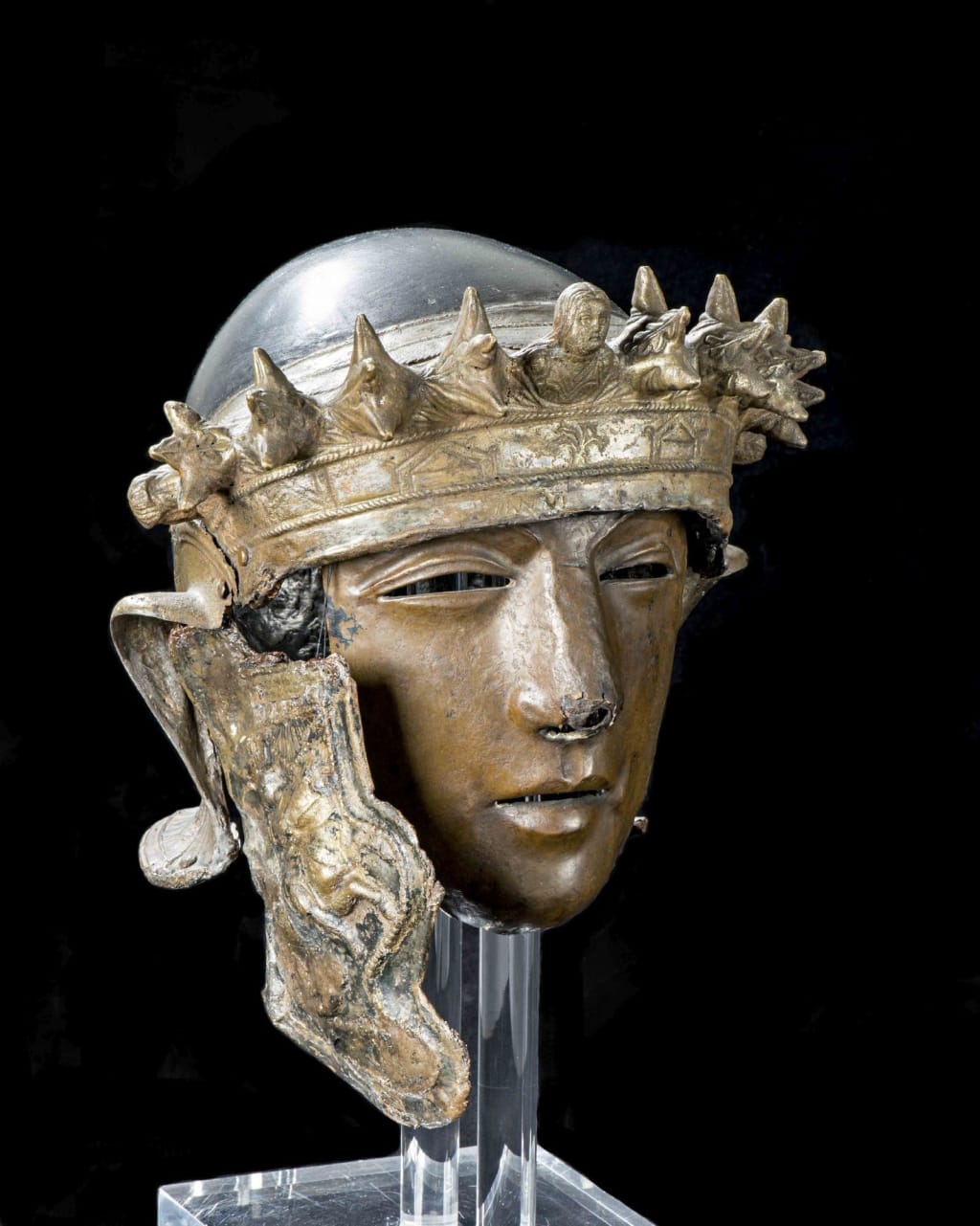
Archaeologists in Turkey have made a significant discovery: an iron mask worn by a cavalryman in ancient Rome’s army around 1,800 years ago. This ancient Roman face mask artifact sheds light on the presence and practices of Roman cavalry units.
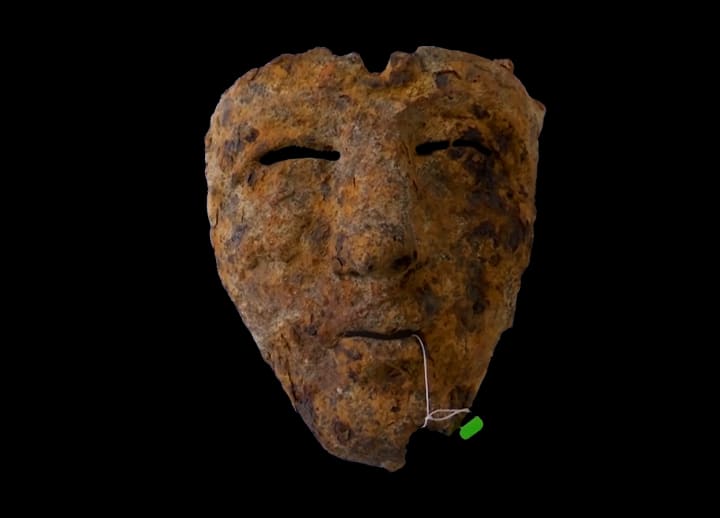
While excavating near the ancient city of Hadrianopolis, a team from Karabük University unearthed a large fragment of this special face mask, likely dating from the 3rd century A.D.
This discovery indicates the presence of a Roman military garrison at the site, which contains the remains of a fortified building.
The Role and Significance of Roman Cavalry Masks
Elite Roman cavalry troopers wore these ornate masks during marches and tournaments known as hippika gymnasia. These tournaments, described by the ancient Roman historian Arrian of Nicomedia, combined entertainment with military drills and often included mock battles.
The masks, often gilded or silvered and made from iron, bronze, or other metal alloys, were attached to the warriors’ helmets. They served not only as marks of prestige but also provided facial protection and outward visibility.
Roman cavalry units were often recruited from "barbarian" tribes, with Germanic cavalry auxiliaries being particularly fearsome in battle. A notable example is the Germanic leader Arminius, who turned against Rome and led a revolt, defeating Roman legionaries in the Battle of the Teutoburg Forest.
The Bond Between Roman Cavalrymen and Their Horses
Roman cavalrymen shared a close bond with their horses, often lodging together. Archaeological research reveals that soldiers and their horses shared the same indoor spaces, with no separate stables.
Cavalry units played a crucial role throughout Rome’s history, their importance growing over time. Germanic cavalry auxiliaries were instrumental in Julius Caesar's victory at the Battle of Alesia in 52 BC. In addition to lances, Roman cavalry troopers wielded a type of long sword known as the spatha.
FAQ
How was the Roman cavalry helmet discovered in Britain?
The Roman cavalry helmet in Britain was discovered at Ribchester in 1796. Similar to the mask found in Turkey, it was an ornate and protective piece used by elite Roman cavalrymen.
Did Roman cavalry wear face masks?
Yes, Roman cavalry wore face masks, especially during marches and tournaments. These masks were part of their helmets and served both protective and decorative purposes.
What is the name of the Roman cavalry mask?
The Roman cavalry mask is often referred to as a "cavalry sports mask" or "face mask" used in hippika gymnasia.
What is the history of Roman masks?
Roman masks have a rich history, used not only in military contexts but also in theatrical performances and religious ceremonies. The masks worn by cavalry were distinct in their design and function.
What did Roman cavalry wear?
Roman cavalry wore helmets with face masks, body armor (often made of mail or scale), and carried lances and spathas. They also wore protective leg and arm guards and decorated their equipment with symbols of prestige.
Why did Roman soldiers wear red cloaks?
Roman soldiers wore red cloaks, known as sagum, which symbolized power and martial prowess. The color red was also practical as it concealed bloodstains in battle.
Why did Roman cavalry wear masks?
Roman cavalry wore masks to protect their faces during combat and tournaments. These masks also served as a status symbol, showcasing the prestige of the wearer.
What are the Roman ancestor masks?
Roman ancestor masks, or imagines, were wax masks of deceased family members used in funeral processions to honor their memory and lineage.
What is a Roman mask?
A Roman mask could refer to various types used throughout Roman culture, including theatrical masks, ancestor masks, and the military face masks worn by cavalry. Each type had distinct purposes, from entertainment to protection and ceremonial use.
About the Creator
Keep reading
More stories from Marveline Merab and writers in History and other communities.
The Siege of Syracuse: A Roman General vs. A Greek Genius
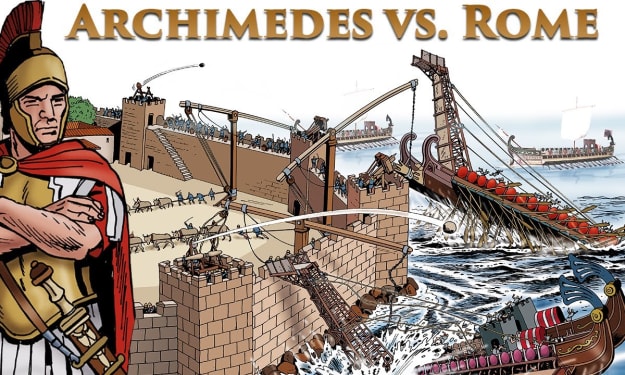
Introduction The Second Punic War, fought between ancient Rome and Carthage, is most well-known for the clashes of the legendary Hannibal with Roman commanders. An often-overlooked engagement during this war is the Siege of Syracuse, from 213-212 BC, which tested strategic military might against feats of engineering. This contest pitted Marcus Claudius Marcellus, a Roman general renowned for his power in single combat, against the Greek mathematical genius Archimedes.
By Marveline Merababout a year ago in History
The Rise and Fall of Nicolae Ceaușescu
Nicolae Ceaușescu’s rise to power was initially marked by promise, even optimism. Born in 1918 into a poor peasant family, he entered politics early, shaped by the ideological rigidity of interwar and wartime communism. When he became General Secretary of the Romanian Communist Party in 1965, following the death of Gheorghe Gheorghiu-Dej, many Romanians saw in him a younger leader, one who might soften the harsh Stalinist legacy that had defined the previous decades. For a society weary of repression and deprivation, Ceaușescu appeared to embody the possibility of cautious change.
By Pure childabout 16 hours ago in History
A woman from a vanished female dynasty was discovered buried with 270,000 beads.
In a Copper Age tomb close to Seville, Spain, the Montelirio bead assemblage contains over 270,000 beads that identify the ladies buried there as elites. The discovery is the biggest collection of beads ever
By Francis Dami3 days ago in History
Wild Card Weekend Recap: What Happens Now?
I think I figured out why I love Wild Card Weekend so much. It's because it's the first playoff anything of the calendar year. The NFL season starts in the fall, and once upon a time, the champion was crowned either on or slightly before New Year's. The evolution of the NFL schedule has resulted in the playoffs starting just into the New Year, and currently, the final week of the season falls on the first weekend of the New Year, with Wild Card Weekend coming a week after that. So yes, chronologically, the NFL's Wild Card Weekend serves as the first playoff anything of the calendar year.
By Clyde E. Dawkins5 days ago in Unbalanced



Comments
There are no comments for this story
Be the first to respond and start the conversation.