
The Trans-Saharan Trade: Shaping West African Empires and the Spread of Islam
Trans-Saharan Trade: A Lifeline Between North and Sub-Saharan Africa

Introduction
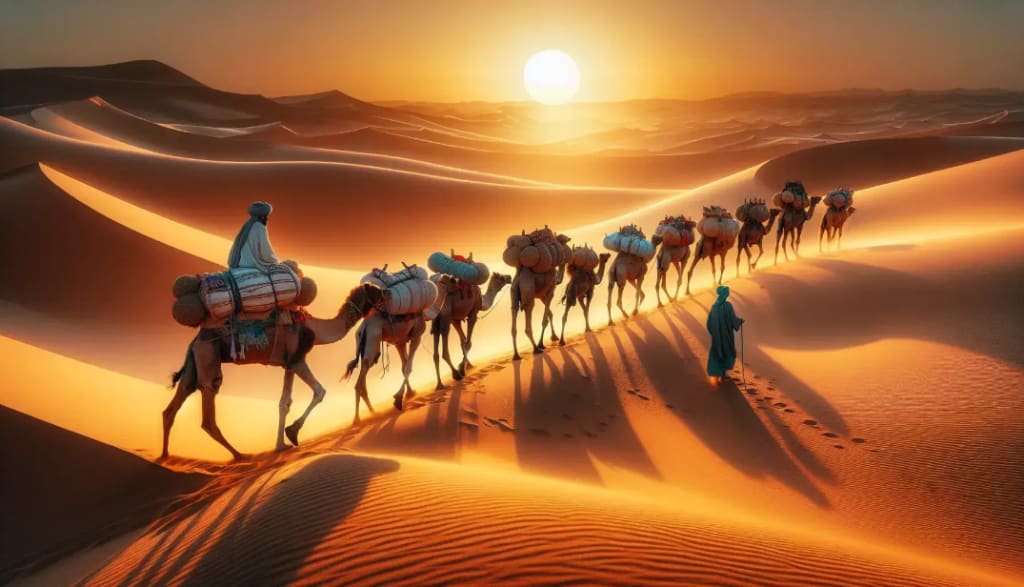
The trans-Saharan trade was a network of trade routes that connected the Mediterranean world with West Africa across the harsh Sahara Desert. Active for over a thousand years, it played a crucial role in the development of West African empires and facilitated the spread of Islam in the region. More than just a network for exchanging goods, trans-Saharan trade routes served as cultural highways that linked African civilizations to the global economy and promoted religious, political, and intellectual exchange.
What Was the Trans-Saharan Trade?
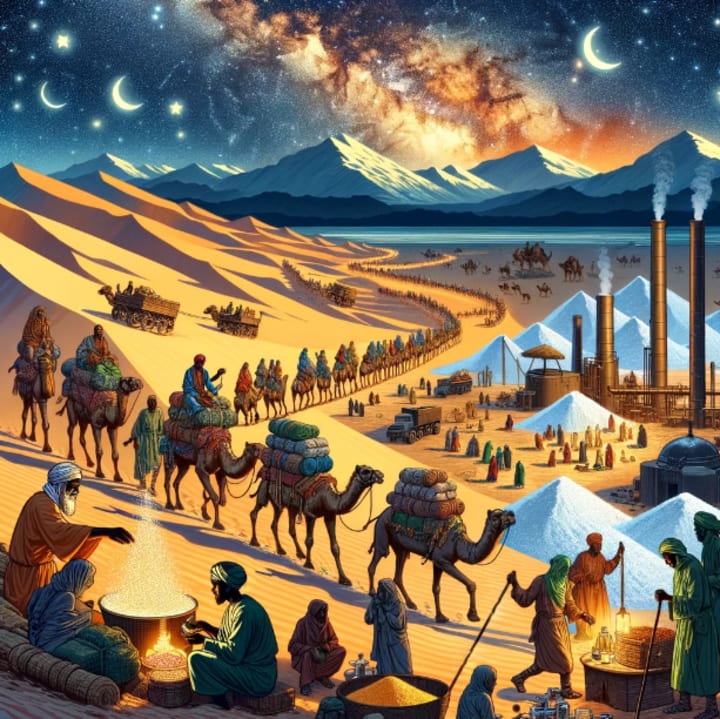
The trans-Saharan trade routes emerged between the 7th and 14th centuries, with gold, salt, slaves, and ivory being the primary commodities exchanged. Caravans, often comprising hundreds or even thousands of camels, braved the arid desert, connecting West African kingdoms like Ghana, Mali, and Songhai to the Mediterranean and beyond.
Salt, mined from vast deposits in the Sahara, was a particularly valuable commodity, crucial for preserving food in a pre-refrigeration era. In return, West African traders provided gold, which became highly sought after across Europe and the Islamic world.
Economic Significance: The Role of Gold and Salt in West African Economies
Gold: The Engine of West African Power
West Africa's dominance in the gold trade made the region extremely wealthy and influential. The Ghana Empire (circa 300–1200 AD) was one of the earliest beneficiaries of trans-Saharan trade, with its kings amassing wealth through their control of gold mines and taxation of trade caravans. It is said that during the height of the Mali Empire (1235–1600 AD), around half of the world's gold came from West Africa, much of it transported via the trans-Saharan routes.
The vast quantities of gold helped West African empires build armies, support education, and enhance infrastructure, leading to the creation of cities like Timbuktu, which became a renowned center of learning.
Salt: More Valuable Than Gold?
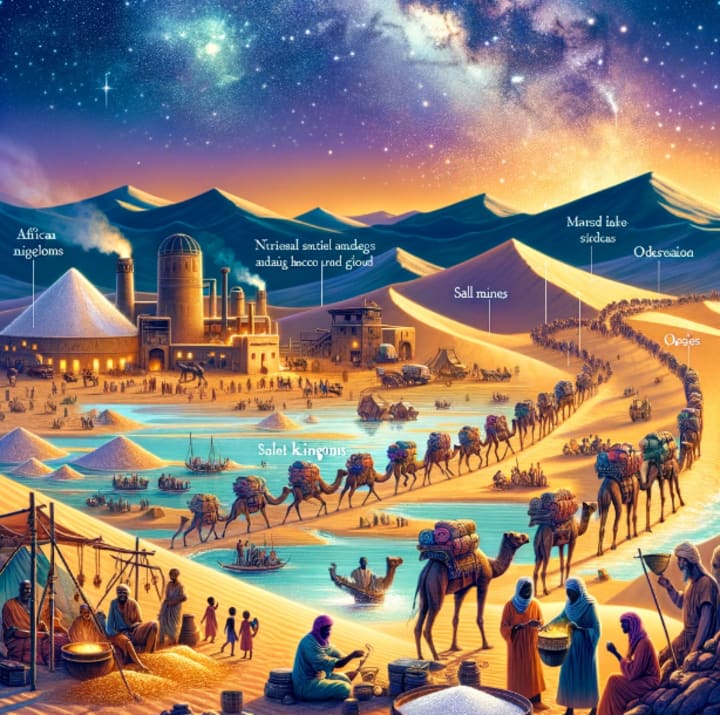
In West Africa, salt was as valuable as gold due to its scarcity in the region. It was essential for preserving food and maintaining human health, particularly in hot climates. The Saharan salt mines of Taghaza and Bilma were critical supply points. Caravans laden with salt would travel south, exchanging it for gold and other goods, fueling a thriving economic system that connected otherwise isolated regions.
Cultural Impact: The Spread of Islam Across West Africa
How Trans-Saharan Trade Facilitated Islamic Expansion
One of the most significant cultural impacts of the trans-Saharan trade was the spread of Islam. As Muslim traders and scholars journeyed across the desert, they brought with them not only goods but also ideas and religious practices. By the 10th century, Islam had spread across much of North and West Africa.
Many West African rulers adopted Islam for its political and economic benefits, as it allowed them to strengthen their ties with powerful Muslim states in North Africa and the Middle East. The adoption of Islam also introduced Arabic literacy, which contributed to the flourishing of intellectual centers such as Timbuktu, home to the famous University of Sankore.
The Role of Muslim Merchants and Scholars
Merchants from North Africa and the Middle East established trade posts and cultural exchanges that brought Islamic traditions into West African communities. Sufi brotherhoods played a particularly important role in converting people in rural areas to Islam, helping to embed the religion deeply in African culture.
Islamic law (Sharia) also began to influence West African politics, which led to the rise of a class of Muslim scholars who became key advisors to the kings and sultans of the region. As a result, Islam helped to centralize authority, legitimize rulers, and streamline trade relations.
The Rise and Fall of the West African Empires
Ghana Empire: The Beginnings of the Gold Trade
The Ghana Empire was the first major West African power to benefit from the trans-Saharan trade. By controlling the gold and salt trade, Ghana grew wealthy, becoming a key player in the region’s economic and political landscape. However, it eventually fell due to internal strife and invasions by the Almoravids in the 11th century.
Mali Empire: Mansa Musa's Legendary Wealth
The Mali Empire, under rulers like Mansa Musa (r. 1312–1337 AD), reached new heights of wealth and global influence thanks to the trans-Saharan trade. Mansa Musa's legendary pilgrimage to Mecca, where he distributed vast amounts of gold along the way, showcased the immense wealth generated by Mali’s control of the gold trade. Mali's capital, Timbuktu, became a major hub of Islamic learning and commerce, attracting scholars, poets, and theologians from across the Islamic world.
Songhai Empire: The Final Flourish
The Songhai Empire (c. 1464–1591) became the dominant West African empire after the decline of Mali. It too capitalized on the trans-Saharan trade, especially under rulers like Askia Muhammad I, who consolidated Islamic governance and fostered trade. However, the empire eventually fell due to internal strife and invasions from Moroccan forces armed with gunpowder weapons, marking the end of the era of trans-Saharan dominance.
The Modern Legacy of the Trans-Saharan Trade
While the trans-Saharan trade routes declined with the rise of Atlantic trade and European colonialism, their legacy endures in modern West Africa. The cultural and religious influence of Islam remains strong across the region, and many of the trade routes established during the height of the trans-Saharan trade are still in use today.
Moreover, cities like Timbuktu continue to be revered for their historical significance as centers of trade and learning. The manuscripts of Timbuktu, preserved in libraries, are a testament to the intellectual exchange that once flourished as a result of these ancient trade routes.
Conclusion
The trans-Saharan trade was far more than just an exchange of goods. It was a transformative network that shaped the political, economic, and cultural landscapes of West Africa. Through the trade of gold, salt, and other commodities, West African empires flourished, and Islam spread far beyond the Sahara. Today, the legacy of these routes is still felt across Africa, as the connections and cultural exchanges they fostered continue to shape the region’s identity.
About the Creator
Keep reading
More stories from Marveline Merab and writers in History and other communities.
Mansa Musa: The Wealthiest Ruler in History and His Lasting Legacy
Introduction Mansa Musa, the 14th-century ruler of the Mali Empire, is often cited as one of the richest individuals in human history. His reign (c. 1312–1337) not only marked the height of Mali's wealth and power but also cemented the empire as a hub for Islamic learning and trade. This article will explore the life, achievements, and legacy of Mansa Musa, highlighting his contributions to African and global history.
By Marveline Merababout a year ago in History
3 Times Ordinary Objects Did Something Deeply Unsettling
Objects surround us every day. They make life easier, more comfortable, or more entertaining. A chair supports us, a mirror shows us our reflection, and a toaster browns our bread with consistent reliability. Most of the time, they behave exactly as expected.
By Enoch Sagini5 days ago in History
When Allies Disagree: How Global Partnerships Are Being Redefined
When Allies Disagree: How Global Partnerships Are Being Redefined For much of the modern era, global alliances appeared firm and predictable. Powerful countries formed blocs, promised mutual support, and stood together during times of war and crisis. But in today’s world, those alliances are changing. Recent disagreements between long-standing partners show that global cooperation is no longer based on automatic loyalty—it is increasingly shaped by national interests, public opinion, and long-term stability.
By Wings of Time 3 days ago in History



Comments
There are no comments for this story
Be the first to respond and start the conversation.