
The Songhai Empire: West Africa's Last Great Empire
How Trade, Islam, and Ambition Built West Africa’s Largest Empire

Introduction
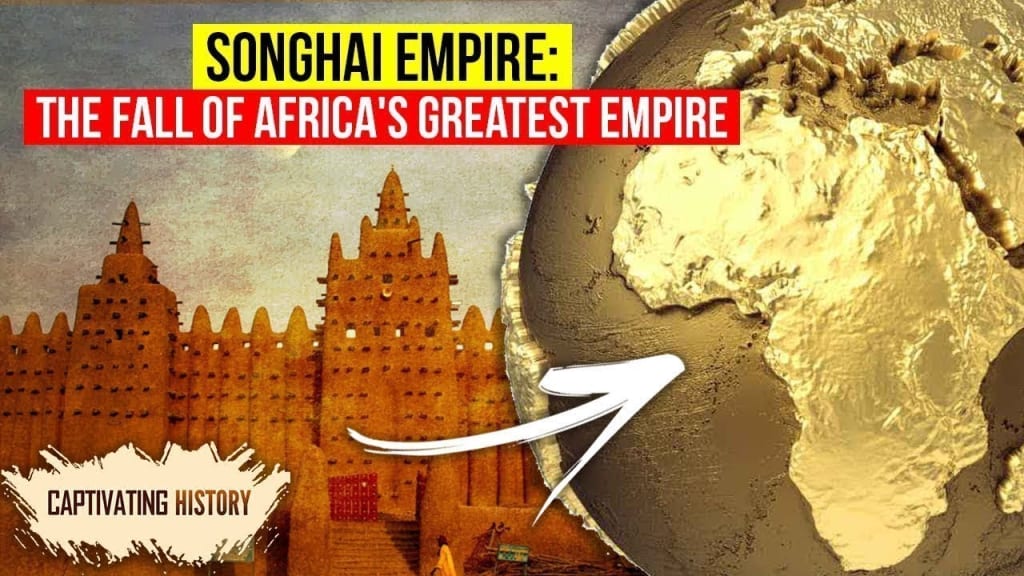
The Songhai Empire (circa 1464–1591) was the largest and last of the three great pre-colonial empires in West Africa. At its height, it controlled vast territories, stretching from the western Atlantic coast deep into the central Sahara. Songhai's success stemmed from its dominance of the trans-Saharan trade routes, effective governance, and strong military. Despite its eventual fall, the Songhai Empire left a lasting legacy in West African history, with centers like Timbuktu and Gao standing as symbols of its wealth, intellectual influence, and Islamic culture.
Origins of the Songhai Empire
The Songhai people first established themselves around Gao, along the Niger River, as early as the 9th century. However, it wasn’t until the mid-15th century, under the leadership of Sunni Ali (r. 1464–1492), that the Songhai transformed from a small kingdom into an expansive empire. Sunni Ali is credited with laying the foundation for Songhai's future greatness by conquering key cities like Timbuktu and Djenne, which were vital for controlling trans-Saharan trade routes.
The Rise of the Songhai Empire
Sunni Ali: The Conqueror
Sunni Ali was a military genius who expanded Songhai’s borders through relentless campaigns. His military tactics—relying on a powerful river navy to control the Niger and skilled cavalry for overland conquests—allowed him to capture strategic cities. Sunni Ali’s rule was marked by centralization and consolidation of power, though he faced opposition from Muslim scholars in cities like Timbuktu, who resented his lack of strict adherence to Islam.
Askia Muhammad: The Golden Age of Songhai
Following Sunni Ali's death in 1492, his successor Askia Muhammad I (also known as Askia the Great) took the throne in 1493 after a brief power struggle. Askia Muhammad is remembered for being both a military and religious reformer. Unlike Sunni Ali, he embraced Islam fully, making it a cornerstone of his administration.
During Askia's reign, Songhai entered its golden age. His policies led to a surge in trade, the expansion of the empire's borders, and a flourishing of Islamic scholarship. By promoting Islamic law (Sharia) and aligning with other Muslim states, Askia ensured that Songhai was a vital part of the broader Islamic world.
Economic Power: Trade as the Lifeblood of Songhai
Control of Trans-Saharan Trade Routes
Songhai's economic might rested on its control of the trans-Saharan trade, particularly the trade routes that connected West Africa to North Africa and Europe. Key commodities like gold, salt, slaves, and kola nuts flowed through Songhai’s cities, making the empire extremely wealthy. Songhai controlled the lucrative gold mines to the south and salt mines in the Sahara, allowing it to dominate regional commerce.
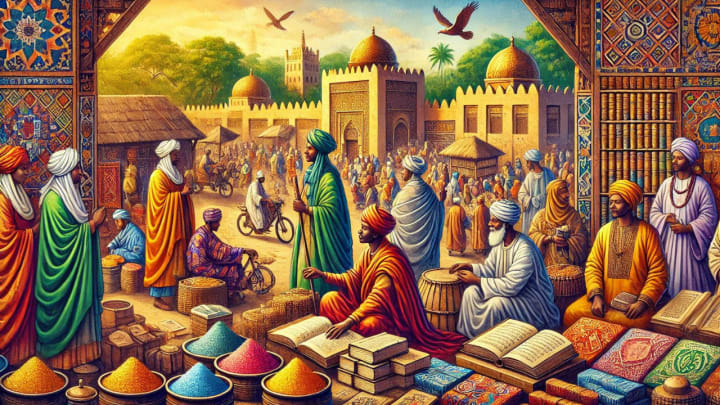
Cities like Timbuktu, Gao, and Djenne were not only centers of trade but also hubs of culture and learning. Timbuktu, in particular, became a major intellectual center during the Songhai Empire, attracting scholars and merchants from across the Islamic world. The famous University of Sankore housed thousands of manuscripts and fostered scholarly activity in the fields of astronomy, mathematics, law, and theology.
Gold, Salt, and Slaves
- Gold: The gold mines near the southern regions of Songhai were among the richest in the world. By controlling this resource, the Songhai Empire became a key supplier of gold to North Africa and Europe.
- Salt: Extracted from the Taghaza mines in the Sahara, salt was a valuable resource for preserving food, and it was traded south in exchange for gold.
- Slaves: Songhai was also involved in the slave trade, which was a crucial part of its economy. Slaves captured in raids were sent across the Sahara to serve in North African and Middle Eastern households, or as laborers in agricultural estates and mines.
Governance and Administration
Askia's Reforms: Centralized Power and Islamic Law
Askia Muhammad’s reign is best known for his administrative reforms, which helped to centralize the empire and solidify its power. He divided Songhai into provinces, each ruled by a governor (called farma), and appointed judges to enforce Islamic law (Sharia) throughout the empire. By standardizing taxation and laws, he ensured the efficient governance of a vast and culturally diverse empire.
Islamic law under Askia brought a degree of unity to Songhai, and his pilgrimage to Mecca (the Hajj) in 1497 enhanced Songhai’s status within the broader Islamic world. During this journey, Askia met the Abbasid Caliph in Cairo and brought back scholars and architects, further cementing Songhai's intellectual and architectural legacy.
Timbuktu: A Hub of Learning and Culture
Timbuktu under Songhai became synonymous with Islamic scholarship. The Sankore Mosque and its associated university were at the heart of intellectual life. Scholars from across the Islamic world flocked to Timbuktu, bringing with them thousands of manuscripts. The libraries of Timbuktu were so vast and important that they still serve as vital historical archives today.
Decline and Fall of the Songhai Empire
Internal Strife and External Threats
By the late 16th century, Songhai was in decline due to a combination of internal strife and external pressures. Succession disputes after Askia Muhammad’s death led to instability, and the once-powerful empire began to fragment. Meanwhile, the growing strength of Moroccan sultan Ahmad al-Mansur threatened Songhai’s dominance over the trans-Saharan trade routes.
The Moroccan Invasion (1591)
In 1591, Morocco, under Ahmad al-Mansur, launched an invasion of Songhai, seeking to control its lucrative gold and salt trade. Armed with gunpowder weapons and cannons, the Moroccan forces easily overpowered the Songhai army at the Battle of Tondibi. The Songhai army, mostly reliant on traditional weapons, could not withstand the superior firepower of the invaders.
The fall of Gao and Timbuktu to the Moroccans marked the end of Songhai as a dominant power. While remnants of the empire continued to exist, the era of great West African empires had come to an end.
The Legacy of the Songhai Empire
Despite its fall, the legacy of the Songhai Empire endures in West African history. The intellectual and cultural achievements of cities like Timbuktu continue to be celebrated, while the administrative systems set up by Askia Muhammad influenced governance in West Africa for centuries. Moreover, the trans-Saharan trade routes established during the height of Songhai’s power continued to shape commerce and cultural exchange in the region long after the empire's demise.
Conclusion
The Songhai Empire was the final and perhaps the most sophisticated of West Africa's great empires. Through its control of trade routes and its embrace of Islamic scholarship, Songhai left a profound mark on the political, economic, and cultural development of the region. Its rise and fall serve as a testament to the complex and vibrant history of pre-colonial Africa, and its contributions to learning and governance remain influential to this day.
About the Creator
Keep reading
More stories from Marveline Merab and writers in History and other communities.
The Trans-Saharan Trade: Shaping West African Empires and the Spread of Islam
Introduction The trans-Saharan trade was a network of trade routes that connected the Mediterranean world with West Africa across the harsh Sahara Desert. Active for over a thousand years, it played a crucial role in the development of West African empires and facilitated the spread of Islam in the region. More than just a network for exchanging goods, trans-Saharan trade routes served as cultural highways that linked African civilizations to the global economy and promoted religious, political, and intellectual exchange.
By Marveline Merababout a year ago in History
Brosley Punch — The Strike That Shook Fate
Brosley was never taught how to throw a punch. He learned it the hard way—through hunger, through survival, through a childhood spent on a world that showed no mercy. Long before the universe would whisper his name in fear, Brosley was just a boy standing on cracked red stone, staring at a sky that never answered his questions.
By The best writer about 3 hours ago in History
Venezuela’s President Under Pressure: Arrest Calls, Indictments, and a Nation at a Crossroads
How the Arrest Narrative Began The idea of arresting Venezuela’s president did not appear out of nowhere. It stems from years of accusations that range from human-rights abuses to corruption and drug-related activities. U.S. authorities have filed formal charges against Nicolás Maduro, linking him to cocaine trafficking networks and large-scale financial misconduct. These cases place him among the few sitting leaders facing active international legal pressure.
By Muhammad Islam khan swati6 days ago in History


Comments
There are no comments for this story
Be the first to respond and start the conversation.