
The Armstrong 100-Ton Gun: The Largest Muzzle-Loading Artillery in British History
How the British 100-Ton Gun Became the Most Powerful Coastal Defense Weapon of the 19th Century

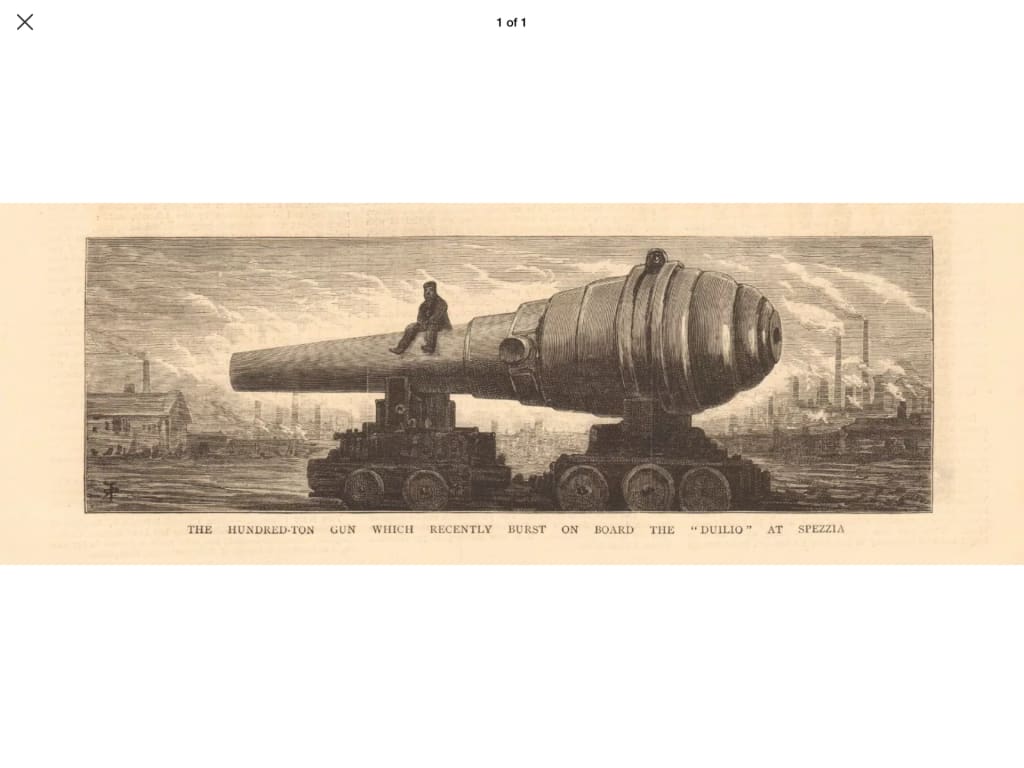
The Armstrong 100-ton gun, developed by the British firm Armstrong Whitworth, holds the title of the largest muzzle-loading artillery piece in British history.
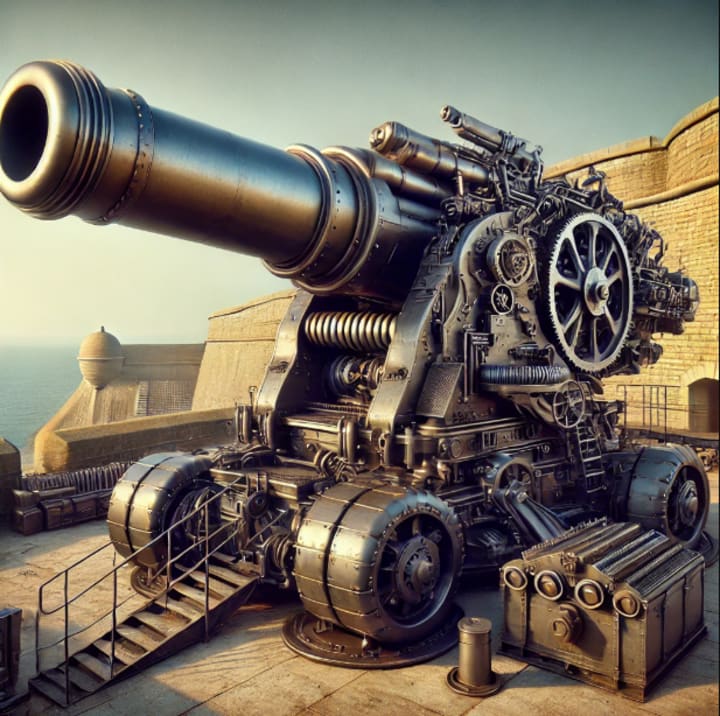
This 17.7-inch gun, introduced in 1870, was considered a marvel of its time and one of the earliest fully automated cannons. Originally designed for the Royal Navy, the gun was ultimately rejected for naval warfare due to its exorbitant cost and considerable weight. However, the gun's impressive firepower and potential threat did not go unnoticed, leading the Italian navy to purchase eight of these formidable weapons a few years later to arm their sister battleships Duilio and Dandolo.
Development and Design
Alarmed by Italy's new naval capabilities, the British Royal Navy quickly responded by ordering four of these massive guns as coastal defense weapons to protect key strategic outposts in Gibraltar and Malta. Each cannon, weighing a staggering 150 tons with its mount, was capable of launching 2,000-pound shells up to five miles using 450 pounds of black powder. The shells came in three types: armor-piercing, high-explosive, and shrapnel, each designed to wreak havoc on enemy ships and fortifications.
The Armstrong 100-ton gun was a technological marvel for its time, equipped with a steam-powered hydraulic system that automated the cleaning, loading, and ramming processes. This level of automation was unprecedented, making the gun one of the most advanced weapons of its era. Despite these advancements, the gun was rarely fired due to its prohibitive cost—each shot cost as much as paying 2,400 infantrymen for a day. The prohibitive expense and logistical challenges of operating such a massive weapon eventually led to its decline in favor of more efficient breech-loading cannons and smokeless propellants by the early 20th century.
Legacy and Preservation
Despite never being fired in combat, the Armstrong 100-ton guns remained in service until 1906. Their imposing presence served as a deterrent and a testament to the technological ambitions of their time. Today, only two examples of these monumental artillery pieces still exist: one at the Rinella Battery in Kalkara, Malta, and another at the Napier of Magdala Battery in Gibraltar. These surviving guns are a significant part of military history and continue to draw the interest of historians and enthusiasts alike.
The Armstrong 100-ton gun's development and deployment highlight a fascinating period in military history where nations were rapidly advancing their military technology. The gun's sheer size and power represent the lengths to which countries would go to secure their defense and project their power. While the Armstrong 100-ton gun ultimately became obsolete, its legacy as a technological marvel and a symbol of an era of grand military engineering endures.
Conclusion
In summary, the Armstrong 100-ton gun stands as a testament to the ingenuity and ambition of late 19th-century military engineering. Although its practical use was limited by its cost and the advent of newer technologies, the gun remains a fascinating piece of history. The surviving examples in Malta and Gibraltar offer a glimpse into the past and a reminder of the ever-evolving nature of military technology.
FAQ
What is the largest artillery piece in history?
The largest artillery piece in history is the Schwerer Gustav, a German railway gun used during World War II. It weighed 1,350 tons and fired 7-ton shells up to 29 miles.
What was the largest muzzle-loading cannon ever made?
The Armstrong 100-ton gun holds the record as the largest muzzle-loading cannon ever made. Its massive 17.7-inch barrel and weight of 150 tons made it the most powerful artillery piece of its time.
What was the British muzzle-loading cannon?
The most famous British muzzle-loading cannon is the Armstrong 100-ton gun, which was used for coastal defense in Gibraltar and Malta.
Who invented the first muzzle-loaded rifle?
The first practical muzzle-loading rifle was invented by August Kotter in the late 16th century. However, Patrick Ferguson later developed one of the first military-usable muzzle-loading rifles in the 18th century.
What was the largest muzzle-loading cannon?
The largest muzzle-loading cannon was the Armstrong 100-ton gun, used by both the British and Italian navies for coastal defense.
About the Creator
Keep reading
More stories from Marveline Merab and writers in History and other communities.
Himmler’s Dark Obsession: How Nazi Germany Tried to Rebrand Witches and Black Magic
Heinrich Himmler, one of the most powerful figures in Nazi Germany and leader of the SS, wasn’t just obsessed with military power—he had a bizarre fixation on occultism. In a strange and misguided project, Himmler tried to reshape the public perception of witches and black magic, turning them from symbols of evil into forces of good. This peculiar initiative became part of Nazi propaganda, woven into official SS ceremonies and rituals. Was this one of Nazi Germany's most outlandish ventures?
By Marveline Merababout a year ago in History
3 Historical Events That Were Ruined by One Incredibly Small Detail
History is shaped by big ideas, brave leaders, and sweeping movements—but sometimes, the tiniest, most overlooked detail changes everything. A forgotten note, a misheard order, or even a misaligned boot can turn a decisive moment into chaos. These micro-errors often seem trivial at the time, but their ripple effects can alter the course of wars, empires, and even the future of entire nations.
By Enoch Sagini3 days ago in History
Pablo Escobar: The Man Who Declared War on Colombia
Pablo Emilio Escobar Gaviria was born on December 1, 1949, in Rionegro, Colombia, and raised in the nearby city of Medellín. He grew up in a modest household, the son of a farmer and a schoolteacher. From an early age, Escobar showed ambition and defiance. He dreamed of power, wealth, and influence—dreams far larger than his surroundings. In a country struggling with inequality and limited opportunity, Escobar believed the rules were written to keep people like him down. Instead of trying to change the system, he chose to dominate it.
By The best writer about 15 hours ago in History




Comments
There are no comments for this story
Be the first to respond and start the conversation.