Irshad Abbasi
Bio
Ali ibn Abi Talib (RA) said 📚
“Knowledge is better than wealth, because knowledge protects you, while you have to protect wealth.
Stories (264)
Filter by community
Horsemen of Empire: A Mongol Legacy
In the windswept plains of Central Asia, beneath the vast sky the Mongols called the "Eternal Blue Sky," rose one of the most formidable forces in human history. The story of the Mongols is not just one of conquest and bloodshed, but also one of resilience, vision, and profound transformation. Their tale has often been told through the fearful lens of their enemies — as ruthless raiders and destroyers. Yet, behind the myth lies a deeper, more nuanced truth: a people forged by harsh land, bound by honor, and led by a man who would change the world — Genghis Khan.
By Irshad Abbasi 9 months ago in History
The Father of Philosophy and Science
Arastu, more widely recognized by the Western world as Aristotle, stands as one of the most influential figures in the history of human thought. His groundbreaking contributions to philosophy, science, and numerous other disciplines earned him the title **"The Father of Philosophy and Science."** Through his intellectual curiosity, rigorous methods, and expansive body of work, Arastu laid the foundational stones upon which much of Western intellectual tradition is built.
By Irshad Abbasi 9 months ago in History
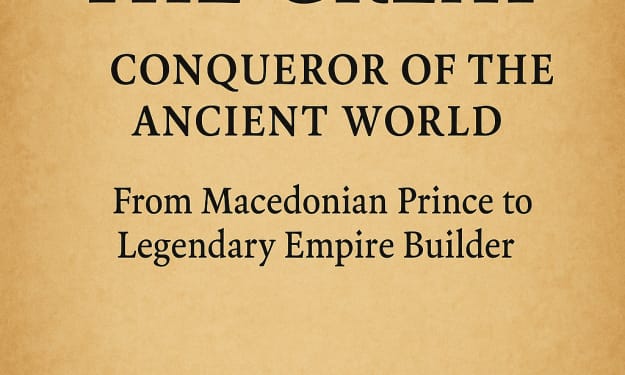
Conqueror of the Ancient World
Born in 356 BCE in Pella, the ancient capital of Macedonia, Alexander III of Macedon—later known as Alexander the Great—emerged as one of history’s most remarkable military commanders and empire builders. His brief yet dazzling life altered the course of civilizations, blending Greek culture with the diverse traditions of Asia and the Middle East. By the age of thirty, Alexander had created one of the largest empires the world had ever seen, stretching from Greece to India.
By Irshad Abbasi 9 months ago in History
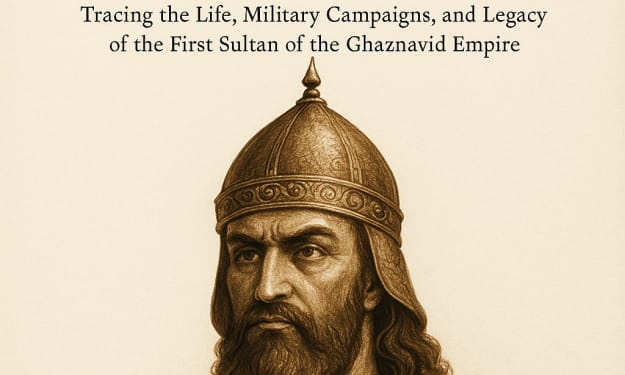
The Conqueror of Empires and Patron of Culture
Mahmud of Ghazni (971–1030 CE), born Yamin ad-Dawlah Mahmud ibn Sebüktegin, was a formidable ruler, warrior, and cultural patron whose influence extended far beyond the borders of his empire. As the first ruler to bear the title “Sultan,” Mahmud's reign marked the formal emergence of Islamic rule in the Indian subcontinent and helped shape the religious, political, and cultural landscape of South and Central Asia.
By Irshad Abbasi 9 months ago in History
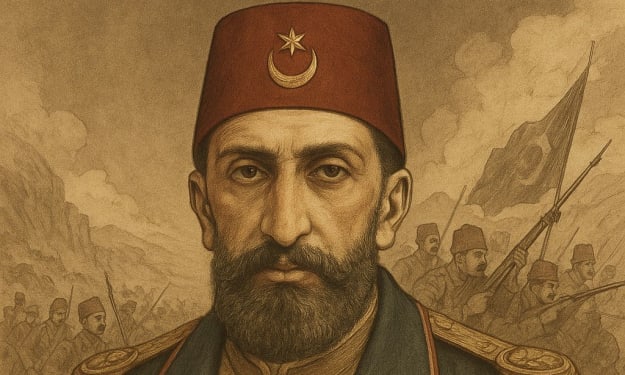
Sultan Abdul Hamid II
Sultan Abdul Hamid II, born on September 21, 1842, in Istanbul, was the 34th Sultan of the Ottoman Empire and the last to wield effective autocratic power. His reign, from 1876 to 1909, was marked by dramatic change, internal strife, foreign pressure, and a fierce struggle to preserve a crumbling empire. A complex figure, he is remembered both as a defender of Islam and the caliphate, and as an authoritarian ruler who ruled with a heavy hand in turbulent times.
By Irshad Abbasi 10 months ago in History
Sultan Mehmed the Conqueror
Sultan Mehmed II, famously known as Mehmed the Conqueror (Fatih Sultan Mehmed), was a visionary ruler whose legacy reshaped the course of world history. Born on March 30, 1432, in Edirne—the then-capital of the Ottoman Empire—he was the fourth son of Sultan Murad II. His early life was steeped in both Islamic education and the arts of governance and warfare, preparing him for an ambitious destiny few could have foreseen: the conquest of Constantinople, the heart of the Byzantine Empire.
By Irshad Abbasi 10 months ago in History
The Lion of Islam and Defender of Jerusalem
Sultan Salahuddin Ayyubi, known in the West as Saladin, was one of the most revered and respected Muslim leaders in history. Celebrated not only for his military genius but also for his chivalry, humility, and justice, Salahuddin rose to power in a time of great turmoil and left a legacy that continues to inspire generations.
By Irshad Abbasi 10 months ago in History
A Life of Strength, Struggle, and Stardom
Bruce Lee was more than a martial artist, more than a movie star—he was a cultural phenomenon who reshaped not only cinema but also global perceptions of Asian identity, philosophy, and physical potential. Born Lee Jun-fan on November 27, 1940, in San Francisco during his father’s opera tour, Bruce spent his early years in Hong Kong. From an early age, he was immersed in performance and conflict—his father was a prominent Cantonese opera star, and Bruce often found himself acting in films and brawling in the streets.
By Irshad Abbasi 10 months ago in History
Iron Will
From humble beginnings in the small village of Thal, Austria, to becoming one of the most recognized and influential figures in the world, Arnold Schwarzenegger's journey is the epitome of ambition, perseverance, and transformation. Born on July 30, 1947, Arnold Alois Schwarzenegger grew up in a strict household led by his father, Gustav, a local police chief and former Nazi party member. Despite the rigid and often harsh upbringing, young Arnold found solace and inspiration in the idea of greatness—an idea that would soon become a lifelong obsession.
By Irshad Abbasi 10 months ago in History
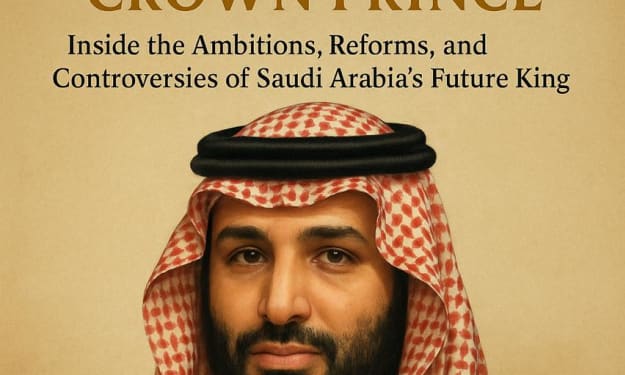
Reforming the Desert Kingdom: The Muhammad bin Salman Era
Muhammad bin Salman Al Saud, widely known as MBS, has emerged as one of the most influential and transformative figures in modern Middle Eastern history. Born on August 31, 1985, in Jeddah, Saudi Arabia, Muhammad bin Salman is the son of King Salman bin Abdulaziz Al Saud and his third spouse, Fahda bint Falah Al Hithlain. As the eldest of his mother’s children and one of many sons of King Salman, MBS's rise to prominence was not preordained, but forged through political maneuvering, ambition, and strategic vision.
By Irshad Abbasi 10 months ago in History
The Visionary King of Saudi Arabia
King Faisal bin Abdulaziz Al Saud, known to the world as Shah Faisal, was a transformative figure in Saudi Arabian and Middle Eastern history. Born in Riyadh in 1906, Faisal was the third son of Abdulaziz Ibn Saud, the founder of the Kingdom of Saudi Arabia. His life spanned a critical period in the evolution of the Arabian Peninsula—from tribal rule to modern statehood—and his reign marked a defining chapter in the political, economic, and religious development of the Islamic world.
By Irshad Abbasi 10 months ago in History
The Rise of a Controversial Leader
Recep Tayyip Erdoğan was born on February 26, 1954, in the working-class neighborhood of Kasımpaşa, Istanbul. His early years were modest and shaped by Turkey’s turbulent politics and the disciplined atmosphere of a conservative Muslim household. His father, a coast guard, instilled in Erdoğan the values of discipline, faith, and hard work—principles that would shape his character and political style.
By Irshad Abbasi 10 months ago in History