Irshad Abbasi
Bio
Ali ibn Abi Talib (RA) said 📚
“Knowledge is better than wealth, because knowledge protects you, while you have to protect wealth.
Stories (217)
Filter by community
The Sacred Cave of Safrawadi: Indonesia’s Mysterious Tunnel to Mecca
Hidden among the lush landscapes and volcanic highlands of Indonesia lies a cave shrouded in mystery, devotion, and folklore. Known locally as “Safrawadi,” this sacred site has become the center of a captivating legend: that deep within its shadowy chambers exists a hidden tunnel leading all the way to Mecca, the holiest city in Islam. While historians and geologists approach the claim with skepticism, for many believers the cave represents something far more profound than a physical passage — it symbolizes spiritual connection, faith, and longing.
By Irshad Abbasi about 4 hours ago in History
A Timeless Tale of Faith, Mystery, and Divine Protection
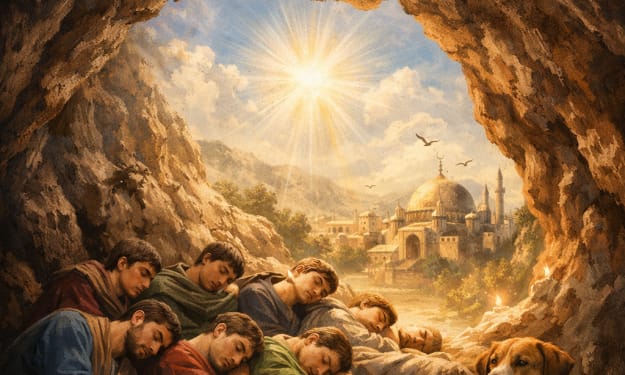
The story of the “Sleepers of the Cave,” known in Islamic tradition as Ashab al-Kahf, is one of the most fascinating and enduring narratives shared between Christianity and Islam. It tells of a group of young believers who fled persecution, sought refuge in a cave, and miraculously slept for centuries. Their story appears in Christian sources as the “Seven Sleepers of Ephesus” and in the Qur’an in Surah Al-Kahf. Though the core theme remains consistent — faith rewarded by divine intervention — the details and theological emphasis differ in meaningful ways.
By Irshad Abbasi about 4 hours ago in History
How False Claims About Bill Gates and COVID-19 Spread Online
The COVID-19 pandemic was one of the most disruptive global events in recent memory. With fear, uncertainty, and rapidly changing science driving public discourse, misinformation spread almost as quickly as the virus itself. Among the many unfounded claims that circulated, one of the most persistent involved Microsoft co-founder Bill Gates — wrongly accused of using the pandemic for personal gain, control, or even population manipulation. But why did such false narratives take hold, and how did Bill Gates become a focal point of COVID-related conspiracy theories?
By Irshad Abbasi about 12 hours ago in Education
The Secret Society That Became a Global Conspiracy Legend
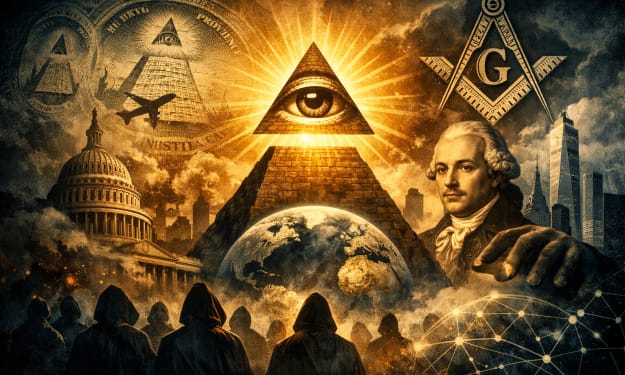
The word “Illuminati” instantly evokes images of shadowy meetings, powerful elites, secret handshakes, and hidden symbols controlling the fate of nations. Over time, the idea of the Illuminati has evolved from a short-lived Enlightenment-era society into one of the most famous conspiracy theories in the world. But what is the truth behind this mysterious name, and how did it grow into a global obsession?
By Irshad Abbasi about 12 hours ago in Horror
The Concept of the Antichrist Across Religions
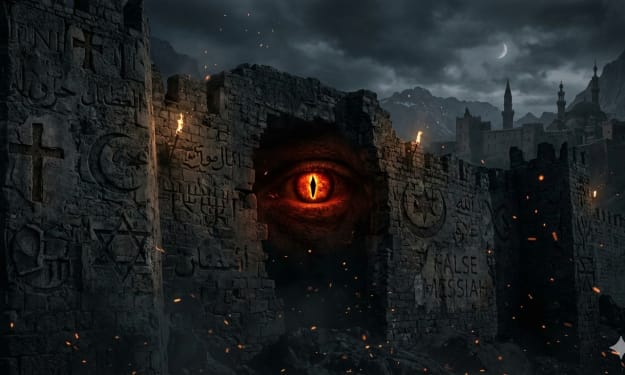
The idea of a deceptive, evil figure who appears near the end of times is a powerful and recurring theme in many religious traditions. In Islam, this figure is known as the Dajjal, while in Christianity and Judaism similar concepts exist under different names and interpretations. Although the details vary, these traditions share common themes of deception, moral testing, and the ultimate triumph of truth over falsehood.
By Irshad Abbasi about 12 hours ago in History
The Lion of Mysore and the Pioneer of Rocket Warfare
Hyder Ali was not just a king; he was a phenomenon. Rising from the humble ranks of an illiterate soldier to become the de facto ruler of the Kingdom of Mysore, he became one of the most formidable challenges the British East India Company ever faced on Indian soil. While history often remembers his son, Tipu Sultan, for his fierce resistance, it was Hyder Ali who laid the strategic, economic, and technological foundations that made Mysore a superpower of the 18th century.
By Irshad Abbasi about 15 hours ago in History
What Seven Soldier Skeletons Reveal About Their Lives.
History is often written by the victors, recorded in ink on parchment that celebrates grand strategies and royal decrees. However, the most honest account of war is frequently found beneath the earth, written in the very bones of those who fought it. When archaeologists uncover a mass grave—such as a recent discovery containing the remains of seven soldiers—they aren't just looking at the end of a life; they are opening a biological diary that spans decades.
By Irshad Abbasi about 19 hours ago in History
From Alexander to America: Afghanistan—Graveyard of Empires or Highway of Conquest?
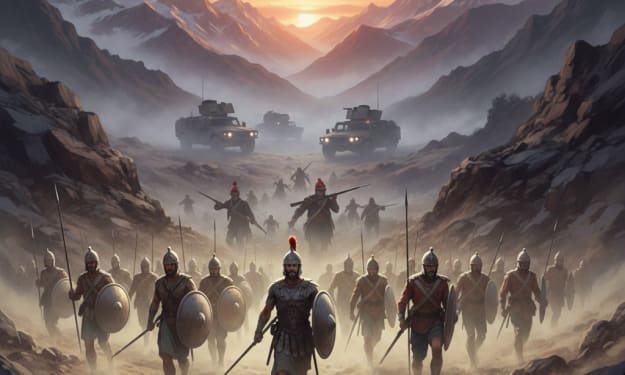
For centuries, the rugged peaks of the Hindu Kush have stood as silent witnesses to the greatest ambitions of mankind. From the bronze shields of Alexander the Great’s phalanxes to the high-tech drones of the United States military, Afghanistan has been the stage for a recurring historical drama. It is often labeled the "Graveyard of Empires," a place where superpowers go to bleed. Yet, a deeper look at history suggests a more complex reality: for many, it was also a "Highway of Conquest," a vital corridor that linked the civilizations of the East and West.
By Irshad Abbasi about 19 hours ago in History
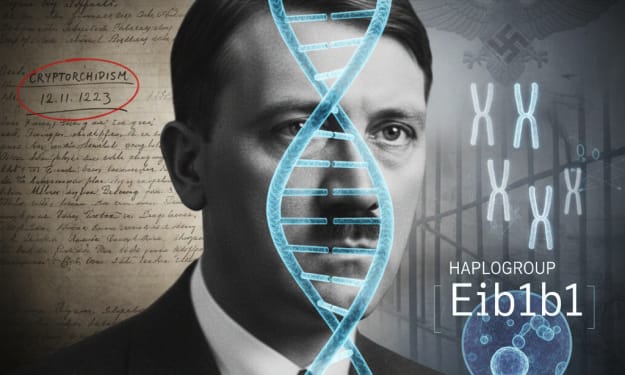
The Hitler Mystery: DNA Secrets and the Century-Old Rumor of the Dictator’s Anatomy
For over eighty years, one of the most persistent pieces of historical trivia has been a schoolyard rhyme and a medical mystery: the claim that Adolf Hitler suffered from a specific physical deformity. While once dismissed as mere British wartime propaganda, modern forensic science, rediscovered medical records, and DNA analysis have reignited the conversation. Was the "one testicle" myth a clever psychological warfare tactic, or was it a medical reality that shaped the psyche of the 20th century’s most notorious tyrant?
By Irshad Abbasi about 20 hours ago in History
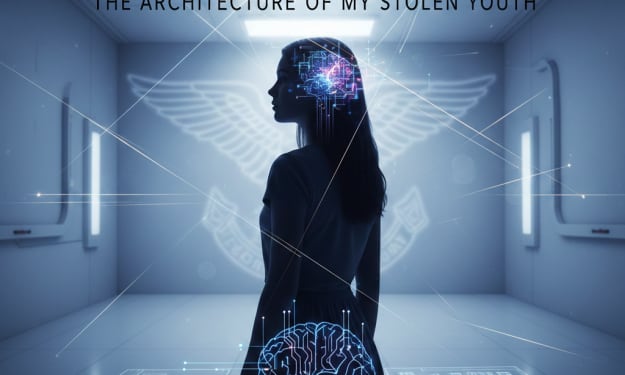
My Life Under CIA Control
How the CIA Used My Mind as a Battlefield—and How I Won It Back In the summer of my sixteenth year, while my peers were learning to drive and obsessing over prom dresses, I was being taught how to disappear. Not physically, but mentally. I was being dismantled, piece by piece, by men in white coats and gray suits who viewed my consciousness not as a human soul, but as a territory to be conquered.
By Irshad Abbasi about 20 hours ago in Horror
A 12-Year-Old’s Descent from Urban Legend to Attempted Murder
In the quiet suburbs of Waukesha, Wisconsin, in May 2014, a story emerged that seemed more like a horror movie plot than a police report. Three 12-year-old girls went into the woods to play, but only two walked out willingly. The third, Payton Leutner, was left bleeding from 19 stab wounds, the victim of a calculated sacrifice intended to please a fictional internet character known as Slender Man.This case remains one of the most disturbing examples of how the digital world can bleed into reality, blurring the lines between childhood imagination and dangerous delusion.The Myth of Slender ManTo understand why two pre-teens would commit such an atrocity, one must understand the "deity" they served. Slender Man originated in 2009 on the Something Awful forums as a "Creepypasta"—a type of internet horror legend. He is depicted as a tall, faceless man in a black suit with tentacle-like appendages.For most, he was a fun, spooky story. But for Anissa Weier and Morgan Geyser, he was terrifyingly real. They believed that in order to become his "proxies" and protect their families from his wrath, they had to kill someone.The Day of the AttackThe plan was orchestrated over several months. On May 31, 2014, following a birthday sleepover, Morgan and Anissa lured Payton into a local park under the guise of playing hide-and-seek. Once in the woods, the situation turned graphic.Morgan Geyser carried out the physical attack, stabbing Payton 19 times with a five-inch kitchen knife while Anissa encouraged her. The blade missed Payton’s heart by less than a millimeter—a distance described by doctors as the "width of a human hair."After the attackers fled, Payton displayed incredible resilience. Despite her life-threatening injuries, she crawled out of the woods toward a nearby bike path, where a passerby discovered her and called 911.The Legal and Psychological AftermathThe case ignited a global conversation about the impact of the internet on developing minds. Both girls were charged with first-degree intentional homicide, but their defense teams argued they were not monsters, but children suffering from severe mental health issues.The FindingsMorgan Geyser: Diagnosed with early-onset schizophrenia. She truly believed Slender Man would kill her family if she didn't act.Anissa Weier: Diagnosed with shared delusional disorder (folie à deux), meaning she had been drawn into Morgan’s delusions until they became her own reality.Ultimately, both girls were found not guilty by reason of mental disease or defect. Morgan was sentenced to 40 years in a psychiatric institute, while Anissa received 25 years. Anissa was released under strict supervision in 2021, while Morgan remains under institutional care.Lessons from a Digital TragedyThe Slender Man stabbing serves as a grim reminder of the "echo chamber" effect of the internet. For these girls, the more they read about the myth, the more evidence they found to support its existence."I believed that if I didn't do it, Slender Man would come and kill my whole family in three seconds." — Morgan Geyser during police interrogation.This case forced parents and educators to realize that the "monsters" children find online aren't always just digital images; they can become psychological catalysts for real-world harm. It highlighted the desperate need for better mental health screening in schools and a more nuanced understanding of how children process online folklore.Conclusion: Survival and ResilienceWhile the story is often centered on the attackers and the myth, the true hero is Payton Leutner. Her survival was nothing short of miraculous. In later years, Payton spoke out, showing remarkable strength and a refusal to be defined by the 19 scars she carries.The Slender Man case stands as a cautionary tale for the digital age—a reminder that while the internet is a place of infinite creativity, for the vulnerable, it can also be a place where the shadows grow far too long.
By Irshad Abbasi about 20 hours ago in Horror
The Jewel of the Earth: How the Kaaba Shines Like a Diamond from Space
In the vast, silent expanse of the cosmos, where the Earth appears as a delicate blue marble against the infinite black of the universe, certain landmarks stand out with unexpected brilliance. Recently, a series of high-resolution images captured from the International Space Station (ISS) and advanced satellite arrays have left the global community in awe. The focal point? Masjid al-Haram in Mecca. From hundreds of miles above, the "House of Allah" does not just appear as a building; it radiates a piercing, crystalline glow, resembling a diamond set into the heart of the desert.
By Irshad Abbasi about 20 hours ago in Earth