
The Rise of a Controversial Leader
How One Man Reshaped Turkish Politics and Polarized a Nation

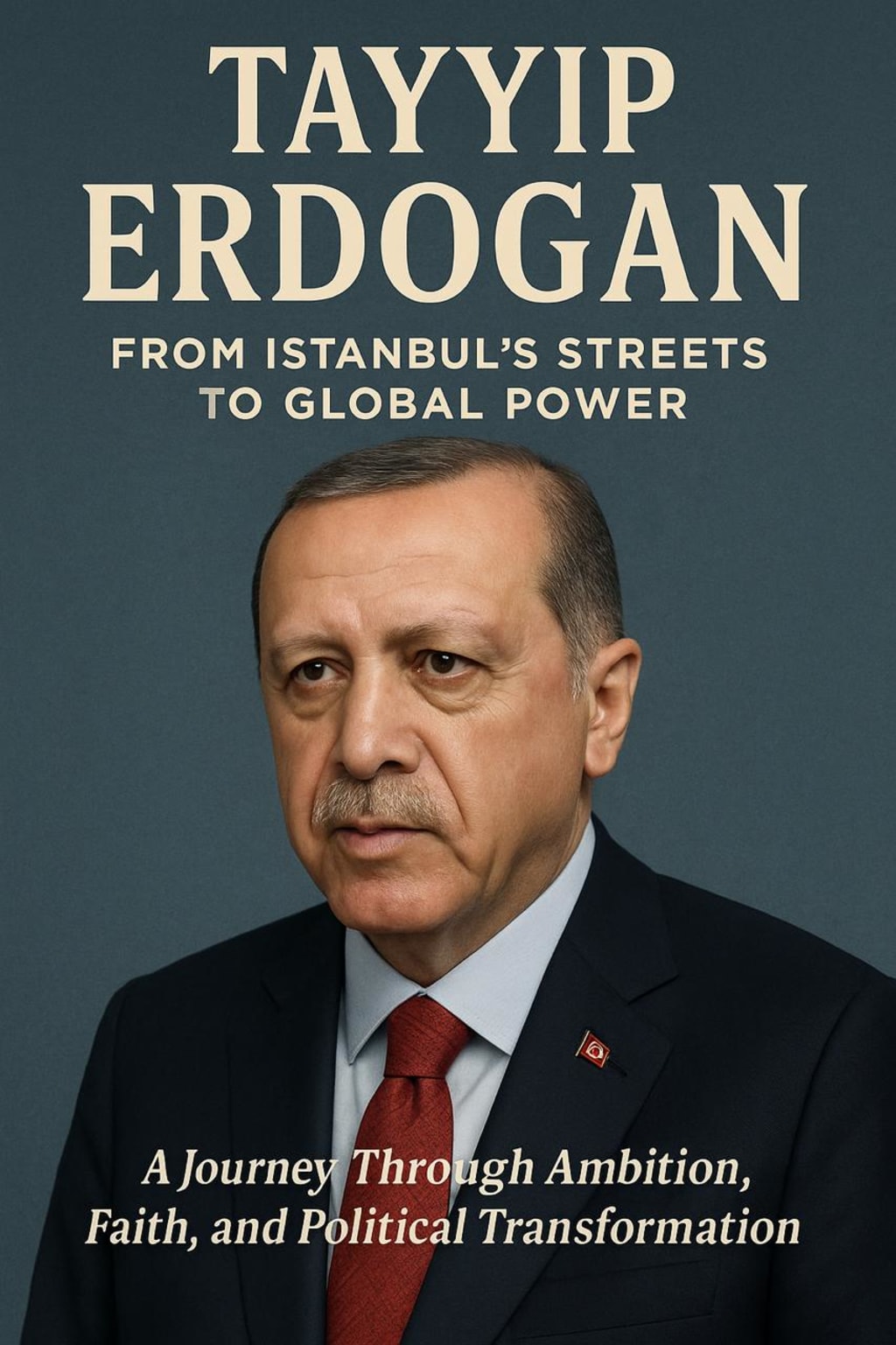
Recep Tayyip Erdoğan was born on February 26, 1954, in the working-class neighborhood of Kasımpaşa, Istanbul. His early years were modest and shaped by Turkey’s turbulent politics and the disciplined atmosphere of a conservative Muslim household. His father, a coast guard, instilled in Erdoğan the values of discipline, faith, and hard work—principles that would shape his character and political style.
Growing up in a time of political instability, Erdoğan was deeply influenced by the contrast between the secular republican order and the traditional Islamic values that permeated Turkish society. As a young man, he found an outlet in religious student circles and also gained recognition as a talented footballer. While his athletic career never materialized professionally, it helped him build leadership qualities and resilience—traits that would become essential in his political journey.
Erdoğan studied business administration at Istanbul’s Marmara University, where he began engaging more actively in political causes. It was during this time that he joined the National Turkish Student Association, a platform for conservative students, and began aligning with the ideals of political Islam. He later became involved with the Islamist National Salvation Party, led by Necmettin Erbakan, who would later become his mentor.
In the early 1990s, Erdoğan’s political ascent gained traction when he became the mayor of Istanbul in 1994, representing the Welfare Party. As mayor, he proved to be an efficient and pragmatic administrator. He tackled the city's chronic water shortages, improved garbage collection, and developed public transportation systems. Despite his religious background, he focused on tangible civic improvements rather than ideological disputes, earning respect across a wide demographic.
However, Erdoğan’s growing influence and his Islamic rhetoric soon clashed with Turkey’s staunchly secular establishment. In 1998, he was arrested and sentenced to ten months in prison (of which he served four) for reciting a nationalist poem that was interpreted as inciting religious hatred. The conviction led to his temporary ban from politics. Ironically, this period of adversity increased his popularity, painting him as a victim of an inflexible secular elite and a symbol of the silenced conservative majority.
Following the dissolution of the Welfare Party, Erdoğan and his allies founded the Justice and Development Party (AKP) in 2001, presenting it as a moderate, conservative democratic party. This rebranding was strategic—it sought to distance itself from the confrontational Islamist stance of earlier parties while still appealing to the religious electorate. In the 2002 general elections, the AKP won a landslide victory, capitalizing on public frustration over economic mismanagement and political corruption.
Although initially barred from serving due to his prior conviction, Erdoğan soon entered Parliament via a by-election in 2003 and became Prime Minister. His first years in power were marked by pro-European Union reforms, economic liberalization, and a commitment to democratic principles. Under his leadership, Turkey experienced impressive economic growth, dramatic infrastructure development, and increased visibility on the international stage.
Yet, as his grip on power tightened, Erdoğan’s leadership style began to shift. Once hailed as a reformist, he gradually adopted a more authoritarian tone. Critics accused him of undermining judicial independence, curbing press freedoms, and centralizing authority. His government's response to the Gezi Park protests in 2013—a grassroots environmental movement that evolved into nationwide anti-government demonstrations—marked a turning point. The brutal police crackdown on protesters drew international condemnation and highlighted the growing divide between Erdoğan’s government and liberal urban voters.
The following years saw Turkey engulfed in a series of crises: a failed peace process with the Kurdish population, increasing terrorist attacks, and worsening relations with Western allies. In July 2016, a faction within the Turkish military attempted a coup against Erdoğan’s government. The coup was swiftly defeated, but it provided Erdoğan with the political capital to launch an unprecedented purge of military officers, judges, civil servants, journalists, and academics suspected of disloyalty. Over 100,000 people were detained or dismissed in the aftermath.
In 2017, Erdoğan pushed for and won a constitutional referendum that drastically changed Turkey’s political system. The parliamentary model was replaced with a presidential one, consolidating executive power in the hands of the president. He was re-elected under the new system in 2018, making him the most powerful Turkish leader since Mustafa Kemal Atatürk, the founder of modern Turkey.
On the global stage, Erdoğan positioned Turkey as a regional power willing to pursue independent and often unpredictable foreign policy. His assertive stance in Syria, the Eastern Mediterranean, and relations with NATO and Russia showcased a leader who balanced diplomacy with calculated defiance. While some praised his efforts to make Turkey a sovereign actor, others viewed his maneuvers as destabilizing.
Despite mounting economic challenges, including inflation, currency devaluation, and rising unemployment, Erdoğan maintained a strong support base. His appeal to conservative, rural, and religious communities remained intact, thanks to a combination of welfare programs, religious rhetoric, and identity-based politics. At the same time, his critics decried increasing polarization and suppression of dissent.
By 2023, Erdoğan had been in power for over two decades—a remarkable feat in a country known for political volatility. That year, he secured another term in a highly contested presidential election. His enduring success could be attributed to a unique mix of charisma, strategic populism, religious symbolism, and ruthless pragmatism. Whether seen as a champion of the voiceless or an authoritarian ruler, Erdoğan undeniably reshaped Turkish politics.
From the gritty neighborhoods of Istanbul to the grand halls of global summits, Tayyip Erdoğan's life reflects a profound transformation—not only of a man but of a nation. His journey embodies the struggles between secularism and Islamism, democracy and authoritarianism, tradition and modernity. He remains a polarizing figure: to his supporters, a visionary leader who restored Turkey’s dignity; to his detractors, a power-hungry autocrat who eroded its democracy.
What cannot be disputed, however, is Erdoğan’s impact. In navigating the shifting tides of Turkish society, domestic crises, and global diplomacy, he emerged not just as a survivor of political storms, but as a master of them.
As Turkey continues to wrestle with the legacy of his leadership, Erdoğan’s story stands as a powerful testament to the possibilities—and perils—of ambition and conviction in modern politics.
About the Creator
Irshad Abbasi
Ali ibn Abi Talib (RA) said 📚
“Knowledge is better than wealth, because knowledge protects you, while you have to protect wealth.
Keep reading
More stories from Irshad Abbasi and writers in History and other communities.
Osman I
Osman I, also known as Osman Gazi, was the founder of the Ottoman Empire and the patriarch of one of the most powerful dynasties in history. Rising from humble tribal origins in 13th-century Anatolia, he established a state that would grow into a vast empire lasting over six centuries. His leadership, military vision, and political insight laid the groundwork for a new Islamic power that would influence the world for generations.
By Irshad Abbasi 10 months ago in History
The Year 1974 in Review: Fun Facts, Trivia, and Historic Highlights
This quick read is a collection of fun facts, trivia, and historic events from the year 1974. Discover the year’s top news stories, most influential people, sports trivia, the cost of living, retail prices, entertainment news, and much more.
By Gregory DeVictor4 days ago in History
My First Time Skiing and I Got Lost, Alone, in the French Alps
Looking back, I can trace some of my life’s biggest adventures to a simple action from my sister. She’d introduced me to Tommy (a very long time ago), a colleague of hers, who had overshared his penchant for Italian-looking women, and I ticked that box.
By Chantal Christie Weissabout 4 hours ago in Humans


Comments
There are no comments for this story
Be the first to respond and start the conversation.