
Reforming the Desert Kingdom: The Muhammad bin Salman Era
The Rise of a Crown Prince

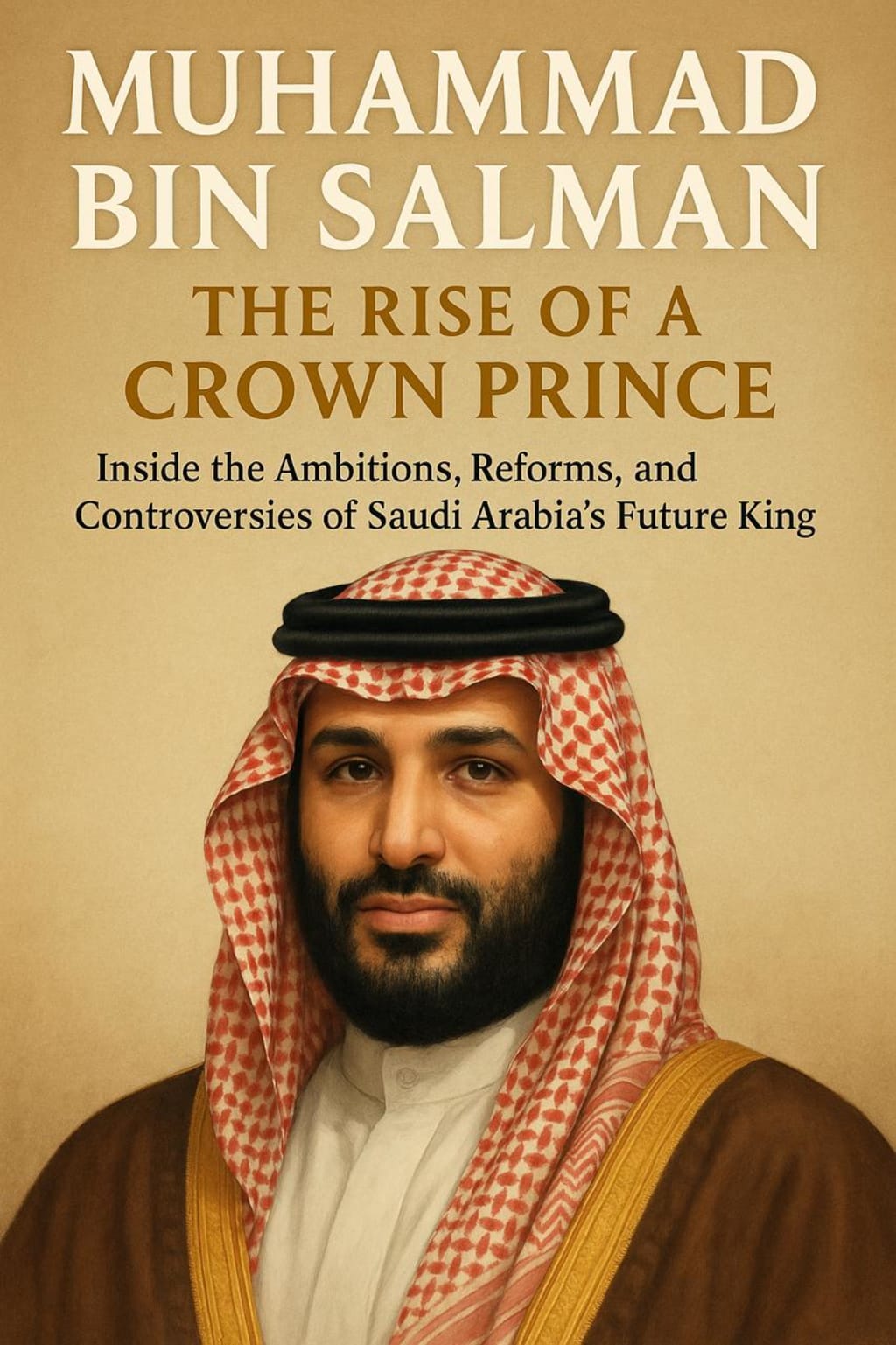
Muhammad bin Salman Al Saud, widely known as MBS, has emerged as one of the most influential and transformative figures in modern Middle Eastern history. Born on August 31, 1985, in Jeddah, Saudi Arabia, Muhammad bin Salman is the son of King Salman bin Abdulaziz Al Saud and his third spouse, Fahda bint Falah Al Hithlain. As the eldest of his mother’s children and one of many sons of King Salman, MBS's rise to prominence was not preordained, but forged through political maneuvering, ambition, and strategic vision.
Raised in a wealthy but strictly conservative environment, Muhammad bin Salman was educated in Riyadh and later earned a law degree from King Saud University. His early interests in governance and business were shaped by observing his father, then governor of Riyadh Province, who played a key role in Saudi Arabia’s urban and economic expansion during the latter half of the 20th century. This upbringing offered MBS early exposure to the intricacies of leadership and governance within the Saudi system.
His formal entrance into politics began in 2009 when he served as a special advisor to his father. However, it wasn't until 2015, when King Salman ascended the throne, that MBS's rise accelerated dramatically. In a matter of months, Muhammad bin Salman was appointed Minister of Defense, head of the Royal Court, and later, Deputy Crown Prince. These moves shocked much of the Saudi elite and international observers, many of whom were unaccustomed to such rapid consolidation of power in a kingdom known for slow and calculated succession planning.
MBS’s ascent represented a generational shift in Saudi leadership. Unlike his older uncles and cousins, many of whom were trained in Western military academies or long-held bureaucratic roles, MBS portrayed himself as a bold reformer and visionary. His flagship initiative, **Vision 2030**, launched in 2016, outlined an ambitious plan to diversify the Saudi economy away from oil dependence, promote the private sector, and modernize the Kingdom’s social fabric. The plan included major infrastructure projects, the partial privatization of Saudi Aramco, and a renewed emphasis on tourism, technology, and entertainment.
Part of his reformist image included high-profile decisions that had long been considered taboo in the ultraconservative kingdom. In 2017, MBS lifted the longstanding ban on women driving, a move heralded by much of the international community. He also curtailed the powers of the religious police, introduced cinemas, and began to open up the kingdom's cultural space. These reforms appealed especially to the youth—nearly 70% of Saudis are under the age of 35—who had grown up in a hyper-conservative society with limited outlets for expression and mobility.
However, Muhammad bin Salman’s rule has also been marked by intense controversy. In 2017, under the banner of anti-corruption, he orchestrated a sweeping purge of royal family members, businessmen, and officials, many of whom were detained at the Ritz-Carlton hotel in Riyadh. Critics argued that this was less about corruption and more about consolidating his own power by sidelining rivals. Some detainees were reportedly coerced into financial settlements, and the episode sent a chilling message to the kingdom's elite.
His foreign policy has been assertive and, at times, aggressive. MBS led Saudi Arabia’s intervention in Yemen in 2015, aiming to restore the internationally recognized government against Houthi rebels. The conflict has since evolved into one of the world’s worst humanitarian crises, attracting widespread condemnation. The blockade of Qatar in 2017, which lasted for more than three years, and tensions with Iran further reflected MBS’s muscular foreign policy stance.
The most damaging blow to his international image came in 2018 with the murder of journalist Jamal Khashoggi in the Saudi consulate in Istanbul. A longtime critic of the Saudi regime, Khashoggi’s death led to global outrage. Western intelligence agencies, including the CIA, concluded that MBS likely ordered the killing or was at least aware of the operation. Although he denied direct involvement, the incident significantly tarnished his reputation, especially among Western allies and human rights organizations.
Despite this, MBS has maintained and even expanded relationships with global powers. He has courted massive investments from the U.S., China, and Russia, while forging closer economic ties with India and other Asian nations. His leadership of the Public Investment Fund (PIF), now valued at over \$700 billion, has made him a key figure in global finance. Projects like NEOM—a \$500 billion futuristic city on the Red Sea coast—symbolize his ambition to position Saudi Arabia as a global innovation hub.
Domestically, MBS’s popularity remains mixed. Among younger Saudis, especially in urban centers, he is often seen as a modernizer breaking the rigid molds of the past. For many older Saudis and religious conservatives, his rapid reforms have been unsettling. Political dissent is tightly controlled, and there has been little progress in terms of democratic governance or press freedom. Critics argue that MBS has replaced the old system of consensus-driven monarchy with a more autocratic, centralized rule under his command.
Yet, there’s no denying the sheer scale of change he has initiated. Saudi Arabia today is starkly different from the kingdom of just a decade ago. Women participate more openly in the workforce and public life. Cultural festivals, concerts, and sporting events now attract global attention. International tourists are welcomed. The once-unquestionable dominance of clerical influence has been curbed.
As Crown Prince and de facto ruler, Muhammad bin Salman continues to shape the trajectory of not only Saudi Arabia but also the wider Middle East. His leadership is defined by contradictions—reformer and authoritarian, visionary and controversial, modernizer and monarch. The ultimate legacy of MBS will likely depend on the long-term success of his reforms and his ability to balance modernization with stability, ambition with restraint.
In a region where leadership is often shaped by lineage more than merit, Muhammad bin Salman has defied traditional paths to power. Whether he becomes the architect of a new Saudi Arabia or a cautionary tale of unchecked ambition, his rise remains one of the most significant and closely watched political transformations of the 21st century.
About the Creator
Irshad Abbasi
Ali ibn Abi Talib (RA) said 📚
“Knowledge is better than wealth, because knowledge protects you, while you have to protect wealth.
Keep reading
More stories from Irshad Abbasi and writers in History and other communities.
The Visionary King of Saudi Arabia
King Faisal bin Abdulaziz Al Saud, known to the world as Shah Faisal, was a transformative figure in Saudi Arabian and Middle Eastern history. Born in Riyadh in 1906, Faisal was the third son of Abdulaziz Ibn Saud, the founder of the Kingdom of Saudi Arabia. His life spanned a critical period in the evolution of the Arabian Peninsula—from tribal rule to modern statehood—and his reign marked a defining chapter in the political, economic, and religious development of the Islamic world.
By Irshad Abbasi 10 months ago in History
The Year 1995 in Review: Fun Facts, Trivia, and Historic Highlights
This quick read is a collection of fun facts, trivia, and historic events from the year 1995. Discover the year’s top news stories, most influential people, sports trivia, retail prices, Internet news, and much more.
By Gregory DeVictor6 days ago in History



Comments
There are no comments for this story
Be the first to respond and start the conversation.