Ikram Ullah
Stories (148)
Filter by community
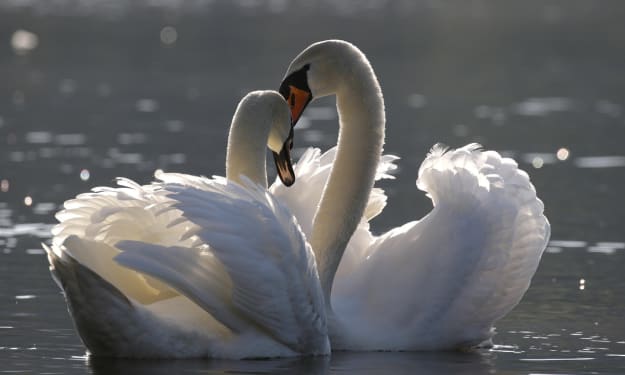
Swans: The Majestic Symbols of Grace, Survival, and Myth
Introduction: The Allure of the Swan Swans have captivated humanity for millennia. With their snow-white plumage, serpentine necks, and ethereal presence, they embody elegance and mystery. But beyond their beauty lies a story of ecological resilience, cultural symbolism, and surprising scientific quirks. From Greek myths to modern conservation triumphs, swans are far more than just "pond ornaments." Let’s dive into their world.
By Ikram Ullah10 months ago in Earth
"You Will Die Alone": Daughter Confronts Father in French Court Over Orchestrated Rapes of Wife
Husband Allegedly Arranged Wife's Rape by Strangers: “You Will Die Alone,” Daughter Confronts Father in Court When a man in France was accused of allegedly arranging the rape of his wife by strangers, his daughter shouted at him in open court, “You will die alone like a dog,” plunging the courtroom into complete silence.
By Ikram Ullah10 months ago in Criminal
The Prince Who Would Be King: Power, Oil, and the Art of Control
Oil, Power, and a $450 Million Picture: The Story of Saudi Crown Prince 'MBS' from Obscurity to Ascendancy In January 2015, Saudi Arabia's 90-year-old King Abdullah was nearing death in a hospital, and his half-brother Salman was poised to become king. At the same time, his favorite son, Mohammed bin Salman, was preparing for a power grab. Saudi Prince Mohammed bin Salman, also known as 'MBS,' at just 29 years old, had plans for some of the grandest projects in Saudi Arabia's history. But he feared that conspirators within the Saudi royal family might act against him. So, one night that month, he summoned a senior security officer to his palace to secure his loyalty. The security officer, Saad al-Jabri, was told to leave his mobile phone on a table outside, and MBS did the same. Now, they were alone. The prince was so fearful of palace spies that even the sole landline telephone was disconnected. According to al-Jabri, during their conversation, MBS described how he would awaken his kingdom from its deep slumber and give it its rightful place on the global stage. By selling shares in Aramco, the world's most profitable company, he would begin to wean the economy off its dependence on oil. He would invest billions of dollars in Silicon Valley tech startups, including the taxi company Uber. Then, he would create 6 million new jobs by freeing Saudi women to join the workforce. A surprised al-Jabri asked MBS about the scope of his ambitions, to which he replied, "Have you heard of Alexander the Great?" MBS then ended the conversation. The meeting, which was supposed to last half an hour, began at midnight but stretched to nearly three hours. When al-Jabri left the room, he found multiple missed calls on his mobile phone from other government colleagues, who were worried about his prolonged absence. Our documentary team, which has been working for the past year, has spoken to Saudi friends and opponents of MBS, as well as senior Western spies and diplomats. The Saudi government was offered the opportunity to respond to the claims made in the BBC film and this article. However, they did not respond. Saad al-Jabri was a high-ranking official in the Saudi security apparatus, with friendships extending to the heads of the CIA and MI6. The Saudi government has labeled Jabri a disgraced former official, but he is also one of the most informed Saudi dissidents who has dared to speak about how Crown Prince Mohammed bin Salman rules Saudi Arabia. His interviews provide us with some startling details. By gaining access to many who know the prince personally, we have shed light on the events that led to MBS's rise and influence, including the 2018 murder of Saudi journalist Jamal Khashoggi and the start of the devastating war in Yemen. Due to his father's frailty, the 38-year-old Prince Mohammed bin Salman is the de facto ruler of the land where Islam originated and is now the world's largest oil exporter. He has begun implementing many of the key projects he outlined to Saad al-Jabri. He has also been accused of human rights abuses, including suppressing freedom of expression, widespread use of the death penalty, and imprisoning women's rights activists. A Rocky Start The first king of Saudi Arabia fathered at least 42 sons, including MBS's father, Salman. The crown has traditionally passed among these sons. In 2011 and 2012, when two of them suddenly died, Salman was promoted in the line of succession, bringing him closer to power. Western intelligence agencies keep a close eye on the Saudi royal family to determine who will be the next king. At the time, MBS was so young and unknown that he was not even on their radar. Sir John Sawers, who headed MI6 until 2014, says, "He grew up in relative obscurity. He was not being groomed for high office." The crown prince's upbringing in a palace with few consequences for bad behavior explains his tendency to act without considering the repercussions of his decisions. MBS first gained notoriety in Riyadh in his late teens, earning the nickname 'Abu Rasasa' or 'Father of the Bullet.' He reportedly sent a bullet in the mail to a judge who ruled against him in a property dispute. Sir John Sawers says, "There's a certain ruthlessness to him. He doesn't like being crossed. But he's been able to bring about changes that no other Saudi leader could." The former MI6 chief says one of the most welcome changes is the cutting of Saudi funding for foreign mosques and religious schools that became breeding grounds for Islamic jihad. MBS's mother, Fahda, is a Bedouin tribal woman and is considered his father's favorite among his four wives. Western diplomats believe the king has suffered from vascular dementia for many years, and MBS was the son he turned to for help. Several diplomats recall their meetings with MBS and his father, noting that the prince would write notes on an iPad and then send them to his father's iPad for him to read out as answers. Lord Kim Darroch, national security advisor to British Prime Minister David Cameron, recalls, "I wonder if MBS was writing the sentences for his father." The prince was apparently so eager for his father to become king that in 2014, he reportedly suggested assassinating the then-king Abdullah with a poisoned ring obtained from Russia. Jabri says, "I can't say for sure if he was serious, but we took it seriously." The former senior security official says he has seen a secretly recorded video in which MBS discusses this. "For a long time, he was banned from court and from shaking hands with the king." Some time later, the king died of natural causes, allowing his brother Salman to ascend the throne in 2015. MBS was appointed defense minister and wasted no time in starting a war. The War in Yemen Two months later, the prince led the Gulf coalition's assault against the Houthi movement, which had seized much of western Yemen and which he saw as a proxy for Saudi Arabia's regional rival, Iran. The war triggered a humanitarian catastrophe, pushing millions to the brink of famine. Sir John Jenkins, the British ambassador before the war began, says, "It was not a sensible decision. A senior US military commander told me they were given 12 hours' notice of the campaign, which is unheard of." The military campaign helped transform a little-known prince into a Saudi national hero. However, even his friends believe it was the first of many major mistakes. A pattern emerges in his behavior, such as MBS's tendency to dismantle the traditionally slow Saudi decision-making system, preferring to act unpredictably or emotionally, and refusing to bow to the US or be treated as the leader of a backwater state. Jabri accuses MBS of issuing forged royal decrees in his father's name. Jabri says he discussed the Yemen war at the White House before it began, and President Obama's national security advisor, Susan Rice, warned him that the US would only support an air campaign. However, Jabri claims that MBS was so determined to push forward in Yemen that he ignored the Americans. Jabri says, "We were surprised that a royal decree was issued allowing ground intervention. He forged his father's signature on that decree. The king's mental capacity was deteriorating." Jabri says his source for this allegation was "reliable and trustworthy" and came from the Interior Ministry, where he was chief of staff. Jabri recalls the CIA station chief in Riyadh at the time being so angry that MBS had ignored the Americans. He added that the attack on Yemen should never have happened. Former MI6 chief Sir John Sawers says that while he doesn't know if MBS forged documents, "it's clear that the decision to militarily intervene in Yemen was MBS's, not his father's, though he may have been brought along." We have learned that MBS never saw himself as part of the system. He believed he was a young man who wanted to do a lot and that he didn't follow anyone else's rules. Kristen Fontenrose, who served on US President Donald Trump's National Security Council, says that when she read the CIA's psychological profile of the prince, she felt something was missing. She says, "He had unlimited resources. He was never told 'no.' He's the first young leader to reflect a generation that, frankly, most of us in government didn't understand." He Made His Own Rules In 2017, MBS purchased a famous painting that reveals how he thinks. He is willing to take any risk in a religiously conservative society. Above all, he wants to outdo the West in a show of power. In 2017, a Saudi prince reportedly working for MBS spent $450 million on the painting 'Salvator Mundi,' the most expensive artwork ever sold. The painting, by Leonardo da Vinci, depicts Jesus as the ruler of heaven and earth and the savior of the world. It has been completely missing for nearly seven years since the auction. Bernard Haykel, a friend of the crown prince and a professor of Near Eastern Studies at Princeton University, says that despite rumors that the painting hangs on the prince's yacht or in his palace, it is actually stored in Geneva, and MBS intends to hang it in a museum in the Saudi capital that has yet to be built. Haykel said that MBS had said, "I want to build a very big museum in Riyadh, and I want an anchor object that will attract people like the Mona Lisa." Similarly, his sports plans reflect someone determined and fearless to disrupt the environment. Saudi Arabia won the uncontested bid to host the 2034 FIFA World Cup. They have invested hundreds of millions of dollars in hosting tennis and golf tournaments, a practice known as 'sports washing.' But he is a leader who doesn't care what the West thinks of him; he does the opposite. He will do anything to make himself and Saudi Arabia great. Former MI6 chief Sir John Sawers says, "MBS is interested in building his own power as a leader. And the only way to do that is to increase the power of his country. That's what drives his actions." Jabri's 40-year career as a Saudi official could not withstand MBS's rise to power. As chief of staff to former Crown Prince Mohammed bin Nayef, he fled the kingdom when foreign intelligence services told him he was "in danger" after MBS took office. But Jabri says MBS unexpectedly messaged him, offering him his old job back. Jabri says, "It was a trap, and I didn't fall for it." He believes that if he had returned, he would have been tortured, imprisoned, or killed. As were his teenage children, Omar and Sarah. They were detained and later jailed on charges of money laundering and attempting to flee. They deny the allegations. Jabri says, "They planned to kill me. They won't rest until they see me dead. I have no doubt about that." Saudi authorities have issued Interpol notices for Jabri's extradition from Canada, but they have been unsuccessful. They claim he is wanted for embezzling billions of dollars during his time at the Interior Ministry. However, he was awarded the rank of major general, and the CIA and MI6 credited him with helping to prevent al-Qaeda terrorist attacks. Khashoggi's Murder It is very difficult to prove MBS's innocence in the 2018 murder of journalist Jamal Khashoggi at the Saudi consulate in Istanbul. The 15-member hit squad traveled on diplomatic passports and included several of MBS's own bodyguards. Khashoggi's body was never found, and it is believed that his bones were dismembered. Shortly after the murder, Professor Haykel exchanged WhatsApp messages with MBS. Recalling their conversation, Professor Haykel says, "I was asking, how could this happen?" "I think he was deeply shocked. He didn't expect such a reaction to Jamal Khashoggi's murder." Some time later, Dennis Ross met with MBS. Ross says MBS told him he didn't order the murder and "it was a huge mistake. I wanted to believe him because I couldn't believe he could issue such orders." MBS has always denied having prior knowledge of the plot. Although in 2019, he said he took "responsibility" for the murder because it happened under his watch. A declassified US report released in February 2021 insisted that MBS was personally involved in Khashoggi's murder. I asked those who knew MBS closely if he had learned from his mistakes or if his resolve had only increased after the Khashoggi killing. In response, Professor Haykel said, "He learned his lesson the hard way." He said MBS is deeply upset about how Khashoggi's murder has been used against him and his country. However, he is doing everything he can to ensure that an incident like Khashoggi's murder never happens again. Sir John Sawers agreed with Professor Haykel, saying that Khashoggi's murder was a turning point in MBS's life, after which he "certainly learned some lessons. However, his personality remains the same." MBS's father is 88 years old. When he dies, it is possible that MBS will rule Saudi Arabia for the next 50 years. However, he has recently expressed fears of being assassinated, possibly due to his efforts to normalize relations between Saudi Arabia and Israel. Professor Haykel says, "I think there are many people who would want to assassinate him, and he knows that." However, the constant surveillance around MBS keeps him safe. This was something Saad al-Jabri noticed when MBS was about to come to power and pulled the telephone wires out of the wall before speaking to him. However, MBS is still on a mission to modernize his country in a way that his ancestors could not. But he is not the first dictator whose inner circle lacks the courage to stop him from making more mistakes. Perhaps this is what makes him even more ruthless.
By Ikram Ullah10 months ago in Humans
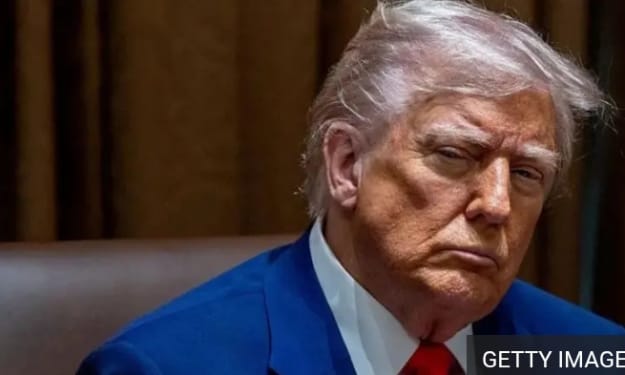
U.S. Bond Market Turmoil: A Tipping Point for Trump’s Tariff Policies?
Dramatic Volatility in the U.S. Bond Market: What Could Force Trump to Revoke Tariffs After a period of turmoil caused by U.S. trade tariffs, global stock markets have remained relatively stable this week.
By Ikram Ullah10 months ago in The Swamp
Hajj Allocation Systems in Muslim Countries: Transparency, Challenges, and Expansion Efforts
Hajj Quota System: How Do Pakistan and Other Muslim Countries Decide Who Will Perform Hajj and Who Will Have to Wait? Every year during the Hajj season, a similar situation arises: thousands of people apply, but only a few are accepted, while many are left waiting.
By Ikram Ullah10 months ago in Humans
Trump’s Strategic Demands from Saudi Arabia and Global Allies
Iran's Threat, the Cost of Protection, and the 'Promise of a Gift': What Does Trump Want from Saudi Arabia? During his first term in 2018, U.S. President Donald Trump made a historic statement: "There are countries that wouldn’t last even a week without our protection—and they’ll have to pay for it."
By Ikram Ullah10 months ago in The Swamp
Flying Palace or Political Turbulence?
Air Force One's Alternative ‘Flying Palace’: The Qatari ‘Gift’ That Could Land Trump in Trouble The recent discussions between the White House and Qatar’s royal family have focused on a luxury jumbo jet. This lavish aircraft might be handed over for use as Air Force One by the President of the United States.
By Ikram Ullah10 months ago in The Swamp
The Rise and Fall of the Baghdad Pact: Why CENTO Failed in the Middle East
Baghdad Pact and the 'Wall of Allies': That Military Alliance Like NATO Which Did Not Help Pakistan When Needed When you hear the name of Baghdad, the capital of Iraq, many thoughts come to mind — from Harun al-Rashid and the capital of the Abbasid Caliphate to Saddam Hussein.
By Ikram Ullah10 months ago in History
Information Warfare Amid India-Pakistan Tensions: The Faces Behind the Battle of Narratives
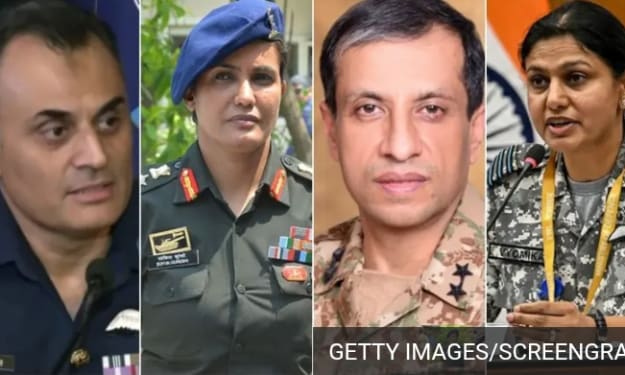
India-Pakistan Tensions: The 'Information War' and the Military Officers Who Became the Face of This 'War' On May 7, a press conference was held to share the initial details of India's 'Operation Sandur' carried out in Pakistan. Among others, two female officers from the Indian armed forces also participated.
By Ikram Ullah10 months ago in FYI
The Last Days of Bahadur Shah Zafar: The Forgotten Tragedy of the Last Mughal Emperor
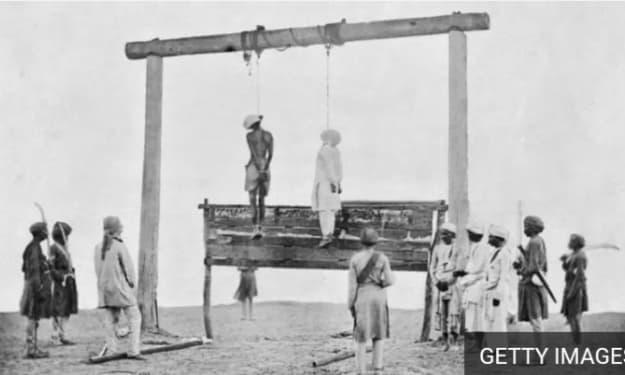
The 1857 'War of Independence': When Delhi Witnessed Death Dancing "I am neither the light of anyone’s eye, nor the solace of anyone’s heart, I am but a handful of dust, of no use to anyone."
By Ikram Ullah10 months ago in History
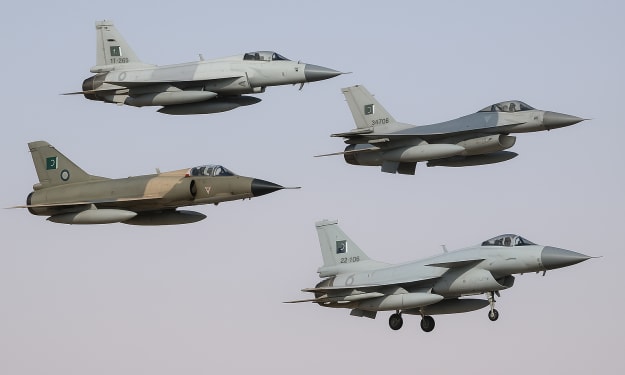
Guardians of the Sky: A Detailed Insight into the Pakistan Air Force and Its Powerful Fighter Jet Fleet
Introduction The Pakistan Air Force (PAF) is one of the most respected air forces in South Asia, known for its professionalism, combat readiness, and innovation. Since its inception in 1947, the PAF has evolved into a highly capable aerial warfare force. This article explores the history, organization, and especially the advanced fighter jets and jet engines that make up the core strength of the Pakistan Air Force.
By Ikram Ullah10 months ago in History
Operation Bunyān Marsūs: Pakistan's Strategic Missile Response to Indian Airstrikes
What Do We Know About the 'Fateh Missile' That Initiated Operation Bunyān Marsūs? The government of Pakistan has announced that in the early hours of Saturday morning, it launched a retaliatory operation against India, named Operation Bunyān Marsūs.
By Ikram Ullah10 months ago in FYI