
Swans: The Majestic Symbols of Grace, Survival, and Myth
From Mythical Symbols to Climate Warriors—How These Birds Shape Ecosystems, Culture, and Survival
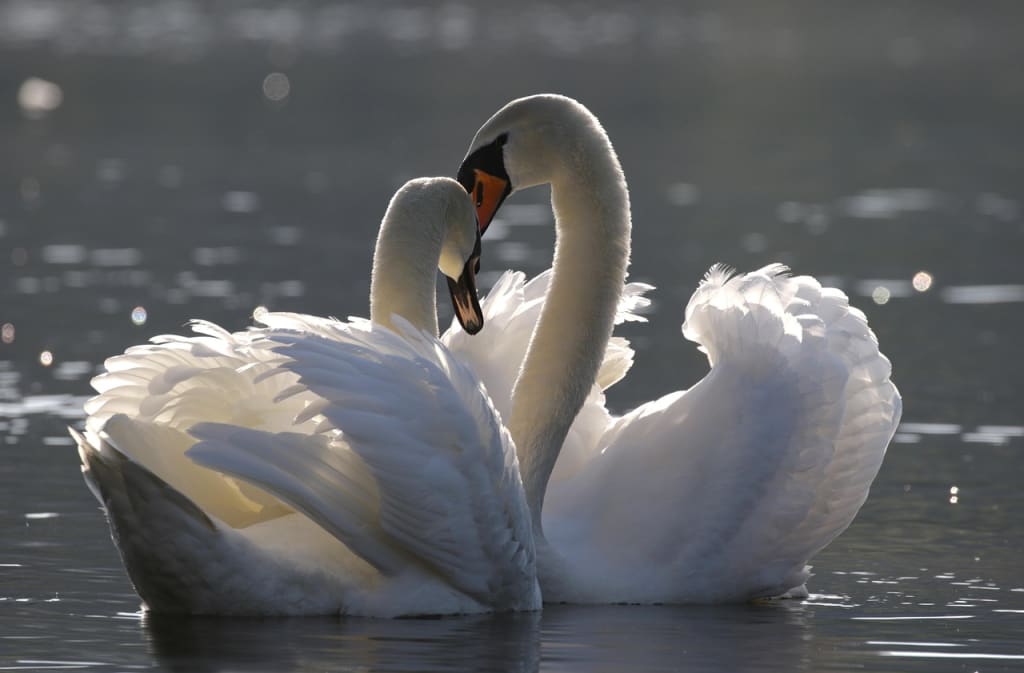
Introduction: The Allure of the Swan
Swans have captivated humanity for millennia. With their snow-white plumage, serpentine necks, and ethereal presence, they embody elegance and mystery. But beyond their beauty lies a story of ecological resilience, cultural symbolism, and surprising scientific quirks. From Greek myths to modern conservation triumphs, swans are far more than just "pond ornaments." Let’s dive into their world.
---
1. Biology and Species: The Giants of the Waterfowl World
What Makes a Swan?
Swans belong to the genus Cygnus (family Anatidae), closely related to geese and ducks . They are the largest waterfowl, with some species weighing up to 35 pounds and boasting wingspans exceeding 10 feet—equivalent to a compact car! . Their elongated necks, equipped with 25 vertebrae (double a human’s count), allow them to forage underwater while keeping their bodies buoyant .
Species Spotlight
Mute Swan (Cygnus olor): Recognizable by its orange bill and S-curved neck, this Eurasian species was introduced to North America as an ornamental bird but is now invasive, outcompeting native wildlife .
Trumpeter Swan (Cygnus buccinator): North America’s largest native swan, once near extinction (only 69 individuals in 1935), now thriving due to conservation efforts .
Black Swan (Cygnus atratus): Native to Australia, its striking ebony feathers and red bill颠覆ed European beliefs that all swans were white—a metaphor for the unexpected .
Tundra Swan (Cygnus columbianus): A migratory marvel, traveling 4,000 miles annually from the Arctic to warmer wetlands .
---
2. Behavior and Social Dynamics: Love, War, and Family
"Till Death Do Us Part"
Swans are icons of lifelong monogamy. They form bonds as early as 20 months old, with pairs staying together for decades . While "divorce" is rare (3% in mute swans), they may seek new mates if breeding fails or a partner dies . Their courtship rituals include synchronized head-bobbing and vocal duets—a ballet of devotion .
Parenting: Tough Love on the Water
Swans are fiercely protective parents. They build massive nests (up to 3 feet wide) near water, with both sexes sharing incubation duties—a rarity among waterfowl . Cygnets (baby swans) ride on their mothers’ backs for safety and stay with their parents for a full year, learning migration routes and survival skills .
Aggression: Beauty with a Bite
Despite their serene image, swans are territorial warriors. During breeding season, they hiss, flap their wings, and even break human bones to defend nests . In the UK, mute swans are technically still "property of the Crown," a medieval law reflecting their historical value—and tempers .
---
3. Ecological Role: Unsung Heroes of Wetlands
Ecosystem Engineers
Swans play a critical role in nutrient cycling. By feeding on aquatic plants like watercrowfoot, they prevent overgrowth that could choke waterways. Their droppings fertilize ecosystems, while undigested seeds in their feces promote plant diversity . In the U.S., landowners even "hire" mute swans to deter invasive Canadian geese—a natural pest control .
Migratory Impact
Tundra swans’ adaptation to eating agricultural waste (e.g., leftover corn) highlights their resilience amid habitat loss. However, this shift risks conflicts with farmers and exposes them to pesticides .
---
4. Cultural Symbolism: From Myths to Modern Media
Mythology and Folklore
Greek Mythology: Zeus transformed into a swan to seduce Leda, symbolizing divine power and transformation .
Celtic Tradition: Swans represented the soul’s journey, often linked to mystical transitions .
Native American Lore: Seen as messengers bridging the physical and spiritual worlds .
Literature and Art
Swan Lake: Tchaikovsky’s ballet immortalized swans as symbols of cursed beauty and duality .
The Ugly Duckling: Hans Christian Andersen’s tale reframes swans as emblems of self-discovery .
Modern Symbolism
Swans adorn national flags (Finland), corporate logos, and even inspire psychological concepts like "black swan theory"—unpredictable, high-impact events .
---
5. Conservation: Triumphs and Ongoing Threats
Success Stories
The trumpeter swan’s rebound—from 69 to 76,000 individuals—is a conservation milestone. Protected habitats (e.g., U.S. national parks) and bans on lead fishing tackle (a major toxin) fueled this revival .
Current Challenges
Habitat Loss: Wetland drainage for agriculture threatens 50% of global swan populations .
Climate Change: Arctic-nesting tundra swans face melting breeding grounds .
Invasive Species: Mute swans disrupt North American ecosystems, sparking debates over culling vs. control .
---
6. Fun Facts to Share
1. Longevity: Wild swans live 20+ years; captive ones can reach 50 .
2. Constellation Connection: The Cygnus constellation mirrors a swan’s flight .
3. Speed Demons: They can fly 60 mph and "run" on water during takeoff .
4. Feather Facts: A single swan has 25,000 feathers—enough to fill a pillow!
5. Silent Flight: Their wing structure minimizes sound, making them stealthy fliers .
---
Conclusion: Why Swans Matter
Swans are more than just photogenic birds—they’re ecological linchpins, cultural touchstones, and symbols of nature’s fragility. Their survival hinges on balancing human needs with wetland preservation. As climate change accelerates, protecting these majestic birds isn’t just about nostalgia; it’s about safeguarding biodiversity itself.
Call to Action: Support organizations like the National Wildlife Federation or local wetland trusts. Share this article to spread awareness—because every ripple of effort helps swans glide into the future.
About the Creator
Keep reading
More stories from Ikram Ullah and writers in Earth and other communities.
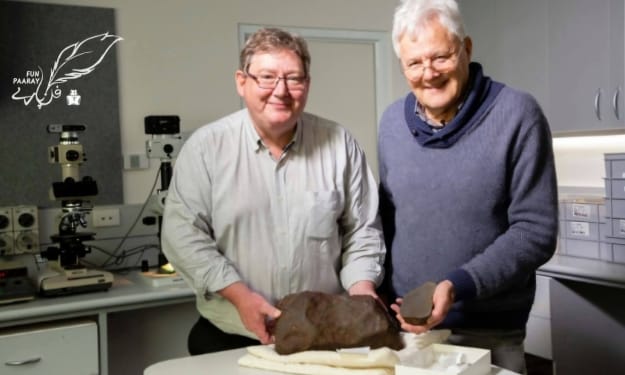
The Meteorite Hidden in Plain Sight
In the vast landscape of Australia, where gold hunters and adventurers often roam the earth in search of fortune, one man found something that defied imagination. What he believed was a strange rock hiding gold turned out to be a priceless relic from outer space—a meteorite older than Earth itself.
By Ikram Ullah2 months ago in Earth
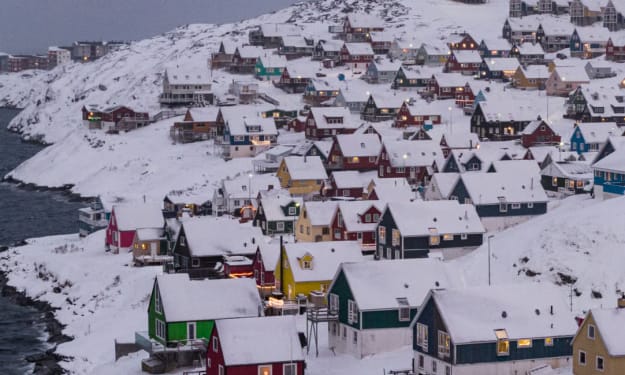
For Russia, Greenland Offers an ‘Ideal Solution’ to Its Ukraine Problem
In the complex chessboard of global geopolitics, some developments become unexpectedly powerful tools. One such flashpoint today is Greenland — the icy Arctic territory of Denmark that has suddenly captured international attention. While the world focuses on former U.S. President Donald Trump’s renewed interest in Greenland, Moscow is quietly calculating how this turmoil could serve its broader interests, particularly in the context of the war in Ukraine.
By Muhammad Hassanabout 23 hours ago in Earth
A building's lifetime climate impact is mostly determined by its daily energy use.
The majority of a building's climate impact is not caused by its construction. As the heating, lighting, and ventilation systems continue to function year after year, it gradually accumulates.
By Francis Dami6 days ago in Earth


Comments
There are no comments for this story
Be the first to respond and start the conversation.