
The Rise and Fall of the Baghdad Pact: Why CENTO Failed in the Middle East
A Clear Timeline of U.S. Involvement, Regional Tensions, and the Collapse of the Anti-Soviet Alliance from 1957 to 1979
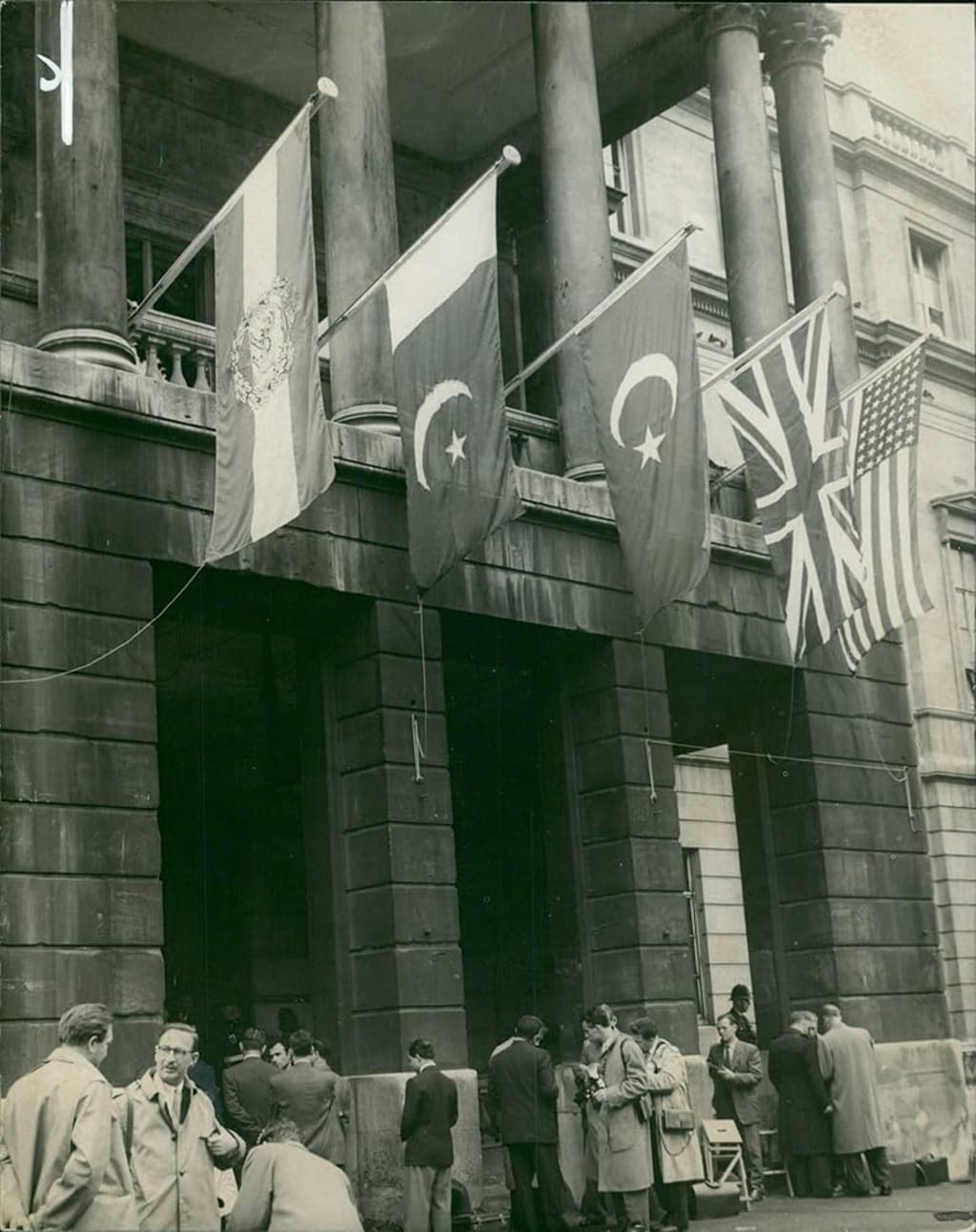
Baghdad Pact and the 'Wall of Allies': That Military Alliance Like NATO Which Did Not Help Pakistan When Needed
When you hear the name of Baghdad, the capital of Iraq, many thoughts come to mind — from Harun al-Rashid and the capital of the Abbasid Caliphate to Saddam Hussein.
However, it may not come to your mind that this name was once, in the 1950s, also a reference to a military alliance of the Western Middle East, whose end marked the beginning of the decline of British influence in the Middle East.
The Baghdad Pact or Agreement was made in 1955, which included the United Kingdom, Iraq, Turkey, Pakistan, and Iran.
According to the Encyclopedia Britannica, it was a security organization headquartered in the Iraqi capital Baghdad. After the end of the pro-West monarchy in Baghdad, Iraq withdrew from the agreement, and then the organization's headquarters were moved to Ankara, the capital of Turkey. Its name was also changed to the Central Treaty Organization, i.e., CENTO. In 1979, Iran also withdrew after the Islamic Revolution and the fall of the Shah, and in the same year, the organization was dissolved.
So what is the story of this agreement?
‘To Counter the Communist Wave’
After World War II, two major global powers emerged: the United States and the Soviet Union. The conflict between them formed the framework of the Cold War, as both powers tried to expand their political and military influence across the world.
Both the United States and the United Kingdom considered the Middle East important for their interests. However, after World War II, Britain's influence was in decline.
In the early 1950s, the United States government expressed interest in forming a military alliance in the Middle East to counter the threat of Soviet Communist expansion in important oil-producing regions, and Washington tried to create a regional alliance based on anti-Communism.
The Baghdad Pact was part of this strategy, aimed at extending a wall of allied states from Turkey to Pakistan.
The Baghdad Pact was formed at the same time as NATO and the Southeast Asia Treaty Organization. The idea for all three alliances emerged after U.S. Secretary of State John Foster Dulles returned from a tour of the Middle East in May 1953, during which he proposed the formation of a defensive arrangement of countries across Eurasia against Communism.
The importance of the Middle East lay in several different factors:
First, the presence of oil in many countries of the Middle East meant that the economies of Western Europe, and to some extent the U.S. economy, depended on this region as a source of energy, and Britain obtained about 90 percent of its oil supply from the Gulf.
Second, the Middle East is located within several transit routes to the Far East, and the water and air routes passing through Egypt, Iraq, and Jordan made Britain highly reliant on good relations with the countries of the region for communication and trade with the Far East.
Third, this region holds strategic importance. On one side, it is adjacent to NATO’s southern flank, and on the other, it can provide bases from which the Soviet Union could be attacked from the south. Britain had bases in Iraq and on the island of Cyprus.
In the 1950s, ongoing tensions in the Middle East — such as the Arab-Israel conflict and rising anti-colonial sentiment led by Egypt — made it difficult to form an alliance that included Arab and Islamic states along with Israel and Western powers.
Instead, the United States shifted its focus to the northern belt. The idea was to establish an alliance linking NATO’s southernmost member, Turkey, with Pakistan, the western member of the Southeast Asian alliance, CENTO.
Turkey and Pakistan signed an agreement in 1954 to enhance security and stability in the region.
At the urging of Britain and the U.S., the formation of the Baghdad Pact began on February 24, 1955, when Iraq and Turkey signed a 'Mutual Cooperation Agreement' in Baghdad to resist external aggression, paving the way for other countries in the region to join.
In April, the United Kingdom joined, followed by Pakistan on September 1, and then Iran, under the leadership of Shah Mohammad Reza Pahlavi, in November 1955.
In this way, the 'Baghdad Pact' was established, comprising the UK, Iraq, Turkey, Pakistan, and Iran. This occurred during the reign of Iraq’s last king, Faisal II, and Prime Minister Nuri al-Said. The purpose of this agreement was to strengthen the defense of the region and to prevent Soviet Union entry into the Middle East.
American Position
Britain was the third country to join the Baghdad Pact. In contrast, the United States did not become fully involved in this agreement.
After Britain joined in 1955, it was expected that the U.S. would also join this alliance. In June 1955, a joint study by the British Ministry of Defence and Foreign Office supported the idea that the defense of the region could only be secured with American assistance.
From the beginning, Britain and other member countries lobbied for America’s inclusion in the Baghdad Pact, but this effort failed.
Britain continued to pressure its most powerful ally to join the organization. This pressure intensified when the alliance faced a crisis in March 1956 following the dismissal of British officer General Glubb from the command of the Jordanian Arab Legion.
However, the U.S. preferred to maintain the status of an observer and completely refused to join the alliance — perhaps one reason being Washington's desire to keep Israel, Egypt, or Saudi Arabia satisfied as well.
Factors That Weakened the Alliance
From the beginning, the Baghdad Pact failed to garner broad support from Middle Eastern states, which lacked a common identity. Turkey was a nationalist republic, Iran a monarchy, Pakistan an emerging democratic state, and Iraq had recently come out of a colonial system of governance.
Attempts by then Iraqi Prime Minister Nuri al-Said to persuade several Arab countries — especially Egypt and Syria — to join the alliance were unsuccessful. These countries believed that the Soviet Union — which had begun to emerge as the only supplier of arms and equipment to Arab countries facing Israel — posed no threat to them.
Nevertheless, Britain hoped that Syria and Jordan would join the alliance at a later stage. Syria refused to join, while Jordan’s King Hussein initially hesitated.
Eventually, King Hussein sided with his people, who came out in large numbers on the streets to condemn the alliance and refused to join it.
In 2003, BBC Middle East analyst Gerald Butt wrote: “At that time, I saw protesters breaking the windows of a British bank where my father worked in the Jordanian capital Amman, and I was disturbed as a child to see the protesters vandalizing our garden.”
The President of Lebanon supported the Baghdad Pact because of his good relations with Iraq’s King Faisal and Iran’s Shah Mohammad Reza Pahlavi, but due to widespread domestic opposition, Lebanon did not join the agreement.
Meanwhile, Egypt opposed any such alliance that could become a new extension of 'European imperialism,' and the Saudis distrusted the Hashemite rulers of Iraq.
The developments in the Middle East in the years following the formation of the alliance further weakened it.
In 1956, Egyptian leader Gamal Abdel Nasser took control of the Suez Canal. Israel responded by attacking the Sinai Peninsula, and British and French forces also intervened, which caused Britain to lose prestige in the region and damaged its position in the Baghdad Pact.
In early 1957, the Eisenhower Doctrine was announced when the U.S. President sent a special message to Congress about the situation in the Middle East. According to Eisenhower, any country could request economic or military assistance from the United States if it felt threatened — specifically by the Soviet threat. In this way, requests for U.S. military assistance in the Middle East were no longer dependent on NATO membership.
The pace of events in the region accelerated in 1958, further weakening the Baghdad Pact.
In February 1958, Egypt and Syria announced the formation of the United Arab Republic. Then, on July 14, 1958, the monarchy in Iraq was overthrown in a violent and bloody military coup. The Baghdad Pact was one of the reasons behind this coup.
This led to increased tension in the region, forcing the United States to send troops to Jordan to strengthen the influence of its allies.
In light of the Eisenhower Doctrine, the President of Lebanon requested U.S. intervention and accused Nasser and Syria of arming and supporting the opposition in Lebanon.
On July 15, 1958, U.S. Marines arrived in Beirut, the Lebanese capital. The U.S. stated that the purpose of this intervention was to prevent bloodshed in Lebanon.
Supporters of the opposition took to the streets in Lebanon, launching protests demanding the president's resignation. Later, barriers were erected between opposition and government supporters, and the clashes intensified.
The army commander at the time refused to allow the armed forces to support either side due to the sensitive sectarian divisions within the military establishment.
The United States sent envoy Robert Murphy to find a peaceful solution to the crisis. The crisis ended when the president agreed not to extend his term or contest for a second term. The army commander was chosen as his successor.
All these developments in Lebanon occurred outside the framework of the Baghdad Pact.
On March 24, 1959, Iraq’s new leader, Abdul Karim Qasim, announced Iraq's withdrawal from the alliance before it even completed its fourth year. The pact was renamed CENTO, and its offices were relocated to Turkey.
In 1965, during the war against India, Pakistan tried to seek help from its allies, but when the UN Security Council adopted Resolution 211 on September 20, calling for an arms embargo on both warring sides, the U.S. and Britain supported the resolution.
In 1971, after a new war with India began, Pakistan again attempted to seek support from the alliance but received only limited U.S. military assistance, which was outside CENTO's scope.
In 1974, Britain withdrew from the alliance and ended its support in protest against Turkey's invasion of Cyprus, which resulted in Turkey taking control of the island’s northern part.
In 1979, the Iranian Revolution overthrew the Shah, and Iran withdrew from the alliance. Pakistan also decided in the same year that the organization had played no role in enhancing its security. That same year, the organization was formally dissolved.
About the Creator
Keep reading
More stories from Ikram Ullah and writers in History and other communities.
The Last Days of Bahadur Shah Zafar: The Forgotten Tragedy of the Last Mughal Emperor
The 1857 'War of Independence': When Delhi Witnessed Death Dancing "I am neither the light of anyone’s eye, nor the solace of anyone’s heart, I am but a handful of dust, of no use to anyone."
By Ikram Ullah8 months ago in History
Why Early Aircraft Designs Failed Before They Ever Flew
Long before airplanes became symbols of speed and global connection, flight was an idea filled with uncertainty, ambition, and repeated disappointment. Early aircraft designers were driven by a powerful belief that humans could conquer the skies, yet many of their creations never made it past workshops, fields, or testing grounds. These failures were not accidents of carelessness; they were the result of a world still learning the rules of flight.
By Beckett Dowhan7 days ago in History
3 Times Ordinary Objects Did Something Deeply Unsettling
Objects surround us every day. They make life easier, more comfortable, or more entertaining. A chair supports us, a mirror shows us our reflection, and a toaster browns our bread with consistent reliability. Most of the time, they behave exactly as expected.
By Enoch Sagini5 days ago in History




Comments
There are no comments for this story
Be the first to respond and start the conversation.