
U.S. Bond Market Turmoil: A Tipping Point for Trump’s Tariff Policies?
Dramatic fluctuations in the bond market shake investor confidence and could force a shift in U.S. trade strategy
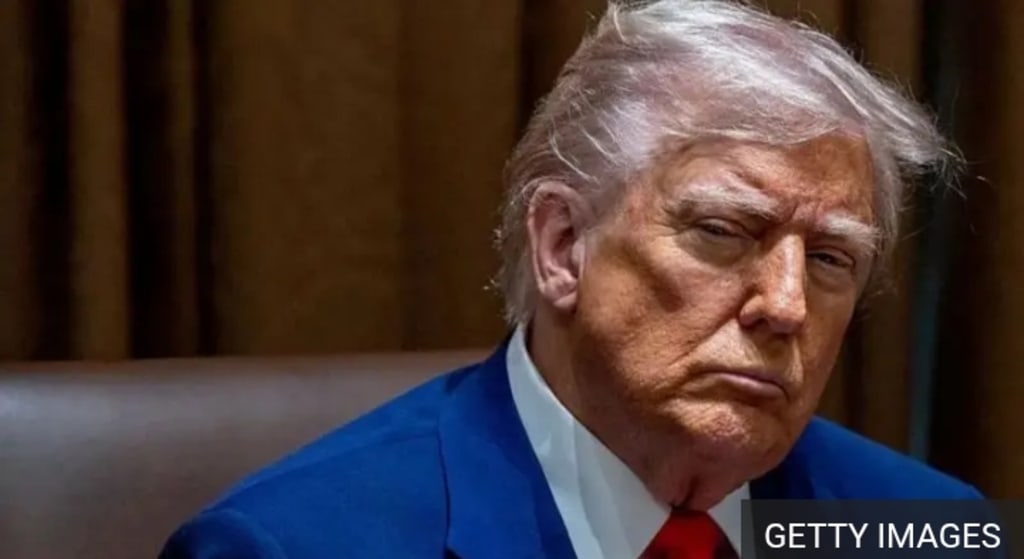
Dramatic Volatility in the U.S. Bond Market: What Could Force Trump to Revoke Tariffs
After a period of turmoil caused by U.S. trade tariffs, global stock markets have remained relatively stable this week.
However, investors are closely watching one segment of the market that rarely moves dramatically—the U.S. bond market.
Governments sell bonds to raise money for public spending, paying interest in return. Simply put, when a government lacks funds to run the state, it borrows money from its people in the form of bonds, promising to return the money with profit after a certain period, like three, four, or five years.
Recently, in a rare move, the interest rate on U.S. government bonds has surged sharply, while the value of those bonds has fallen.
This volatility signals that investors are losing confidence in the world’s largest economy.
Why is this significant enough to possibly force Trump to revoke tariffs?
What Are Government Bonds?
When a government needs to borrow money, it typically sells bonds to investors in financial markets. In the U.S., these are called Treasury Bonds, and in Pakistan, they’re referred to as T-Bills.
Payments are made over a set number of years, with the final payment occurring when the bond "matures." Essentially, the government gets the funds it needs and repays them with a predetermined interest.
Most bond buyers are financial institutions, including pension funds and central banks like the Bank of England.
What’s Happening with U.S. Bonds?
Investors usually buy government bonds as a safe investment with little risk of default—especially from a superpower like the U.S.
So during economic uncertainty, investors usually move their money into U.S. bonds.
But recently, that hasn’t happened.
Initially, on April 2, after the announcement of the so-called "Liberation Day" tariffs, stock markets fell and investors turned to U.S. bonds.
However, when the first of those tariffs took effect on April 5, and Trump doubled down on his policies later that week, investors began dumping government bonds. This forced the U.S. government to offer higher interest rates to attract lenders.
The yield on 10-year U.S. government bonds jumped from 3.9% to 4.5%, and the 30-year yield rose by nearly 5%. Even a 0.2% move in either direction is considered significant.
Why the Sudden Sell-Off?
In short, uncertainty over the economic impact of tariffs is making investors view U.S. government bonds as less safe. So, they now demand higher returns to take on that risk.
The greater the risk, the higher the return investors expect.
How Does This Affect Ordinary Americans?
If the U.S. government has to spend more on interest payments, it affects the national budget and public services, making it costlier to run the government.
The impact can also hit households and businesses directly.
Oxford Economics analyst John Canavan says, “When investors demand higher interest rates to lend money to the government, borrowing becomes more expensive—impacting everything from daily expenses to credit card bills and car loans.”
Sudden changes in borrowing costs hit businesses hard, especially small ones, since most American homeowners have fixed-rate mortgages for 15 to 30 years.
If businesses lose access to credit, it can slow economic growth and eventually lead to job losses.
Canavan adds that banks may become more cautious with lending, further weakening the U.S. economy.
He says, “First-time homebuyers could face higher costs, affecting the housing market in the long run.”
“In the U.S., it's common for small business owners to use their home equity as collateral.”
Why Should Trump Care?
After imposing tariffs, Trump urged investors to stay firm. But the potential threat to jobs and the economy seems to have restrained him.
Following the bond market’s turmoil, he announced a 90-day grace period on additional tariffs for all countries except China. However, the 10% tariff remains in place for all.
This has become a pressure point for Trump—and the world has taken note.
Paul Ashworth, Chief North America Economist at Capital Economics, says, “While Trump managed to stop a stock market sell-off, things changed when the bond market began weakening.”
U.S. media reported that Treasury Secretary Scott Bessent received phone calls from business leaders, which played a key role in persuading Trump.
Has Something Similar Happened in the U.K.?
This situation has been compared to the infamous September 2022 mini-budget by former U.K. Prime Minister Liz Truss. Her tax cut announcements frightened investors, who then sold off British government bonds, forcing the Bank of England to step in to save pension funds.
Some analysts believe if bond selling escalated further, the U.S. Federal Reserve might have been forced to intervene.
Even though bond yields have started to fall again, some argue the damage was already done—the bond value dropped even before full tariffs took effect.
Capital Economics’ Deputy Chief Market Economist Jonas Goltermann says, “The most worrying aspect of the recent turmoil is the emerging risk in U.S. Treasury bonds and the dollar—much like what happened in the U.K. in 2022.”
What About China’s Connection to U.S. Bonds?
According to Deutsche Bank, foreign ownership of U.S. bonds has nearly doubled since 2010, with a $3 trillion increase.
Japan holds the most U.S. Treasury bonds, but in this global trade war, America’s chief adversary—China—is the second-largest foreign holder of U.S. government debt.
About the Creator
Keep reading
More stories from Ikram Ullah and writers in The Swamp and other communities.
Trump’s Strategic Demands from Saudi Arabia and Global Allies
Iran's Threat, the Cost of Protection, and the 'Promise of a Gift': What Does Trump Want from Saudi Arabia? During his first term in 2018, U.S. President Donald Trump made a historic statement: "There are countries that wouldn’t last even a week without our protection—and they’ll have to pay for it."
By Ikram Ullah8 months ago in The Swamp
Iranian Airspace Reopens – As It Happened
Iran has officially reopened its airspace following a period of heightened regional tension that forced widespread flight suspensions and diversions. The reopening marks a significant moment for regional aviation, trade, and diplomacy, coming after days of uncertainty that disrupted travel across the Middle East and beyond. Airlines, passengers, and governments closely watched developments, as Iranian airspace is a critical corridor linking Europe, Asia, and the Gulf.
By Aarif Lashari4 days ago in The Swamp


Comments
There are no comments for this story
Be the first to respond and start the conversation.