
Hajj Allocation Systems in Muslim Countries: Transparency, Challenges, and Expansion Efforts
A Comparative Look at How Pakistan, Egypt, Indonesia, and Others Manage Pilgrim Selection Amid Growing Demand and Saudi Arabia’s Ongoing Infrastructure Expansion
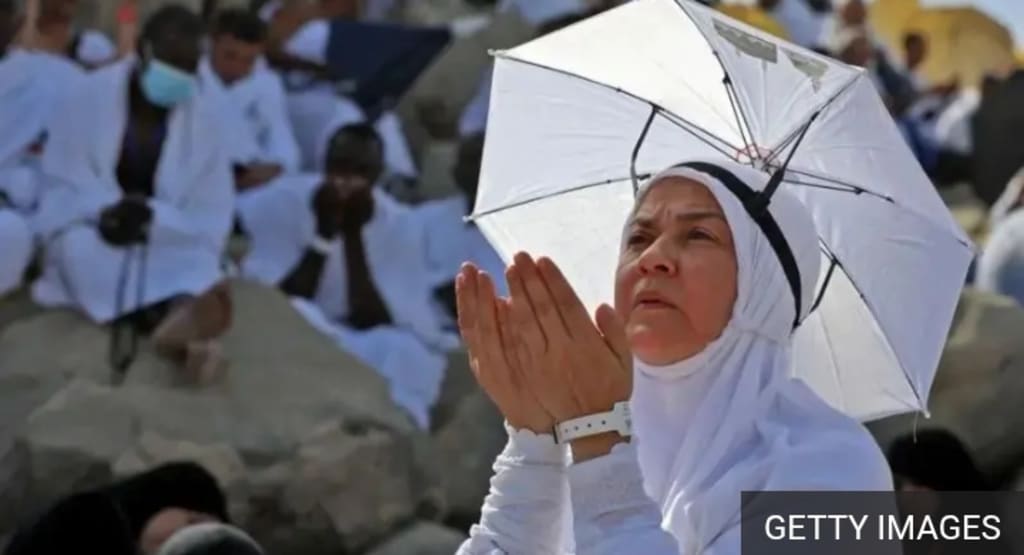
Hajj Quota System: How Do Pakistan and Other Muslim Countries Decide Who Will Perform Hajj and Who Will Have to Wait?
Every year during the Hajj season, a similar situation arises: thousands of people apply, but only a few are accepted, while many are left waiting.
Despite the desire and ability to perform Hajj, not everyone gets the opportunity to fulfill this Islamic duty, as Hajj is conducted under a strict international system known as the 'Quota System.'
The Saudi government determines a fixed number of pilgrims for each country, and this is done in collaboration with the Organization of Islamic Cooperation (OIC) based on the principle of 'one pilgrim for every thousand Muslims' in the population of each country.
In many countries, lotteries or draws are held to select eligible applicants. The lottery may be based on factors such as age or how long it has been since someone last performed Hajj. Different countries use various methods for this process.
The Situation Before the Quota System:
The quota system was officially adopted in 1987. This was not just an administrative decision, but a necessary measure in response to the growing Muslim population worldwide and the increasing number of people wishing to perform Hajj.
The aim was clear: to prevent overcrowding and reduce the risk of stampedes and other incidents. Additionally, it allowed for the management of Hajj within the infrastructure available during the pilgrimage period.
But how was Hajj organized before the quota system, and what events led to the need for determining the number of pilgrims?
Ahmad Al-Halabi, an expert in Hajj and Umrah affairs, explained in an interview with BBC Arabic that in the past, anyone who could afford to perform Hajj could do so.
He said, "There was no fixed number for pilgrims coming to Makkah every year, but due to the increasing numbers and the limited capacity to carry out the sacred rituals, it became necessary to organize the number of pilgrims."
He further mentioned, "If we look at the years before the decision to limit the number of pilgrims, we find that there was a need to restrict the number to 1 million because the area of Mina is less than eight square kilometers, and only 61% of that area, or just under five square kilometers, is usable. The remaining areas of Mina are difficult to access, and pilgrims are advised to stay away from those areas."
As the pressure on the holy sites increased in the 1970s, the government began efforts to control the crowds, but these were not enough to prevent the disasters that followed.
On July 2, 1990, one of the most horrific disasters in modern Hajj history occurred. A stampede broke out in the 550-meter-long pedestrian tunnel connecting Makkah to Mina, known as Al-Mu'aisim.
As pilgrims were heading to perform the "Jamarat" ritual of stoning the devil, a safety barrier above a bridge collapsed, causing many people to fall. The exit was blocked, and thousands were trapped inside. With rising temperatures, the ventilation system failed, turning the tunnel into a deadly trap. As a result, 1,426 pilgrims died, most of whom were from Malaysia, Indonesia, and Pakistan.
Al-Halabi believes that this incident exposed flaws in crowd management. He says, "Accidents often happen in the Jamarat area, and this is due to the lack of awareness by Hajj offices in these countries."
He added that after this event, the practice of dividing pilgrims into groups to perform the Jamarat ritual was introduced.
The Role of Politics in Hajj Management:
Since then, the quota system has become an essential part of Hajj management and ensuring the safety of millions of people. While the quota system is theoretically based on a simple principle of equality, the reality is much more complex, as politics and emergency situations often influence Hajj management.
In 2015, following a stampede near Jamarat, there was significant diplomatic tension between Tehran and Riyadh, leading to the complete absence of Iranian pilgrims in 2016.
In 2017, the Hajj season began amidst the Gulf crisis and the severing of relations between Saudi Arabia and Qatar. Although Riyadh declared that Qatar's quota was secure, the absence of Qatar's official mission and travel restrictions made it difficult for Qatari pilgrims, resulting in a significant decrease in their numbers.
Similarly, in 2020 and 2021, the COVID-19 pandemic caused an exceptional situation, and for the first time in centuries, foreign pilgrims were not allowed to perform Hajj, with only a limited number of domestic pilgrims permitted.
Internal political crises in various countries also affect Hajj arrangements. For example, in Syria in 2012, after relations between Riyadh and Damascus were severed, the Hajj institution was entrusted to the Syrian National Coalition, creating a political and religious dispute regarding the agency responsible for facilitating Hajj for Syrians.
Likewise, in Libya, the division between two rival governments led to confusion regarding the consolidation of pilgrim lists and the division of quotas between the country's east and west.
Every Country Has Complete Freedom to Arrange Their Pilgrims:
Once Saudi Arabia determines the quota for pilgrims from each country, the responsibility for implementing it lies with the governments and local authorities of those countries. These countries and authorities are free to adopt their methods for selecting pilgrims.
Ahmad Al-Halabi explains that every country has the complete freedom to organize their list of pilgrims, as long as they follow Saudi Arabia's guidelines.
He says, "Each country has its own system, and they are free to decide which pilgrims are eligible for this year's Hajj. The selection is made only from those who meet the eligibility criteria."
"No one can obtain a Hajj visa unless they meet all the required conditions. The most important of these conditions include affiliation with regulatory bodies like Hajj offices and having accommodation arranged in specific locations in Makkah and Madinah."
However, once the list is drawn, it becomes crucial to decide who will be given the opportunity to perform Hajj. Since the number of applicants exceeds the quota set by the Saudi government, most countries rely on the lottery system to select pilgrims. The method used to implement this system varies in each country, but the goal remains the same: to ensure fairness in providing the opportunity to pilgrims.
Some examples provided by Al-Halabi include Turkey, where pilgrims register on the Religious Affairs Presidency's website, and if their name is selected in the lottery, they proceed with the paperwork. Those whose names are not drawn are included in the next year's lottery. A similar system has been in place in Egypt for some time.
According to him, the approval to perform Hajj is no longer just a financial or logistical matter, but in more populous countries, people have to wait for years due to the high demand.
What Systems Are in Place in Pakistan and Other Muslim Countries?
Talking to BBC's Manza Anwar, the spokesperson for Pakistan's Ministry of Religious Affairs, Umar Butt, explained that generally, a "first-come, first-served" system is used, and if more applications are received than the available spots, a lottery system is applied.
He mentioned that the lottery system is still in place in case of an excess number of applications.
The spokesperson for the Ministry of Religious Affairs stated that this year, all applicants who applied within the official quota were selected, and there was no need to reject any applications.
He explained that this year, around 88,500 pilgrims were selected under the government scheme.
The spokesperson further shared that the number of pilgrims allocated to private operators this year is also 88,500.
He also noted that private operators did not meet the deadline this year, resulting in some of the allocated quota being wasted.
In Egypt, the Ministry of Interior supervises the Hajj lottery. During the lottery, both government officials and the public are present to ensure the process is transparent.
The conditions for Egyptian applicants include being at least 25 years old, having never performed Hajj before, and providing medical records to prove physical fitness.
In Morocco, the Ministry of Endowments and Islamic Affairs supervises the process. Online registration is open year-round, and preference is given to those who have not performed Hajj in the last ten years.
In Iraq, the Supreme Commission for Hajj and Umrah supervises an electronic lottery for all provinces. Preference is given to those who have never performed Hajj and to elderly or senior applicants. The lottery is held centrally, and the results are announced on the official website, widely covered by the media.
In Lebanon, the Hajj and Umrah Authority organizes the lottery based on two important criteria: the applicant's age and how long it has been since they last performed Hajj. Preference is given to those who have not performed Hajj in the last 20 years. If the allocated quota is not filled, the lottery continues for those who have not performed Hajj in the previous 19, 18, and 17 years, and so on.
Indonesia sends the most people to Hajj. Due to the high demand, waiting times there can extend to 15 years or more.
A government official from Indonesia informed local media that in the South Sulawesi province alone, the waiting period can extend to 43 years.
Despite early registration and electronic monitoring, the lists continue to grow, leaving millions of Indonesian Muslims waiting for their dream of performing Hajj to be fulfilled.
Al-Halabi explains the role of Hajj and religious tourism offices, saying, "These offices are not involved in the quota or lottery process. Generally, in various countries, the official Hajj agencies conduct the lottery, and once their name is selected, the applicant arranges their travel and accommodation with the Hajj office. These offices are also responsible for training pilgrims and introducing them to the sacred rituals."
Expansion of Sacred Sites’ Infrastructure Continues
Amid these challenges, the Saudi government has continued its work on expanding the infrastructure of the Holy Mosque and sacred sites.
The third expansion project, which began during the reign of King Abdullah in 2011, was completed under the leadership of King Salman. With this expansion, the capacity of the Holy Mosque increased to over 1.8 million.
Al-Halabi confirmed this, stating, "By 2025, the number of visitors is expected to reach 15 million. Under Saudi Vision 2030, this number will increase to 30 million by 2030. This annual increase will be based on the expansion projects, which are still ongoing, and relevant authorities are currently working to increase the capacity at the holy sites."
About the Creator
Keep reading
More stories from Ikram Ullah and writers in Humans and other communities.
Imran Khan: From Cricket Legend to National Leader
Early Life and Background Imran Ahmed Khan Niazi was born on October 5, 1952, in Lahore, Pakistan, into a Pashtun family of the Niazi tribe. Raised in an upper-middle-class household, he received an elite education — first at Aitchison College in Lahore, then at Royal Grammar School Worcester, and finally at Keble College, Oxford, where he studied philosophy, politics, and economics.
By Ikram Ullah8 months ago in Humans
The Coming Climate Migration. Which U.S. Cities Prepare and Which Stay in Denial.
Climate migration no longer sits in the future. It unfolds now. Floods displace families. Heat strains cities. Drought limits water supply. Insurance retreats. People move when daily life breaks down. The United States faces internal migration driven by climate pressure rather than borders.
By Wilson Igbasi2 days ago in Humans


Comments
There are no comments for this story
Be the first to respond and start the conversation.