Holianyk Ihor
Bio
Stories (419)
Filter by community
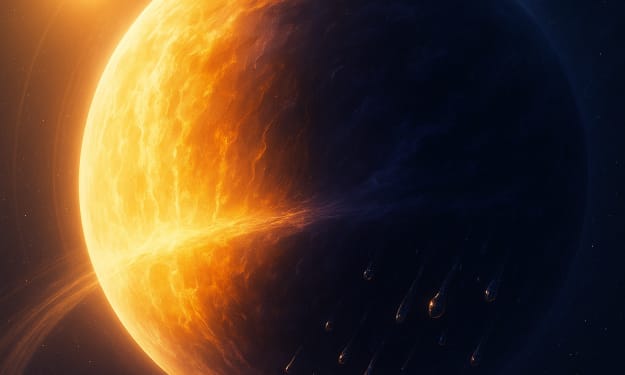
Rebel Worlds: Exoplanets with Reverse Rotation and Bizarre Atmospheres
When astronomers began discovering planets beyond our Solar System in the 1990s, most expected to find familiar worlds — something like a Hot Jupiter here, a cold Neptune there, maybe the occasional rocky Earth-twin. Instead, the universe responded with a cosmic smirk and delivered a catalog of planets so strange that even science fiction writers would hesitate to invent them. Among the most mind-bending of these discoveries are exoplanets with reverse (retrograde) rotation and wildly abnormal atmospheres — worlds that defy planetary logic and challenge our understanding of physics.
By Holianyk Ihor3 months ago in Futurism
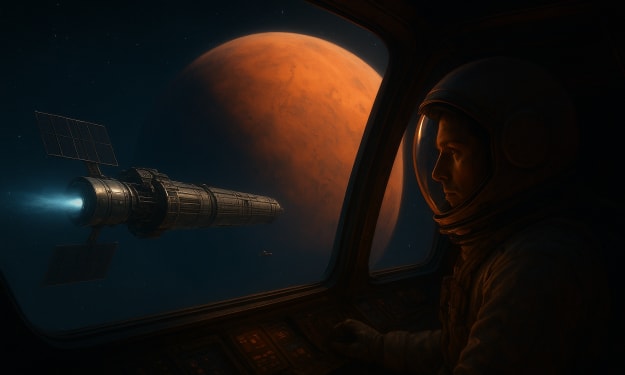
Nuclear Engines for the Journey to Mars: Why NTR and NEP May Change Everything
For decades, Mars has been the big red prize of human space exploration. We’ve landed rovers, taken selfies on its dusty plains, and mapped its canyons and craters in high resolution. And yet, no human has ever set foot there. The biggest obstacle isn’t distance itself — it’s time. With today’s chemical rockets, a crewed flight to Mars would take six to nine long months one way, and the entire mission could stretch to two or even three years. That means more radiation exposure, more psychological pressure, more supplies, and more risk.
By Holianyk Ihor3 months ago in Futurism
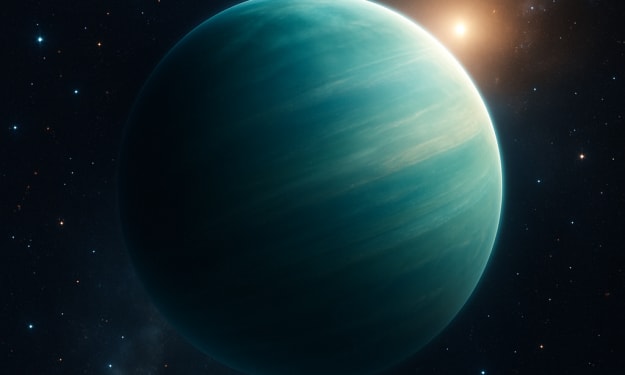
Desert Planets and Their Unique Climate Systems: Worlds of Dust, Heat, and Endless Wind
When we imagine distant planets beyond our Solar System, most of us picture Earth-like worlds—blue oceans, drifting clouds, and sprawling continents. But astronomers now believe that one of the most common types of terrestrial planet in the galaxy may look nothing like our home. Instead, many rocky exoplanets are likely desert planets: dry, dusty, and extreme. Their climates are harsh, their landscapes barren, yet they are scientifically fascinating—and, surprisingly, some might even be habitable.
By Holianyk Ihor3 months ago in Education
Hunting for Alien Life: The Search for Atmospheric Biosignatures on Distant Worlds
Just a few decades ago, the idea of planets orbiting other stars lived mostly in science fiction. Today, astronomers have confirmed more than five thousand exoplanets—burning-hot gas giants, frozen mini-Neptunes, super-Earths cloaked in clouds, and even rocky worlds that remind us of home. Yet the true holy grail remains undiscovered: evidence of life beyond Earth.
By Holianyk Ihor3 months ago in Education
Cataloging NEOs Down to 140 Meters: NASA and ESA’s New Planetary Defense Mission
Not long ago, the idea of defending Earth from an asteroid sounded like pure science fiction. It was something you’d expect from a Hollywood disaster movie, not a space agency budget proposal. But today, protecting our planet from near-Earth objects (NEOs) has become a serious, well-funded scientific priority. NASA and the European Space Agency (ESA) have now set a bold shared goal: to detect and catalog at least 90% of all NEOs that are 140 meters or larger. Simply put, they want to find nearly every space rock big enough to erase a major city from the map.
By Holianyk Ihor3 months ago in Education
How Sunlight Spins Space Rocks: New Insights into the YORP Effect
For decades, astronomers believed that the spins of asteroids were shaped almost entirely by violent collisions and gravitational encounters. That story is now changing. As telescopes grow sharper and space missions more precise, scientists are uncovering the surprising truth: sunlight itself can gradually twist, tilt, and even tear apart asteroids. This subtle, long-term influence is known as the YORP effect, and it is rapidly becoming one of the most intriguing topics in planetary science.
By Holianyk Ihor3 months ago in Education
BioSuit: The Next-Generation Space Suit That Fits Like a Second Skin
When we picture an astronaut, most of us imagine a bulky white suit — stiff, heavy, and inflated like a balloon. It’s an icon of space exploration, but also a symbol of how difficult it is to move freely in the vacuum of space. For decades, astronauts have battled against the rigidity of their suits just to bend an arm or take a step.
By Holianyk Ihor3 months ago in Education
The Hidden Magnetism of Space: Why Objects That Don’t Attract on Earth Pull Together Among the Stars
If you drop a pen and a paperclip on your desk, they just sit there. Nothing happens — no invisible force draws them together. But take those same two objects far away from Earth, into the silent vacuum of space, and something extraordinary begins to happen: they start to move toward each other. Slowly, almost imperceptibly at first, but undeniably. It sounds like science fiction — yet it’s a real and fascinating truth about how the universe works.
By Holianyk Ihor3 months ago in Futurism
Pandora Mission: Opening a Cosmic Box of Secrets
For centuries, humanity has looked to the night sky in wonder — to predict the seasons, to navigate oceans, or to seek meaning among the stars. Today, our gaze has a new purpose: to find out whether we’re alone in the universe. And leading this quest is NASA’s Pandora mission, a small but mighty space telescope designed to study the atmospheres of 39 distant exoplanets — all while watching their host stars and planets simultaneously.
By Holianyk Ihor3 months ago in Futurism
SPHEREx: The Space Telescope That Will Redraw Our Map of the Universe
When we gaze up at the night sky, we see a silent ocean of stars — calm, timeless, and still. But behind that peaceful illusion lies a dynamic history: galaxies forming, stars igniting, and cosmic structures evolving over billions of years. To truly understand where we came from, astronomers must look back — far back — into the cosmic dawn. And soon, a new explorer will help them do just that.
By Holianyk Ihor3 months ago in Futurism
Enceladus: The Moon That Sprays Secrets of Life Into Space
When astronomers first discovered Enceladus, one of Saturn’s many icy moons, few suspected it would become one of the most exciting places in the solar system. Barely 500 kilometers across, this tiny world seemed frozen, silent, and geologically dead. But in 2005, NASA’s Cassini spacecraft made a discovery that shocked scientists — Enceladus wasn’t dead at all. It was alive with activity, shooting enormous plumes of water vapor and ice particles far into space.
By Holianyk Ihor3 months ago in Education
The New Frontier of Worlds: Super-Earths, Mini-Neptunes, and Ocean Planets
When astronomers first discovered planets orbiting other stars—so-called exoplanets—they expected to find worlds similar to those in our own Solar System: rocky like Earth, or massive and gaseous like Jupiter. What they actually found was far more surprising. The galaxy, it turns out, is filled with planets that defy our expectations—entirely new types of worlds that blur the line between the familiar and the fantastical.
By Holianyk Ihor3 months ago in Education