
The Hidden Magnetism of Space: Why Objects That Don’t Attract on Earth Pull Together Among the Stars
Space

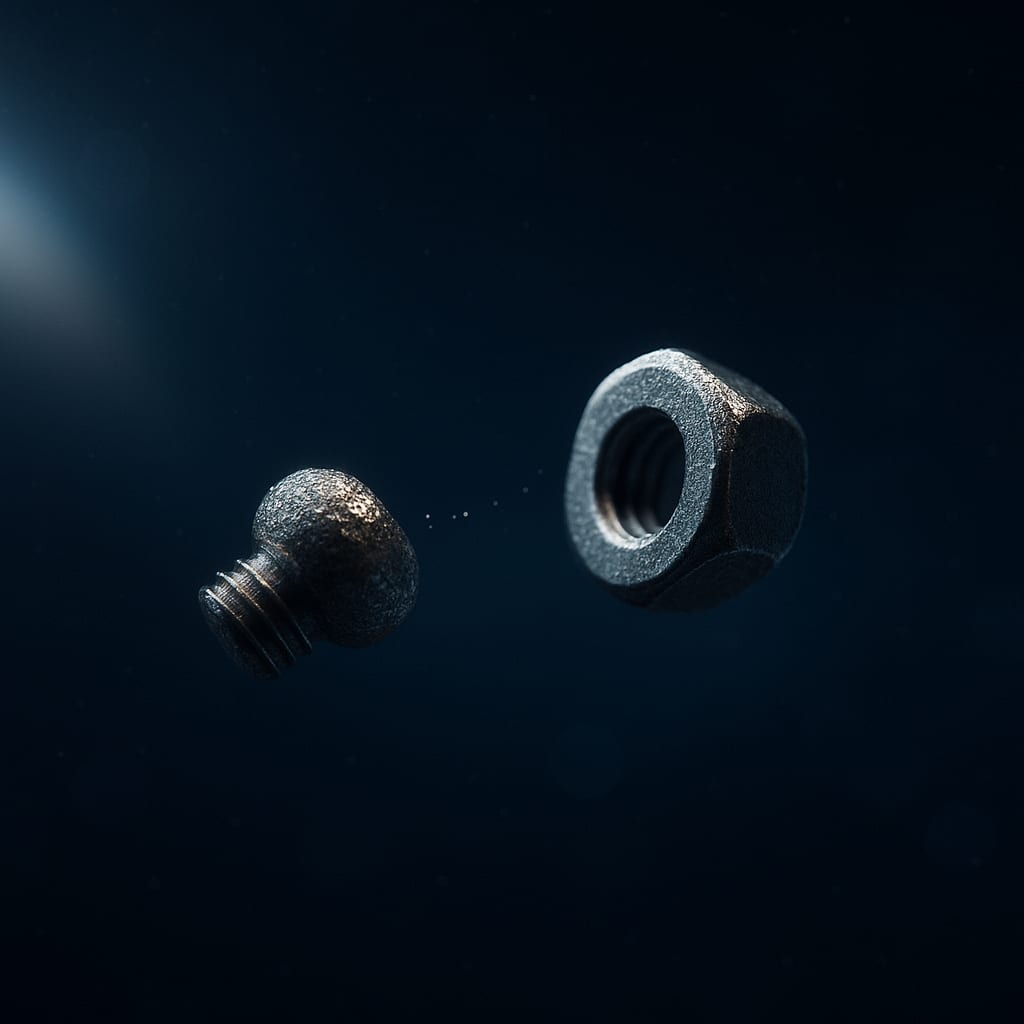
If you drop a pen and a paperclip on your desk, they just sit there. Nothing happens — no invisible force draws them together. But take those same two objects far away from Earth, into the silent vacuum of space, and something extraordinary begins to happen: they start to move toward each other. Slowly, almost imperceptibly at first, but undeniably. It sounds like science fiction — yet it’s a real and fascinating truth about how the universe works.
Gravity Never Sleeps
One of the biggest misconceptions people have about space is that it’s a place without gravity. After all, astronauts float, objects drift, and everything seems weightless. But that’s not because gravity disappears — it’s because it’s evenly distributed. In fact, gravity is everywhere. It’s one of the fundamental forces of the universe, quietly weaving everything together.
As Isaac Newton first realized, every object that has mass attracts every other object that has mass. It doesn’t matter if it’s a planet or a paperclip — the rule is universal. The only difference is how strong that attraction is. On Earth, the planet’s gravitational pull is so overwhelmingly dominant that any tiny attraction between small objects is completely drowned out.
Why We Don’t See It on Earth
Let’s put this into perspective. Take two ordinary apples, each weighing about 200 grams, sitting 10 centimeters apart on a table. The gravitational force between them is around 10⁻¹¹ newtons — that’s a number so small it’s practically meaningless in our daily lives. To give you an idea, it’s weaker than the weight of a single speck of dust. And because both apples are resting on a surface and surrounded by air, friction and resistance easily overpower that microscopic tug.
So, on Earth, even though your coffee cup and your phone are technically pulling on each other right now, you’ll never notice it. The gravitational influence of the entire planet — plus all the forces of contact, air pressure, and friction — hide that subtle dance completely.
The Cosmic Stage Changes Everything
Now imagine those same apples drifting together inside a spacecraft orbiting far from Earth. There’s no air resistance, no friction, and no giant planet nearby to dominate the gravitational field. In this environment, the tiny gravitational attraction between them becomes free to act.
At first, nothing seems to happen. The apples appear to hang perfectly still. But over minutes, hours, or even days, that faint pull starts to take effect. Slowly — very slowly — they begin to drift closer. Eventually, they’ll touch. It’s not magnetism, not static electricity, but pure gravity: matter attracting matter, as it always has.
This is the kind of phenomenon astronauts aboard the International Space Station occasionally observe with floating tools, droplets of water, or bits of debris. Even without touching, these objects tend to clump together over time, forming tiny clusters that behave almost like miniature planets.
The Building Blocks of Planets
This subtle attraction isn’t just a curiosity — it’s the reason we exist at all. Billions of years ago, when the solar system was just a swirling cloud of dust and gas, there were no planets, no moons, and no solid ground. But those individual grains of dust and ice particles had mass — and that meant they had gravity.
In the emptiness of space, they began to drift toward one another, ever so slightly. Tiny collisions turned dust into pebbles, pebbles into boulders, and boulders into planetesimals — the seeds of planets. Over time, through countless gentle (and not-so-gentle) impacts, gravity turned chaos into order, shaping worlds, moons, and even life itself.
So when two objects in space slowly pull together, you’re not just watching a neat science trick — you’re witnessing the same physics that built the universe.
The Silent Power of the Small
What’s so poetic about this is that it reminds us how universal physical laws truly are. Gravity doesn’t care about size, importance, or visibility. Whether it’s two galaxies colliding or two metal bolts floating in a spacecraft, the same rule applies: everything attracts everything.
And in a way, that’s a comforting thought. It means that connection — physical, invisible, inevitable — is built into the very structure of reality. The same force that keeps your feet on the ground is the one that pulls stars into galaxies, and galaxies into clusters, and clusters into the vast cosmic web we see today.
The Universe Is Always Reaching Out
Next time you see footage of astronauts floating in microgravity, imagine all the quiet gravitational relationships unfolding around them — the slow drift of particles, the merging of droplets, the meeting of tiny fragments that could, given enough time, grow into something magnificent.
Gravity, after all, is the universe’s way of saying: everything belongs together.
About the Creator
Keep reading
More stories from Holianyk Ihor and writers in Futurism and other communities.
Pandora Mission: Opening a Cosmic Box of Secrets
For centuries, humanity has looked to the night sky in wonder — to predict the seasons, to navigate oceans, or to seek meaning among the stars. Today, our gaze has a new purpose: to find out whether we’re alone in the universe. And leading this quest is NASA’s Pandora mission, a small but mighty space telescope designed to study the atmospheres of 39 distant exoplanets — all while watching their host stars and planets simultaneously.
By Holianyk Ihor3 months ago in Futurism
About Binding Prometheus
I want to start actively advocating on behalf of my own work, and the most valuable part of my canon is, without a doubt, Binding Prometheus, the play I have been working on since 2019 and only finished in 2023 as part of my MA. The play itself is an amalgamation of a million different inspirations. On one end, it evokes the Ancient Greek myth-play, deriving its own title from the earliest extant work of Western drama we have, Aeschylus’s Prometheus Bound. On the other end, it borrows significantly from the sci-fi bulwarks from over the years, namely Mary Shelley’s Frankenstein and Karel Capek’s Rossum’s Universal Robots. The play could be an episode of Black Mirror, I fear. I don’t know. I’ve only ever seen one episode of Black Mirror.
By Steven Christopher McKnight17 days ago in Futurism
Japan LED Modular Display Market Size & Forecast 2025–2033
Japan LED Modular Display Market at a Glance The Japan LED Modular Display market is anticipated to grow to US$ 1,009.54 million by 2033, rising from US$ 380.54 million in 2024, registering a robust CAGR of 11.45% during 2025–2033. This growth is driven by the increasing demand for high-resolution digital signage across retail, transportation, entertainment, and public infrastructure, combined with the adoption of energy-efficient, customizable display systems for Japan’s expanding smart city initiatives.
By Aaina Oberoi2 days ago in Futurism
Miss Persephone's Manual to a Seemingly Ordinary Life
Miss Persephone was found at the dining table, her blue eyes swollen, her tears arriving and retreating like the tides of the ocean. Earlier that day, her family had visited her in the retirement home where she had lived for eight years. It was her eightieth birthday.
By Imola Tóth3 days ago in Fiction


Comments
There are no comments for this story
Be the first to respond and start the conversation.