
Cataloging NEOs Down to 140 Meters: NASA and ESA’s New Planetary Defense Mission
Space

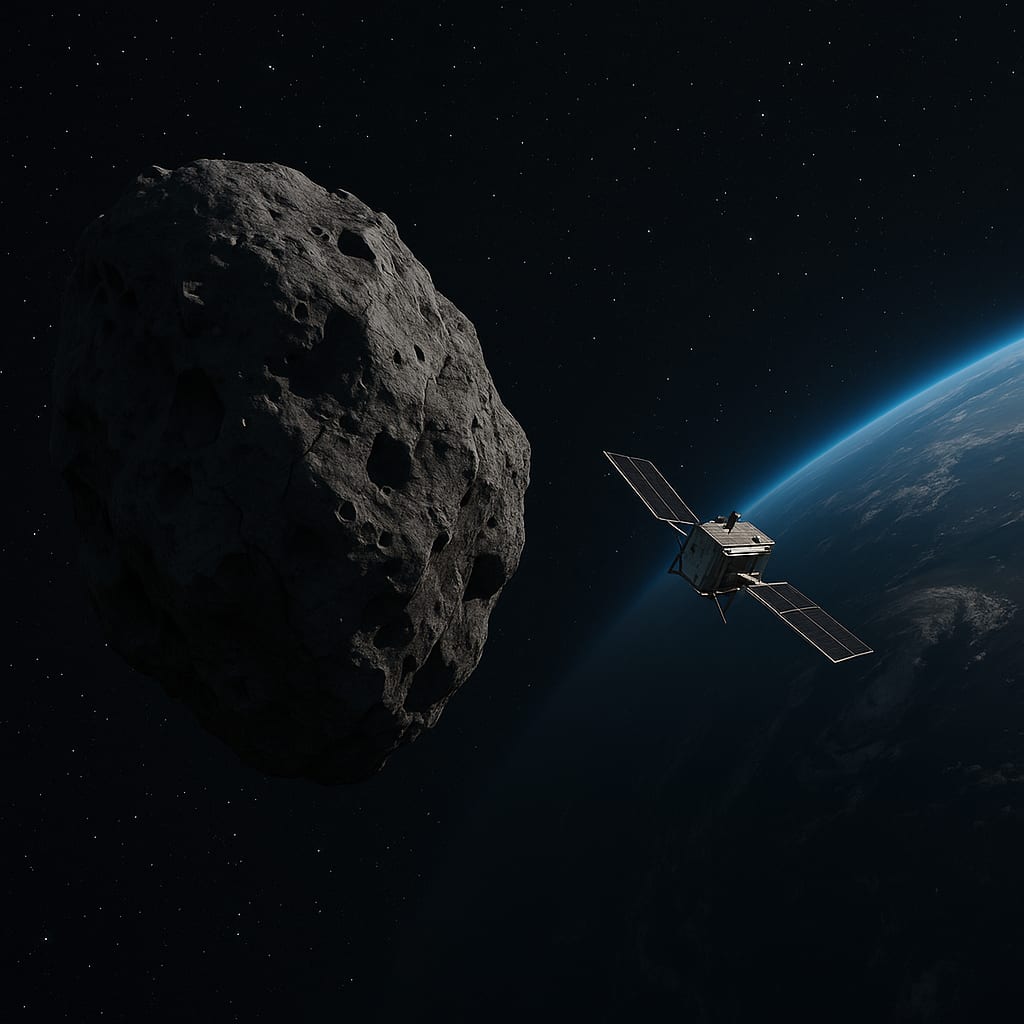
Not long ago, the idea of defending Earth from an asteroid sounded like pure science fiction. It was something you’d expect from a Hollywood disaster movie, not a space agency budget proposal. But today, protecting our planet from near-Earth objects (NEOs) has become a serious, well-funded scientific priority. NASA and the European Space Agency (ESA) have now set a bold shared goal: to detect and catalog at least 90% of all NEOs that are 140 meters or larger. Simply put, they want to find nearly every space rock big enough to erase a major city from the map.
It’s a mission that blends astronomy, engineering, statistics, and — let’s be honest — existential anxiety. But it’s also one of the most inspiring global science projects of the 21st century.
Why 140 Meters Matters
Why draw the line at 140 meters? Because objects of this size are the most dangerous category we are still mostly blind to. They’re the “Goldilocks” threat: not small enough to burn up in the atmosphere, and not rare enough to ignore.
A 140-meter asteroid hitting Earth could unleash energy equal to dozens of megatons of TNT — far beyond the largest nuclear weapon ever detonated. It wouldn’t end civilization, but it could end a city, a region, or a country’s economic core in a single morning. Imagine the blast wave, firestorms, regional climate effects, and decade-long consequences for trade, agriculture, and infrastructure.
For perspective:
Object Size Typical Damage Example
- 20–50 m Local shockwave and
broken windows Chelyabinsk, 2013
- 140+ m Regional devastation A wiped-out metro area
- 1 km+ Global consequences “Dinosaur-level” danger
The good news: we’ve already found most of the 1-kilometer-class objects. The bad news: we’ve only identified about half of the 140-meter category. The rest are still out there — silent, dark, and occasionally crossing Earth’s orbital path.
The Problem: Space Rocks Are Sneaky
Spotting asteroids is harder than it sounds. Many NEOs are made of dark, carbon-rich material that barely reflects sunlight. Some approach from the direction of the Sun, hiding in its glare like a thief walking out of a spotlight. Others move slowly against a dense background of stars, making them easy to miss.
To fix that, NASA and ESA are deploying a new generation of space- and ground-based systems designed specifically for planetary defense.
Meet the New Planetary Defense Arsenal
NASA’s NEO Surveyor (launch expected 2027)
- A space telescope that sees in infrared, not visible light
- Can spot dark asteroids by detecting their heat signature
- Tailored to find 100–200 meter objects previously invisible to Earth-based telescopes
ESA’s Flyeye Telescopes
- A new class of wide-field observatories
- Designed to scan massive portions of the sky each night
- “Insects’ eye” vision, but for space rocks
ESA’s NEOMIR Mission
- A spacecraft positioned between Earth and the Sun
- Watches objects approaching from the Sun-facing side — currently our biggest blind spot
Together, these systems create something humanity has never had before: a near-complete surveillance network for cosmic hazards.
Finding Is Only Step One: Can We Actually Deflect an Asteroid?
Cataloging dangerous asteroids is like spotting a ticking time bomb — it’s only useful if you also know how to defuse it. That’s why NASA and ESA are not only mapping NEOs but also practicing planetary defense in real life.
In 2022, NASA’s DART mission made history by purposely crashing a spacecraft into an asteroid and successfully changing its orbit. It was a small nudge, but a world-changing milestone. For the first time, humanity proved we can alter the trajectory of a celestial object. That demonstration is the foundation for future missions that could one day push a dangerous asteroid off a collision course with Earth.
The Big Picture: A New Era of Planetary Security
The effort to catalog NEOs down to 140 meters is not about panic — it’s about preparation. The earlier we detect a threat, the more options we have. With decades of warning, deflection is easy. With months of warning, it’s nearly impossible.
This mission may turn out to be one of the most important scientific achievements in human history. For billions of years, Earth has been struck by asteroids with no defense, no warning, and no mercy. Now, for the first time, life on this planet has the tools to fight back.
Planetary defense is no longer science fiction. It’s policy. It’s engineering. And it’s happening right now.
About the Creator
Keep reading
More stories from Holianyk Ihor and writers in Education and other communities.
How Sunlight Spins Space Rocks: New Insights into the YORP Effect
For decades, astronomers believed that the spins of asteroids were shaped almost entirely by violent collisions and gravitational encounters. That story is now changing. As telescopes grow sharper and space missions more precise, scientists are uncovering the surprising truth: sunlight itself can gradually twist, tilt, and even tear apart asteroids. This subtle, long-term influence is known as the YORP effect, and it is rapidly becoming one of the most intriguing topics in planetary science.
By Holianyk Ihor3 months ago in Education
My New Book is Finally Here
My poetry collection Beautiful and Brutal Things is done. It's actually done and finally published over 270 pages. Over a year of my life went into this book. More than a year, really. Long days at my computer, sometimes seven days a week because I couldn't stop even when I probably should have. Then two months of editing that felt harder than the writing itself. But it's finished, and I'm still standing, and the book is real.
By Tim Carmichael3 days ago in BookClub


Comments
There are no comments for this story
Be the first to respond and start the conversation.