Holianyk Ihor
Bio
Stories (419)
Filter by community
Why Space Robots Will Never Fully Replace Humans
When we imagine the future of space exploration, it’s easy to picture an army of tireless robots efficient, precise, and immune to the challenges of deep space. Already, machines like Mars rovers roam alien landscapes, satellites scan distant galaxies, and robotic landers touch down on asteroids. But despite the growing sophistication of these robotic marvels, there are compelling reasons why they will never truly replace human beings in space.
By Holianyk Ihor6 months ago in Futurism
Rare Metals from the Stars: What Elements Exist Only in Meteorites?
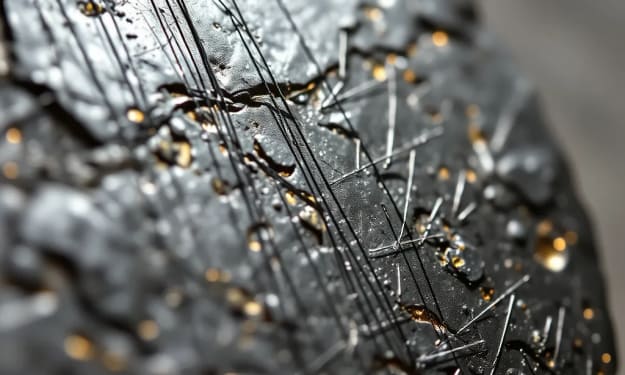
When we gaze at the night sky, a deep sense of wonder takes over. The stars, the planets, the endless void of space it all feels mysterious and unreachable. But every so often, space reaches back. It hurls pieces of itself toward Earth in the form of meteorites. These rocky or metallic visitors aren’t just celestial curiosities they’re treasure chests carrying exotic materials rarely, or never, found in Earth’s crust. Some of the metals discovered in meteorites are so rare and unusual that scientists refer to them as “cosmic anomalies.” So, which metals (and metal-like compounds) exist only in meteorites?
By Holianyk Ihor6 months ago in Futurism
The Cosmic-Scale Paradox: How Infinity Shapes Our Perception of Reality
When we gaze up at the night sky, a sense of wonder often mixes with a quiet unease. The universe is vast breathtakingly silent, dazzlingly beautiful, and perhaps… infinite. This idea of infinity is not just a scientific curiosity. It’s a profound philosophical paradox that challenges our very perception of what is real, what is possible, and what it means to exist.
By Holianyk Ihor6 months ago in Futurism
What If Earth Had Two Moons?
When we look up at the night sky and see the Moon glowing peacefully above us, everything seems just right. The Moon stabilizes Earth’s tilt, controls the tides, and has inspired poets, artists, and scientists for centuries. But what if there weren’t just one Moon what if Earth had two? How would that change our planet, our lives, and our future?
By Holianyk Ihor6 months ago in Futurism
What We Know About Microbes in Space: Invisible Passengers of the Final Frontier
When we imagine space, we often think of stars, planets, black holes, and astronauts in sleek white suits floating through the vacuum. But rarely do we consider the invisible life forms that travel alongside them microbes. These microscopic hitchhikers accompany us everywhere on Earth: in our homes, on our skin, and inside our bodies. But they also boldly go where no microbe has gone before into space.
By Holianyk Ihor6 months ago in Futurism
Why Don’t Spaceships Use Solar Panels for Propulsion?
At first glance, it sounds like the perfect idea: space is flooded with sunlight, so why not use solar panels not just to power onboard systems, but also to propel the spacecraft itself? It seems clean, endless, and efficient. But in reality, the situation is far more complicated. Solar panels are excellent for generating electricity but they’re a poor choice for producing thrust. Here’s why.
By Holianyk Ihor6 months ago in Futurism
How Religions Explained the Cosmos Before Telescopes: Myths, Dogmas, and Celestial Mysteries
Long before telescopes, satellites, and astrophysics offered us a glimpse into the true nature of the universe, humanity gazed at the night sky with a mixture of awe and fear. Stars, planets, comets, and the Moon weren’t just distant objects they were divine symbols, messages from the heavens, and pieces of a grand spiritual puzzle. In nearly every culture, the cosmos was explained through the lens of religion and mythology. So how exactly did people understand the universe before science took its first real look through a lens?
By Holianyk Ihor6 months ago in Futurism
What Would You See If You Could Travel Faster Than Light?
An Imaginative Journey Beyond the Boundaries of Physics The speed of light isn’t just fast it’s the cosmic speed limit. According to Albert Einstein’s theory of special relativity, nothing with mass can reach or exceed the speed of light in a vacuum (about 299,792 km/s). But what if we suspend the rules for a moment? What if faster-than-light (FTL) travel were possible? What would we see as we crossed that ultimate frontier?
By Holianyk Ihor6 months ago in Futurism
Why Do Astronauts Take Spoons but Not Knives into Space?
Strange but true facts about everyday life in orbit When we imagine an astronaut floating through the International Space Station (ISS), we might picture futuristic gadgets, floating food packets, and tools for eating in microgravity. But here’s a curious fact: astronauts always have spoons but hardly ever bring knives. Why? The answer reveals a lot about how different life in space really is.
By Holianyk Ihor6 months ago in Futurism
What Happens Inside a Meteor During Its Fall to Earth?
Every time we see a bright streak across the night sky a meteor blazing through the atmosphere we’re witnessing a truly cosmic event. But have you ever wondered what’s happening inside that fiery object during those dramatic seconds of descent? A meteor is not just a rock falling from the sky. It’s undergoing a violent transformation, both physically and chemically. Let’s take a journey into its core and uncover the incredible events unfolding within.
By Holianyk Ihor6 months ago in Futurism
When the Moon Was Closer: What the Sky Looked Like Millions of Years Ago
Imagine looking up at the night sky hundreds of millions of years ago. The stars were still there, the Milky Way still stretched like a luminous river across the heavens but the Moon? It was a very different sight. Back then, it loomed much larger and brighter in the sky, dominating the night with an intensity we can barely imagine today. Its gravitational pull stirred the seas with incredible force, shaping coastlines and perhaps even influencing the origins of life itself. But how close was the Moon, and what did the world look like beneath its powerful glow?
By Holianyk Ihor6 months ago in Futurism
What’s the Difference Between a Galaxy and a Nebula?
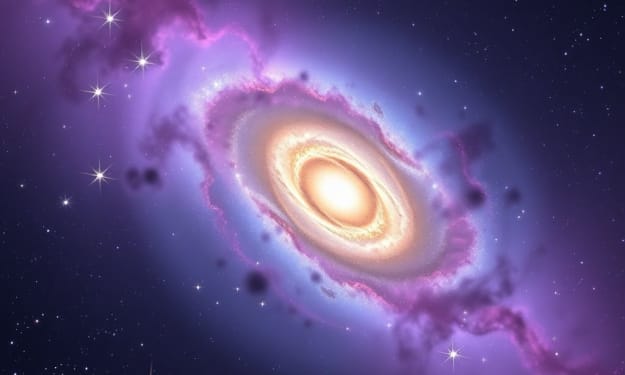
Understanding Cosmic Scale One Cloud at a Time When we gaze at the night sky or marvel at breathtaking telescope images, we often see dazzling spirals, glowing patches, or soft, misty shapes floating in the dark. Some of these spectacular sights are galaxies, while others are nebulae. At a glance, they might seem similar both beautiful, both mysterious but they’re fundamentally different in size, structure, and purpose in the grand architecture of the universe.
By Holianyk Ihor6 months ago in Futurism