Holianyk Ihor
Bio
Stories (419)
Filter by community
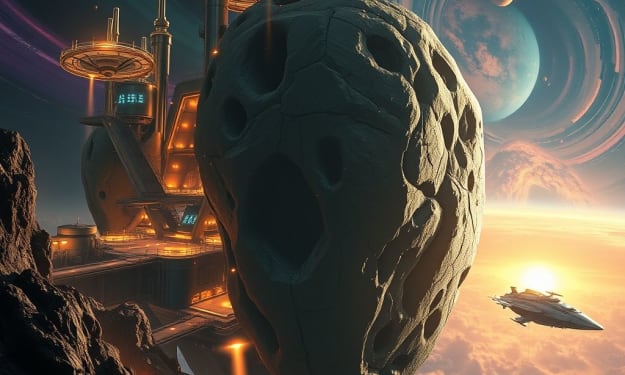
How Asteroids Could Become Fuel Stations for Spacecraft
When most people think of asteroids, they imagine lifeless, rugged rocks silently drifting through the vast emptiness of space. But for engineers and scientists of the future, these cosmic boulders are far more than just space debris they could become the gas stations of the Solar System.
By Holianyk Ihor5 months ago in Futurism
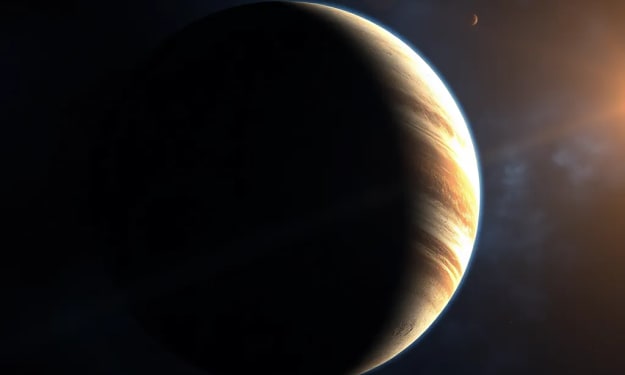
The Myths of Planet Nibiru – and Why They’re Not True
Throughout human history, mysterious legends have always found a place in our collective imagination. In recent decades, one of the most persistent modern space myths has been the tale of the mysterious planet Nibiru the so-called “planet of doom” that some claim is destined to collide with Earth and wipe out all life.
By Holianyk Ihor5 months ago in Futurism
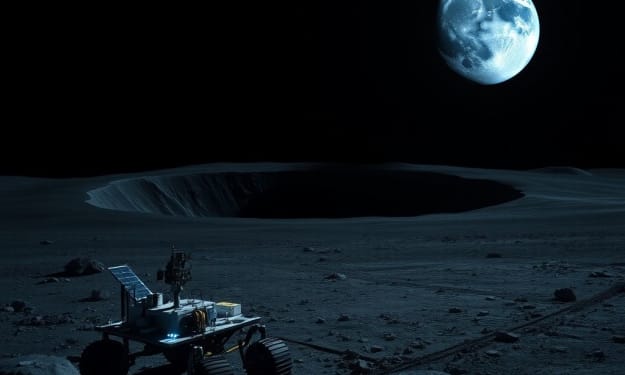
Mining Water on the Moon: Unlocking the Key to Future Space Colonies
When we picture the Moon, most of us imagine a barren, silent world: endless gray plains, craters stretching to the horizon, and a pitch-black sky untouched by clouds. Water seems like the last thing you’d expect to find there. For decades, that was the assumption confirmed, it seemed, by the first lunar missions, which found no obvious signs of liquid water.
By Holianyk Ihor5 months ago in Futurism
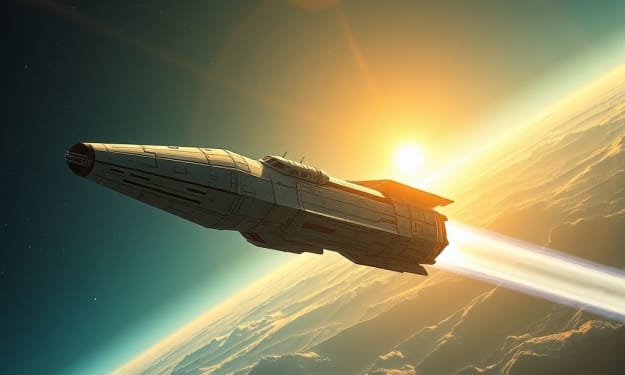
Exoskeletons for Astronauts: How the Spacesuits of the Future Could Transform Space Exploration
Picture this: an astronaut strides across the rocky plains of Mars. Their movements are smooth and confident, like a seasoned mountaineer on Earth. They lift heavy equipment with ease, react quickly to unexpected challenges, and can even run across uneven terrain in thin, alien air. This isn’t a superhero scene from a sci-fi movie it’s the promise of exoskeleton technology.
By Holianyk Ihor5 months ago in Futurism
How the Universe Can “Regenerate” Galaxies
When we think about galaxies, we imagine grand, seemingly eternal structures made up of billions of stars, planets, gas clouds, and dark matter. They appear timeless cosmic cities that simply age until their stars burn out, leaving only cold, silent darkness.
By Holianyk Ihor5 months ago in Futurism
What Would Happen If You Broke the Speed of Light?
Science, sci-fi, and a dash of time paradoxes The speed of light in a vacuum about 299,792 kilometers per second (or roughly 186,282 miles per second) isn’t just a big number. It’s the ultimate cosmic speed limit, built into the very fabric of the universe. Albert Einstein’s special theory of relativity proved more than a century ago that nothing with mass can travel faster than light.
By Holianyk Ihor5 months ago in Futurism
How Space Creates Crystals: Jewels from the Depths of the Universe
When most people think of crystals, they imagine a sparkling piece of quartz on display in a mineral shop or a perfectly cut diamond set in a ring. But few realize that some of the most unusual and flawless crystals are not born deep within Earth’s crust they are forged in the cold, airless reaches of space.
By Holianyk Ihor5 months ago in Futurism
Hot Jupiters — The Planets That Shouldn’t Exist
In astronomy, there’s a strange breed of worlds that seem to defy common sense. They’re enormous, like Jupiter, yet they orbit so close to their stars that a “year” on them lasts only a few Earth days. Their scorching atmospheres can reach temperatures hot enough to melt metal. Astronomers call them Hot Jupiters and, by all known laws of planetary science, they shouldn’t exist at all.
By Holianyk Ihor5 months ago in Futurism
Super-Dense Worlds: Where a Kilogram Weighs Tons
When we think about weight, we usually picture familiar things: a kilogram of apples, a ton of bricks, a liter of water. Our measurements feel intuitive because we live on Earth, with Earth’s gravity. But step beyond our planet, and the entire system begins to break down. Imagine a world where a simple kilogram feels as heavy as a small car. Welcome to the realm of super-dense objects places where gravity bends reality, from neutron stars and exotic exoplanets to hypothetical "hell worlds" that challenge our understanding of physics.
By Holianyk Ihor5 months ago in Futurism
Why Do Some Stars Spin Close to the Speed of Light?
When we think about stars, we usually picture brilliant glowing spheres, massive in size and unimaginably hot. But among these cosmic giants, there exists a rare class of stars that defy even our wildest expectations they spin so fast that parts of them move at speeds approaching that of light. It sounds like science fiction, but it's a very real phenomenon. So how can a star spin that fast without tearing itself apart? Let’s dive into the physics of these stellar speedsters.
By Holianyk Ihor5 months ago in Futurism
From Chaos to Cosmos: How Order Emerged After the Big Bang
When we hear the word chaos, we imagine disorder swirling motion, noise, confusion. Now imagine that our entire universe began in exactly such a state: incredibly hot, unimaginably dense, and bursting with energy. That wild beginning is what we call the Big Bang. And yet, billions of years later, from this primordial chaos emerged galaxies, stars, planets even life itself. How did something so ordered come from such a turbulent start?
By Holianyk Ihor5 months ago in Futurism
The Physics of Black Holes: What Lies Beyond the Event Horizon?
Black holes are among the most mysterious and fascinating objects in the universe. We know they exist. We can observe how they interact with surrounding matter. We’ve even captured their “shadows” against the fabric of space, thanks to the incredible Event Horizon Telescope. But the most tantalizing question still remains unanswered: what happens inside a black hole beyond the event horizon?
By Holianyk Ihor5 months ago in Futurism