
When the Moon Was Closer: What the Sky Looked Like Millions of Years Ago
Space

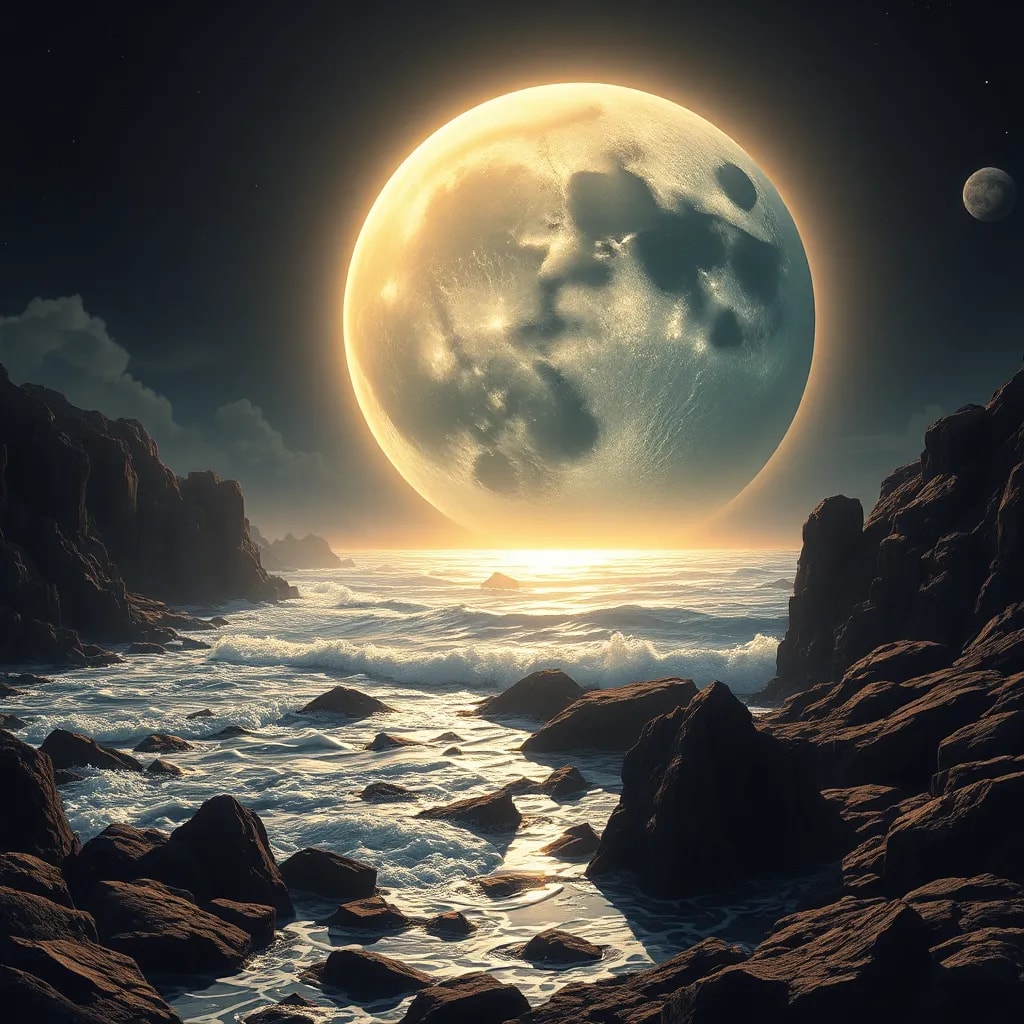
Imagine looking up at the night sky hundreds of millions of years ago. The stars were still there, the Milky Way still stretched like a luminous river across the heavens but the Moon? It was a very different sight. Back then, it loomed much larger and brighter in the sky, dominating the night with an intensity we can barely imagine today. Its gravitational pull stirred the seas with incredible force, shaping coastlines and perhaps even influencing the origins of life itself. But how close was the Moon, and what did the world look like beneath its powerful glow?
The Moon That’s Drifting Away
Today, the Moon is receding from Earth at a rate of about 3.8 centimeters per year. That doesn’t sound like much, but over millions or billions of years, it adds up. Scientists estimate that around 4.5 billion years ago, shortly after the Moon formed, it orbited Earth at just 20,000 to 30,000 kilometers away. Compare that to the current average of 384,000 kilometers, and it becomes clear: the Moon was nearly 15 times closer in the distant past.
A Celestial Spectacle
If you could stand on ancient Earth and look up, the Moon would have appeared 10 to 15 times larger in the sky. Imagine a glowing orb taking up a massive portion of the horizon, casting bold, sharp shadows even at night. A full Moon might have illuminated the landscape almost as brightly as twilight today.
Its proximity also sped up its orbit around Earth. A lunar cycle the time from one full Moon to the next lasted just a few days instead of the familiar 29.5. The changing phases zipped by, and the Moon's tug on Earth's oceans created violent, rapid tidal shifts. Seas surged and fell with immense power, making the coastline a dynamic, unpredictable place.
Tides and the Rise of Life
Those extreme tides likely played a key role in the development of early life. Some scientists believe that the constant movement of water in tidal pools created the ideal conditions for complex chemical reactions. Shallow lagoons were alternately exposed and submerged, forming rich environments where organic molecules could mix, react, and evolve. The Moon’s closeness may have literally pulled life out of the sea.
The Moon Slows the Earth
When the Moon was closer, Earth rotated faster. A single day may have lasted just 4 to 6 hours. But the gravitational interaction between the Earth and the Moon acted like a brake. The Moon pulled on Earth's tidal bulges, creating a drag that slowly slowed Earth's spin. Over billions of years, that braking effect has given us the 24-hour day we know today a rhythm that life on Earth has adapted to and depends on.
Why Is the Moon Moving Away?
This gradual distancing is caused by a transfer of angular momentum. As Earth spins, it drags the ocean's tidal bulge slightly ahead of the Moon’s orbit. This creates a gravitational interaction that pushes the Moon outward while also slowing Earth's rotation. It's a slow dance of physics, playing out over unimaginable timescales, and it's still happening today.
What Dinosaurs Saw in the Sky
Fast forward to about 100 million years ago, during the age of the dinosaurs. By then, the Moon had already moved farther out, but it was still 30,000 to 40,000 kilometers closer than it is now. It would have appeared slightly larger in the sky and likely shone more brightly. Paleontologists speculate that this extra light may have influenced the behavior of nocturnal creatures helping some hunt and others hide.
A Future Without the Moon?
If the Moon continues drifting away, one day billions of years from now its impact on Earth will fade. Tides will weaken, eclipses will become rare, and days will grow longer. Eventually, as the Sun swells into a red giant, it may engulf both Earth and Moon. But that's a distant scenario. For now, the Moon remains a powerful influence.
The Moon: Our Cosmic Timekeeper
The Moon is more than just a companion in the sky. It’s a cosmic chronicle, a timekeeper that records the gravitational story of Earth. Its orbit tells us about the history of our planet, its rotation, its oceans, and its life. Though the Moon seems distant now, its closeness in the past shaped the world in profound ways.
When we gaze at the Moon today, we don’t just see a distant rock we see a reflection of our planet’s past. The sky has changed, but the memory of a closer Moon lives on in tides, rhythms, and the ancient story of life.
About the Creator
Keep reading
More stories from Holianyk Ihor and writers in Futurism and other communities.
What’s the Difference Between a Galaxy and a Nebula?
Understanding Cosmic Scale One Cloud at a Time When we gaze at the night sky or marvel at breathtaking telescope images, we often see dazzling spirals, glowing patches, or soft, misty shapes floating in the dark. Some of these spectacular sights are galaxies, while others are nebulae. At a glance, they might seem similar both beautiful, both mysterious but they’re fundamentally different in size, structure, and purpose in the grand architecture of the universe.
By Holianyk Ihor6 months ago in Futurism
About Binding Prometheus
I want to start actively advocating on behalf of my own work, and the most valuable part of my canon is, without a doubt, Binding Prometheus, the play I have been working on since 2019 and only finished in 2023 as part of my MA. The play itself is an amalgamation of a million different inspirations. On one end, it evokes the Ancient Greek myth-play, deriving its own title from the earliest extant work of Western drama we have, Aeschylus’s Prometheus Bound. On the other end, it borrows significantly from the sci-fi bulwarks from over the years, namely Mary Shelley’s Frankenstein and Karel Capek’s Rossum’s Universal Robots. The play could be an episode of Black Mirror, I fear. I don’t know. I’ve only ever seen one episode of Black Mirror.
By Steven Christopher McKnight19 days ago in Futurism
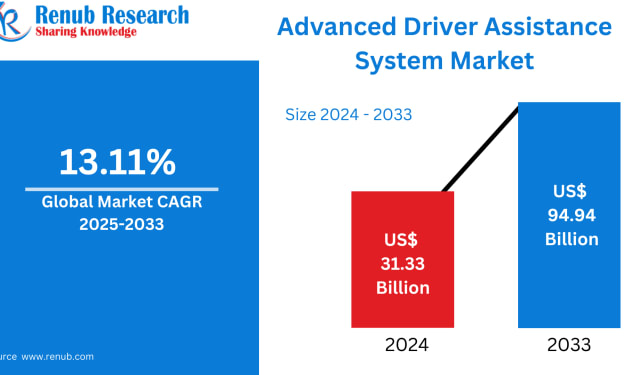
Advanced Driver Assistance System Market Size and Forecast 2025–2033
Advanced Driver Assistance System Market Advanced Driver Assistance System Industry Overview The Advanced Driver Assistance System (ADAS) industry represents one of the most transformative segments of modern automotive technology. Designed to enhance vehicle safety, minimize human error, and improve driving comfort, ADAS technologies are increasingly becoming essential rather than optional. From adaptive cruise control and lane departure warning to collision avoidance and automatic emergency braking, these systems are redefining how vehicles interact with drivers, roads, and surrounding traffic environments.
By Renub Research7 days ago in Futurism


Comments (1)
👑👑