
What We Know About Microbes in Space: Invisible Passengers of the Final Frontier
Space

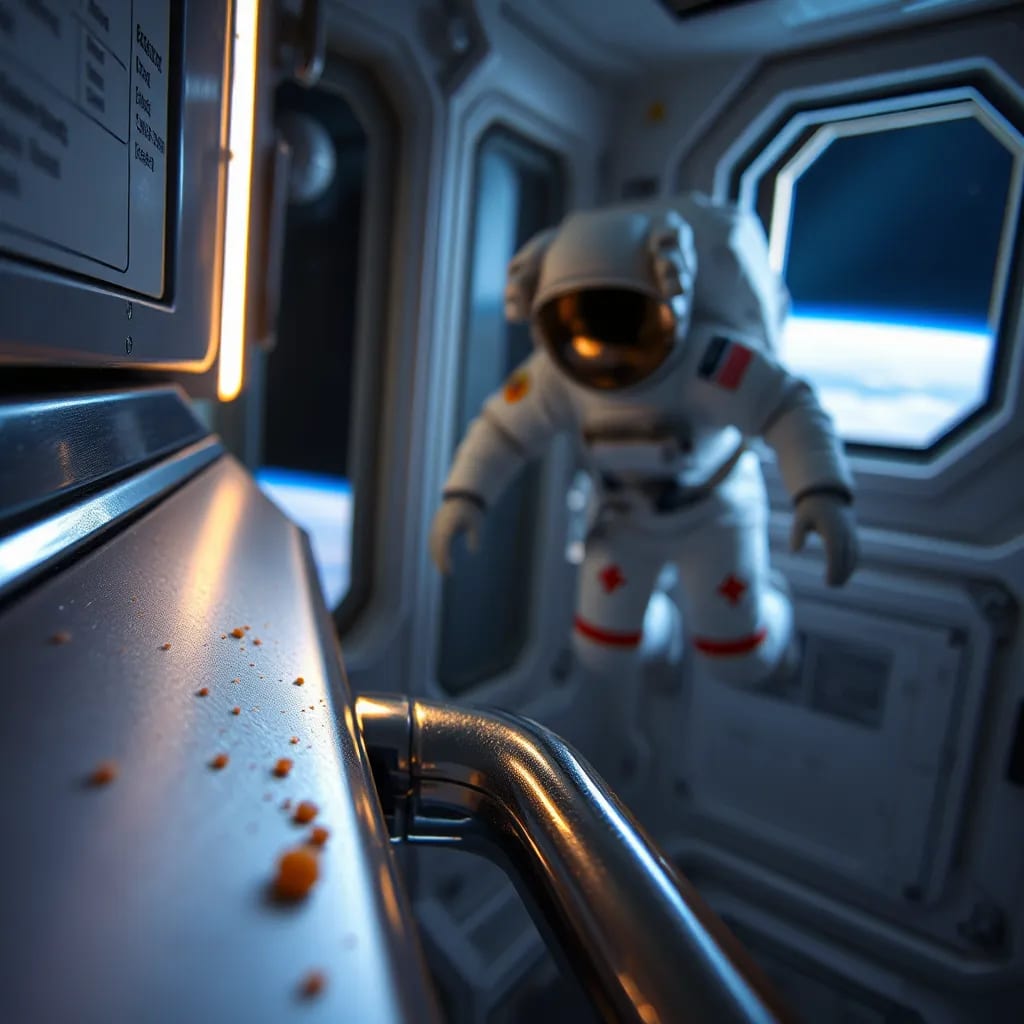
When we imagine space, we often think of stars, planets, black holes, and astronauts in sleek white suits floating through the vacuum. But rarely do we consider the invisible life forms that travel alongside them microbes. These microscopic hitchhikers accompany us everywhere on Earth: in our homes, on our skin, and inside our bodies. But they also boldly go where no microbe has gone before into space.
How Do Microbes End Up in Space?
Every rocket, satellite, space station, and astronaut carries an invisible cloud of microorganisms. Despite rigorous sterilization protocols by NASA, ESA, and other space agencies, it’s nearly impossible to completely eliminate microbes from space-bound equipment. They hide in crevices, cling to skin, and even survive within life-support systems. In fact, when a crew launches into orbit, they bring with them a whole ecosystem of microbes knowingly or not.
What Do Microbes Do in Orbit?
Far from just surviving, some microbes actually thrive in space. Studies conducted aboard the International Space Station (ISS) have revealed surprising and sometimes concerning results:
- Increased Resilience: Microgravity and cosmic radiation appear to make some bacteria stronger. For example, Salmonella cultured in space showed greater virulence compared to Earth-bound strains. In other words, it became better at causing disease.
- Biofilm Formation: Microbes aboard the ISS tend to form stubborn biofilms dense microbial layers that cling to surfaces. These biofilms can clog water systems, corrode metal surfaces, and resist disinfection, posing serious risks to both machinery and astronauts’ health.
- Genetic Mutations: Exposure to space conditions can lead to rapid mutations in microbial DNA. While some of these changes may be harmless or even beneficial others could potentially create harmful superbugs or disrupt ecosystems onboard.
Why Does It Matter?
Studying microbes in space isn’t just a quirky scientific side quest. It’s crucial for the future of human spaceflight and planetary science:
- Crew Health: A contained environment like the ISS makes it easier for infections to spread. And since astronauts often experience weakened immune systems in space, even normally harmless microbes could become dangerous.
- Long-Duration Missions: Future missions to Mars or lunar bases will involve long periods of isolation, far from Earth. Understanding how microbes behave in such conditions is vital for developing effective medical and environmental protocols.
- Planetary Protection: There’s a dual concern here. First, we must avoid contaminating other planets with Earth-based microbes. Second, we need to protect Earth from any extraterrestrial microorganisms we might bring back. That’s where strict planetary protection policies come into play.
Eye-Opening Research
Some of the most fascinating discoveries about space microbes come from real experiments:
- In Japan’s Tanpopo experiment, scientists found that Deinococcus bacteria could survive for up to three years in outer space clinging to the exterior of the ISS. These extremophiles endured vacuum, UV radiation, and drastic temperature swings.
- In 2018, researchers identified unknown microbial colonies on the ISS. While some speculated they might be extraterrestrial in origin, it’s more likely they were mutated Earth-based microbes adapting to space.
What Can Space Microbes Teach Us?
Despite the risks, space microbes offer exciting scientific opportunities:
- Redefining Life’s Boundaries: If microbes can survive the vacuum of space, it opens the possibility of life existing on other worlds like Mars, or icy moons such as Europa and Enceladus.
- New Medicines: The stress of space can cause microbes to develop unique genetic traits. Studying these changes could help us create new antibiotics or therapies for use both in space and on Earth.
- Sustainable Space Living: Microbes might play a role in recycling waste, generating oxygen, or producing materials for future space habitats. They could become key players in closed-loop life-support systems.
Did Life Come from Space?
One of the most fascinating ideas in astrobiology is panspermia the theory that life on Earth may have originated from microbes carried on comets or meteorites. While still unproven, the resilience of microbes in space adds credibility to this possibility. Could we be the descendants of cosmic bacteria?
Conclusion
Microbes are more than just stowaways on our cosmic journeys they're essential partners in exploring and understanding the universe. From preserving astronaut health to hinting at the possibility of alien life, these tiny organisms remind us that even in the vastness of space, life finds a way.
Studying microbes in space is a bridge between the invisible and the infinite, between our blue planet and the stars beyond. And as we continue to venture farther from Earth, these microscopic explorers will go with us silently shaping the future of space exploration.
About the Creator
Keep reading
More stories from Holianyk Ihor and writers in Futurism and other communities.
Why Don’t Spaceships Use Solar Panels for Propulsion?
At first glance, it sounds like the perfect idea: space is flooded with sunlight, so why not use solar panels not just to power onboard systems, but also to propel the spacecraft itself? It seems clean, endless, and efficient. But in reality, the situation is far more complicated. Solar panels are excellent for generating electricity but they’re a poor choice for producing thrust. Here’s why.
By Holianyk Ihor6 months ago in Futurism
About Binding Prometheus
I want to start actively advocating on behalf of my own work, and the most valuable part of my canon is, without a doubt, Binding Prometheus, the play I have been working on since 2019 and only finished in 2023 as part of my MA. The play itself is an amalgamation of a million different inspirations. On one end, it evokes the Ancient Greek myth-play, deriving its own title from the earliest extant work of Western drama we have, Aeschylus’s Prometheus Bound. On the other end, it borrows significantly from the sci-fi bulwarks from over the years, namely Mary Shelley’s Frankenstein and Karel Capek’s Rossum’s Universal Robots. The play could be an episode of Black Mirror, I fear. I don’t know. I’ve only ever seen one episode of Black Mirror.
By Steven Christopher McKnight16 days ago in Futurism
Car Sharing Market Size and Forecast 2025–2033
Introduction: A New Era of Mobility The global transportation landscape is undergoing a profound transformation. Once dominated by private vehicle ownership, urban mobility is now being reshaped by digital platforms, sustainability priorities, and changing consumer behavior. At the center of this shift stands the Car Sharing Market, a model that emphasizes access over ownership, flexibility over permanence, and efficiency over excess.
By Aaina Oberoi5 days ago in Futurism



Comments
There are no comments for this story
Be the first to respond and start the conversation.