Deji Akomolafe
Bio
Stories (512)
Filter by community
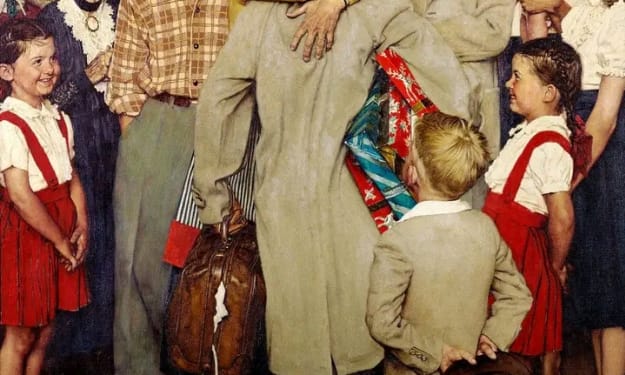
A Norman Rockwell Christmas: The Saturday Evening Post, December 25, 1948
Few artists have captured the spirit of American life quite like Norman Rockwell. His illustrations for The Saturday Evening Post remain iconic, offering heartwarming glimpses into mid-20th century America. One of his most beloved works graced the cover of the December 25, 1948 issue of the Post, a festive scene that tells a story of family, joy, and the warmth of Christmas without the need for obvious holiday symbols.
By Deji Akomolafeabout a year ago in Art
Trajan's Market: The World’s Oldest Shopping Mall
In the heart of Rome, on the slopes of the Quirinal Hill, lies an architectural marvel that has stood the test of time for nearly two millennia: Trajan’s Market. Built around 100-110 AD during the reign of Emperor Trajan, this ancient structure is widely regarded as the world’s first shopping mall. Designed by the renowned architect Apollodorus of Damascus, the market was a groundbreaking project that showcased the ingenuity of Roman engineering and urban planning.
By Deji Akomolafeabout a year ago in History
The Mud Maid: The Living Sculpture of the Lost Gardens of Heligan
The Mud Maid: The Living Sculpture of the Lost Gardens of Heligan Nestled within the enchanting Lost Gardens of Heligan in Cornwall, England, lies a sleeping figure whose beauty evolves with the seasons. Known as the Mud Maid, this remarkable living sculpture captivates visitors with her dynamic connection to nature. Unlike traditional statues crafted from stone or bronze, the Mud Maid is a creation of living plants, moss, and earth, seamlessly blending art with the natural world. Her changing attire, formed by seasonal foliage, makes her an ever-changing masterpiece and a testament to the creative ingenuity behind the Lost Gardens.
By Deji Akomolafeabout a year ago in Art
Buckden Palace: A Symbol of Katherine of Aragon's Defiance
The life of Katherine of Aragon, the first wife of King Henry VIII, is a story of strength, resilience, and tragedy. After her marriage to Henry VIII was annulled in 1533, Katherine was confined to Buckden Palace in Cambridgeshire. This quiet yet fortified residence became a central chapter in the dramatic saga of the Tudor court and remains a symbol of her defiance against one of England's most powerful monarchs.
By Deji Akomolafeabout a year ago in History
From Science to Luxury: The Fascinating Tale of Sir Isaac Newton's Tooth
In the annals of history, few individuals hold the intellectual weight and legacy of Sir Isaac Newton. A physicist, mathematician, and astronomer, Newton's name is synonymous with scientific discovery and enlightenment. His contributions to the understanding of gravity, motion, and optics laid the groundwork for much of modern science. But while his intellectual feats are celebrated globally, few are aware of the peculiar journey of one of his personal artifacts—his tooth—through history.
By Deji Akomolafeabout a year ago in History
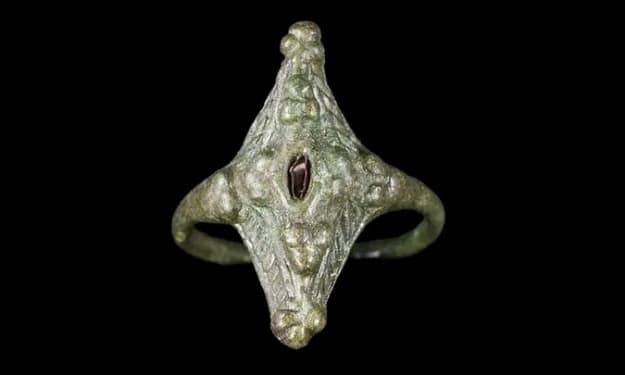
Unearthing History: The Remarkable Discovery of a Pictish Ring in Moray, Scotland
In a thrilling revelation for historians and archaeologists alike, a rare Pictish ring, estimated to be between 1,000 and 1,500 years old, has been uncovered in Moray, Scotland. This extraordinary find sheds new light on the mysterious Picts, an ancient Celtic people whose enigmatic culture has long fascinated scholars and enthusiasts of early Scottish history.
By Deji Akomolafeabout a year ago in History
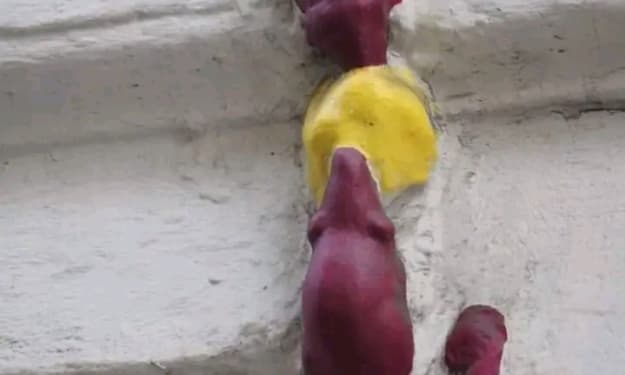
The Two Mice Eating Cheese: London’s Smallest Public Statue with a Big Story
London, a city rich in history and monumental landmarks, is home to countless statues and memorials. Yet, among the grand memorials and imposing sculptures lies a tiny yet quirky piece of London’s history—The Two Mice Eating Cheese. This diminutive carving, located on the exterior wall of a building on Philpot Lane near Monument tube station, is often overlooked by passersby.
By Deji Akomolafeabout a year ago in Art
The Mummy Portrait of a Man from Fayum: A Glimpse into Roman Egypt
In the arid deserts of Egypt lies an extraordinary artistic tradition that bridges the gap between two distinct cultural worlds: ancient Egypt and imperial Rome. Among the most fascinating remnants of this cultural fusion are the mummy portraits, strikingly lifelike depictions of individuals painted on wooden panels or linen shrouds. One such masterpiece, the Mummy Portrait of a Man, dating to the 2nd or 3rd century CE, now resides in the Ny Carlsberg Glyptotek in Copenhagen.
By Deji Akomolafeabout a year ago in Art
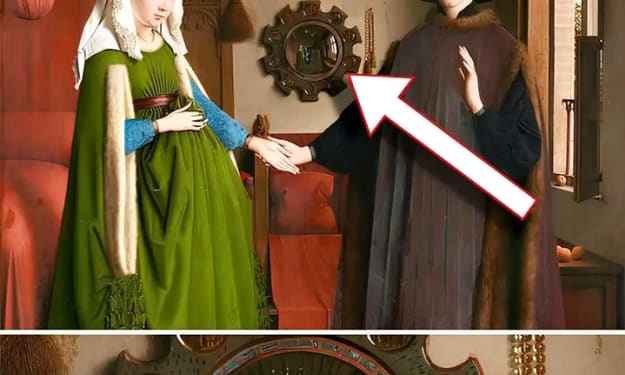
The Mystery and Mastery of Jan van Eyck's Convex Mirror in The Arnolfini Portrait
Jan van Eyck's The Arnolfini Portrait (1434) is one of the most celebrated and analyzed paintings in Western art history. It portrays Giovanni di Nicolao Arnolfini, a wealthy Italian merchant, and his wife in a richly detailed interior. While the couple at the painting’s center initially captures the viewer’s attention, it is the small, convex mirror in the background—measuring a mere three inches in diameter—that continues to mesmerize art enthusiasts and scholars alike. This tiny yet monumental element offers a masterclass in technical skill, narrative depth, and symbolic complexity, elevating the painting from a portrait to a portal of artistic genius.
By Deji Akomolafeabout a year ago in Art
The Doge's Palace: A Gateway to Venice’s Mysterious Piombi Prison
In the heart of Venice, nestled within the grandeur of the Doge’s Palace, lies a portal to a shadowy world of intrigue and imprisonment. One of the doors to the Piombi, the infamous prison located in the attic of this architectural marvel, offers a glimpse into Venice’s darker past. The Piombi, named after the lead plates that lined its roof, is shrouded in stories of despair, resilience, and legendary escapes. To explore its history is to unravel a tapestry of power, justice, and the human spirit.
By Deji Akomolafeabout a year ago in History
The Power of Gratitude: Lessons from a Simple Pair of Shoes
In 1946, a photograph captured a moment of pure, unfiltered joy. It was the face of Werfel, a six-year-old Austrian boy, holding his first pair of new shoes. Separated from his parents and living in an orphanage in post-war Vienna, Werfel’s life had been marked by loss and hardship. Yet, the gift of something as simple as new shoes, provided by the American Red Cross, brought a radiant smile to his face—a moment that still resonates with us today.
By Deji Akomolafeabout a year ago in Art
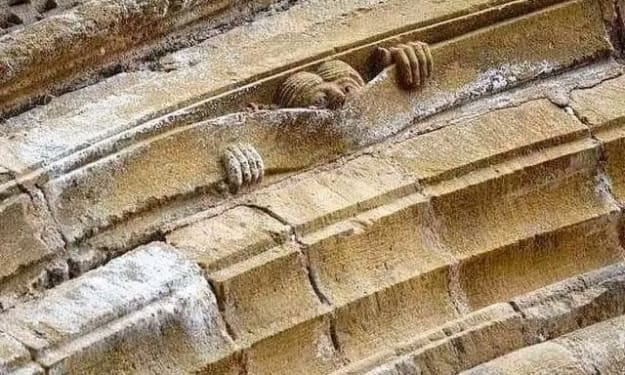
Medieval Masonry: The Craftsmanship Behind Iconic Structures
Medieval Masonry: The Craftsmanship Behind Iconic Structures The medieval era, spanning roughly from the 5th to the 15th century, was an age of remarkable architectural innovation. From soaring cathedrals to fortified castles, medieval masonry laid the foundation—quite literally—for some of the world’s most enduring structures. These buildings, with their intricate stonework and enduring strength, not only showcased the skill of medieval masons but also reflected the cultural, religious, and technological advancements of the time.
By Deji Akomolafeabout a year ago in History