
Trajan's Market: The World’s Oldest Shopping Mall
Ancient Roman Street

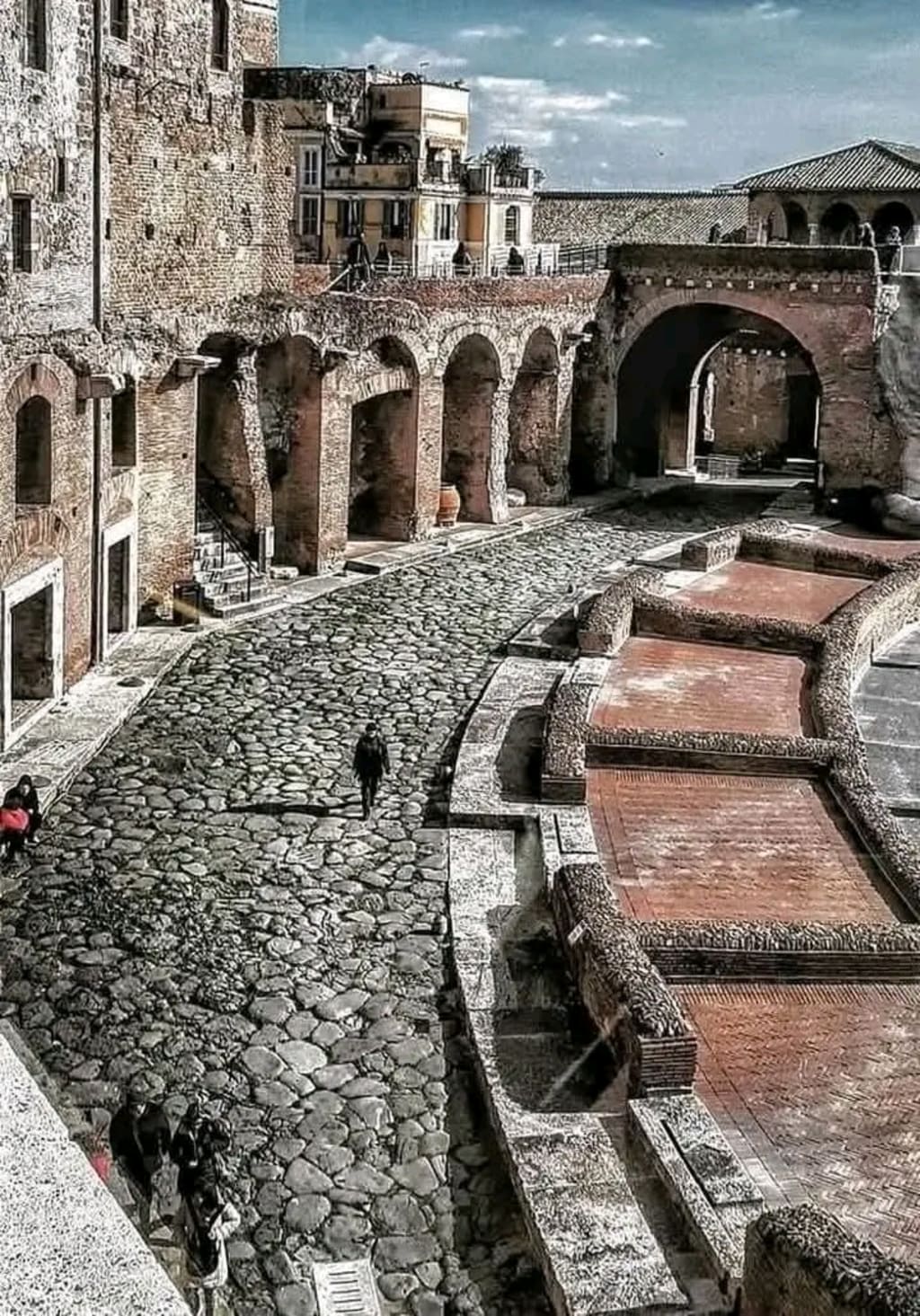
In the heart of Rome, on the slopes of the Quirinal Hill, lies an architectural marvel that has stood the test of time for nearly two millennia: Trajan’s Market. Built around 100-110 AD during the reign of Emperor Trajan, this ancient structure is widely regarded as the world’s first shopping mall. Designed by the renowned architect Apollodorus of Damascus, the market was a groundbreaking project that showcased the ingenuity of Roman engineering and urban planning.
Today, Trajan’s Market remains a testament to the sophistication of ancient Rome, offering insights into the commercial and social life of the empire at its zenith.
A Visionary Emperor and His Architect
Trajan, one of Rome’s most celebrated emperors, was known for his ambitious building projects that symbolized the power and prosperity of the Roman Empire. His reign marked a period of significant territorial expansion and economic growth, which he sought to immortalize through grand architectural feats.
To realize his vision for a state-of-the-art marketplace, Trajan enlisted Apollodorus of Damascus, an architectural genius of the era. Together, they conceived a futuristic complex that combined functionality with aesthetic grandeur, setting a precedent for urban commercial centers.
The Structure of Trajan’s Market
Trajan’s Market is an expansive complex that spans multiple levels, ingeniously carved into the Quirinal Hill. It is made primarily of brick and concrete, showcasing the durability of Roman construction techniques.
The market features 150 shops and offices organized across six levels, each serving a specific purpose:
- Lower Levels: These housed shops selling a variety of goods, including silk, spices from the Middle East, fresh fish, fruit, and flowers.
- Upper Levels: These were likely used for administrative offices and warehouses for storing goods.
At the center of the market is the Great Hall, a large, open space with vaulted ceilings that demonstrates the Romans' mastery of engineering. The hall not only served as a focal point for the market but also provided a gathering space for social and commercial interactions.
Shopping in Ancient Rome
Trajan’s Market was more than just a place to buy goods—it was a bustling hub of commerce and social activity. The diversity of products available was staggering for the time. Roman citizens could browse through an array of exotic goods imported from across the empire, reflecting Rome's vast trade networks.
Imagine a Roman merchant picking up spices from the East to enhance their cooking or a wealthy matron selecting fine silk for her wardrobe. Fresh fish, fruits, and flowers added to the vibrancy of the market, catering to the daily needs of the city's residents.
Moreover, the market’s design facilitated efficient commerce. Its tiered layout allowed for easy movement of goods, while the individual shops provided dedicated spaces for merchants to display their wares.
An Architectural Masterpiece
The design of Trajan’s Market was as innovative as its purpose. The semi-circular layout of the main structure, coupled with the use of concrete and brick, ensured stability and functionality. The complex was meticulously planned to maximize natural light and ventilation, making it comfortable for both merchants and shoppers.
One of the most striking features of the market is the Great Hemicycle, a curved structure lined with shops. The arcaded façade and high windows gave the space a sense of openness and elegance, while the terraces offered stunning views of the surrounding city.
Another remarkable feature is the Via Biberatica, an ancient street that runs through the market. Lined with taverns and shops, this street provided a lively atmosphere where visitors could take a break from shopping to enjoy food and drinks.
Trajan’s Market Today
Although much of Trajan’s Market has been weathered by time, its ruins remain a major tourist attraction and a source of fascination for historians and archaeologists. Visitors to the site can walk through the ancient streets, explore the remnants of shops, and marvel at the architectural ingenuity of the Romans.
The market is now part of the Museum of the Imperial Fora, which offers exhibitions on Roman history and urban development. Artifacts unearthed from the site, including pottery, coins, and tools, provide a glimpse into the daily lives of ancient Romans.
Legacy of Trajan’s Market
Trajan’s Market is not just an ancient relic; it is a symbol of Rome’s enduring legacy as a pioneer in urban planning and commerce. The concept of a centralized shopping area, introduced by Trajan and Apollodorus, laid the foundation for modern retail spaces.
The market also reflects the cosmopolitan nature of the Roman Empire, where goods, ideas, and cultures from across the known world converged. It serves as a reminder of Rome’s economic might and the ingenuity of its people.
Conclusion
Trajan’s Market stands as a remarkable achievement in the history of architecture and commerce. Built nearly two thousand years ago, it remains an awe-inspiring example of Roman innovation and vision.
For anyone visiting Rome, a trip to Trajan’s Market is a journey back in time, offering a unique opportunity to experience the vibrancy of ancient Roman life. It is not just a shopping center—it is a monument to human creativity, resilience, and the enduring allure of the Eternal City.
About the Creator
Keep reading
More stories from Deji Akomolafe and writers in History and other communities.
Buckden Palace: A Symbol of Katherine of Aragon's Defiance
The life of Katherine of Aragon, the first wife of King Henry VIII, is a story of strength, resilience, and tragedy. After her marriage to Henry VIII was annulled in 1533, Katherine was confined to Buckden Palace in Cambridgeshire. This quiet yet fortified residence became a central chapter in the dramatic saga of the Tudor court and remains a symbol of her defiance against one of England's most powerful monarchs.
By Deji Akomolafeabout a year ago in History
Is the U.S. Preparing to Attack Iran?
Is the U.S. Preparing to Attack Iran? Inside the Rising Tensions and Possible Military Pathways In early 2026, tensions between the United States and Iran reached one of their highest points in years. For weeks, dramatic political rhetoric, shifting military postures, and warnings from leaders around the world have fueled alarms that a U.S. military strike against Iran may be imminent. Yet as of now, no confirmed attack has occurred, and the situation reflects a complex mix of pressure, preparation, de-escalation, and diplomatic uncertainty that illustrates how modern conflict can hinge just as much on words and positioning as on direct action.
By Wings of Time 3 days ago in History
No ICE, No KKK, No Fascist USA
"I don't 'do' politics." Politics will do you, regardless. Watching from the sidelines for the last year I can see far too many similarities in the way Trump's ICE Gestapo is to Nazi Germany. Considering the United States just invaded Venezuela and kidnapped their President and his wife I would say we are there.
By Lyvia Jack5 days ago in History


Comments
There are no comments for this story
Be the first to respond and start the conversation.