
Unearthing History: The Remarkable Discovery of a Pictish Ring in Moray, Scotland
Scotland Discovery

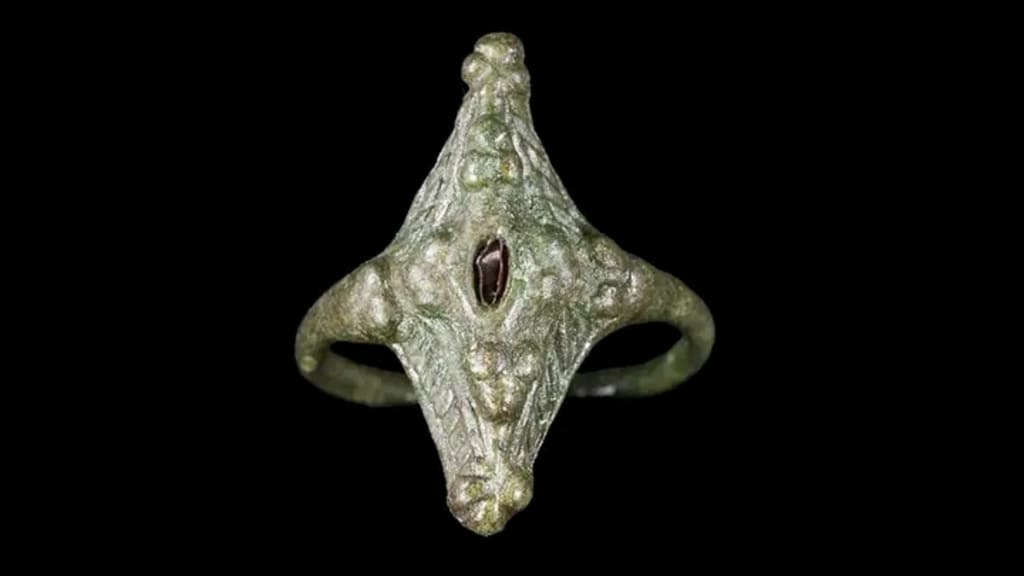
In a thrilling revelation for historians and archaeologists alike, a rare Pictish ring, estimated to be between 1,000 and 1,500 years old, has been uncovered in Moray, Scotland. This extraordinary find sheds new light on the mysterious Picts, an ancient Celtic people whose enigmatic culture has long fascinated scholars and enthusiasts of early Scottish history.
The discovery of this intricately designed ring, believed to hold significant cultural and historical value, offers a unique glimpse into the lives and artistry of the Pictish civilization. With artifacts from this era being relatively scarce, this find marks a pivotal moment in uncovering the secrets of Scotland’s early inhabitants.
Who Were the Picts?
The Picts, whose name derives from the Latin Picti meaning "painted people," were a confederation of Celtic tribes that inhabited what is now Scotland during the late Iron Age and early medieval periods. They are most famously known for their distinctive stone carvings, adorned with symbols, animals, and patterns that remain undeciphered to this day.
By the time of the 10th century, the Picts had largely merged with the Gaels, leaving behind a legacy that continues to intrigue researchers. Despite their significant role in shaping Scottish history, much about their language, culture, and daily lives remains cloaked in mystery, as relatively few Pictish artifacts have survived the passage of time.
The Ring: A Glimpse Into the Past
The recently unearthed ring, though small in size, carries immense historical weight. Crafted with intricate detail, it is thought to have been made from silver—a material indicative of its owner’s high status.
Preliminary studies suggest that the ring might have been used as a symbol of authority or allegiance, possibly worn by a Pictish noble or warrior. Its ornate design, featuring abstract motifs and geometric patterns, mirrors the Picts' renowned artistic style, which is often seen on their standing stones and jewelry.
Dr. Fiona MacLeod, a leading expert in Pictish archaeology, described the find as “a tangible connection to a people whose lives and stories have largely faded into obscurity. This ring is more than just a piece of jewelry; it’s a fragment of a culture that has shaped the fabric of Scotland.”
The Discovery Site
The ring was uncovered during a planned excavation near a known Pictish settlement in Moray, an area rich in early medieval history. Archaeologists had been investigating the site for several months, hoping to uncover more about the Picts’ social structures and way of life.
Moray itself has a long association with Pictish heritage. The region is dotted with ancient ruins, carved stones, and burial sites, which collectively narrate the story of the Picts’ dominance in northern Scotland. This latest find adds another chapter to Moray’s impressive archaeological record.
Why This Discovery Matters
Pictish artifacts, especially personal items like rings, are rare treasures. Unlike their contemporaries, such as the Romans, the Picts left no written records. Much of what we know about them comes from their symbolic carvings and occasional mentions in other cultures' writings.
This scarcity of material evidence makes the Moray ring a groundbreaking find. Each artifact allows historians to piece together fragments of the Pictish puzzle—what they valued, how they interacted with their environment, and their societal hierarchy.
The intricate craftsmanship of the ring also highlights the Picts' advanced metallurgical skills and artistic sensibilities. This serves as a reminder that they were far from the "barbarians" depicted in some historical accounts but were instead a sophisticated society with a rich cultural identity.
Unanswered Questions
While the discovery has sparked excitement, it has also raised intriguing questions. Who might have worn the ring, and what role did they play in Pictish society? Was it a token of allegiance, a status symbol, or perhaps even a diplomatic gift?
Furthermore, could this discovery hint at the existence of a larger trove of artifacts waiting to be found in the area? Archaeologists are optimistic, with ongoing excavations aiming to uncover more about the settlement and its inhabitants.
The Broader Impact
Beyond its academic significance, the discovery of the Pictish ring is expected to bolster cultural tourism in Scotland. Moray, already a destination for history enthusiasts, could see increased interest as the artifact garners international attention.
Plans are underway to display the ring in a local museum, where visitors can marvel at its beauty and ponder its mysterious origins. Public interest in the Picts and their enigmatic history is likely to grow, inspiring further exploration and preservation of Scotland’s ancient heritage.
Conclusion
The unearthing of the Pictish ring in Moray is a remarkable testament to Scotland’s rich and layered history. As a tangible link to a long-lost civilization, it serves as a reminder of the Picts’ enduring legacy and their contributions to Scotland’s cultural tapestry.
While much about the Picts remains shrouded in mystery, discoveries like this bring us one step closer to understanding these ancient people. With every artifact unearthed, we honor their memory and ensure their stories are not forgotten.
As archaeologists continue to delve into the past, the Moray ring stands as a shining beacon of what can be achieved through meticulous research and exploration. Scotland’s ancient secrets may be slowly unraveling, but their allure remains as captivating as ever.
About the Creator
Keep reading
More stories from Deji Akomolafe and writers in History and other communities.
The Doge's Palace: A Gateway to Venice’s Mysterious Piombi Prison
In the heart of Venice, nestled within the grandeur of the Doge’s Palace, lies a portal to a shadowy world of intrigue and imprisonment. One of the doors to the Piombi, the infamous prison located in the attic of this architectural marvel, offers a glimpse into Venice’s darker past. The Piombi, named after the lead plates that lined its roof, is shrouded in stories of despair, resilience, and legendary escapes. To explore its history is to unravel a tapestry of power, justice, and the human spirit.
By Deji Akomolafeabout a year ago in History
The Fall of Tibet to a Communist State: History, Causes, and Consequences
The incorporation of Tibet into the People’s Republic of China (PRC) after 1950 was not a single event but a complex process involving military force, political negotiation, ideological conflict, and long-lasting resistance. Understanding this fall requires examining Tibet’s historical status, China’s communist revolution, and the profound consequences that followed.
By Say the truth about 14 hours ago in History
Are Banks Open on Martin Luther King Jr. Day?
Introduction Martin Luther King Jr. Day, also called MLK Day, is a national holiday in the United States. Many people enjoy a day off from work or school on this day. However, a common question people ask is: Are banks open on MLK Day?
By Farhan Sayedabout 3 hours ago in History




Comments
There are no comments for this story
Be the first to respond and start the conversation.