
Buckden Palace: A Symbol of Katherine of Aragon's Defiance
Medieval Times

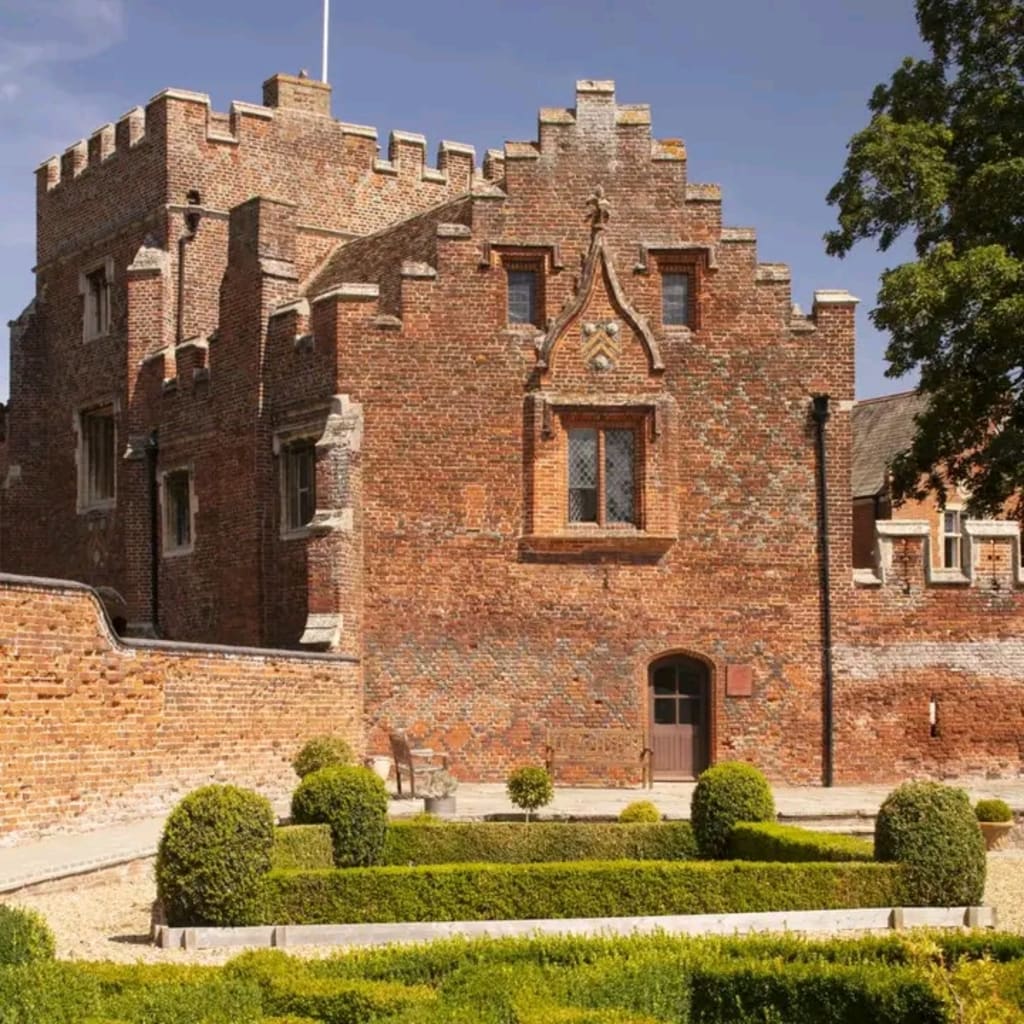
The life of Katherine of Aragon, the first wife of King Henry VIII, is a story of strength, resilience, and tragedy. After her marriage to Henry VIII was annulled in 1533, Katherine was confined to Buckden Palace in Cambridgeshire. This quiet yet fortified residence became a central chapter in the dramatic saga of the Tudor court and remains a symbol of her defiance against one of England's most powerful monarchs.
Katherine of Aragon’s Fall from Grace
Katherine, a Spanish princess and the daughter of Ferdinand II of Aragon and Isabella I of Castile, was married to Henry VIII for over 20 years. Their union, however, was marred by Henry's obsessive quest for a male heir. When Katherine failed to provide him with a surviving son, Henry sought to annul their marriage, claiming it was invalid because she had previously been married to his late brother, Arthur.
Katherine refused to acquiesce. A devout Catholic, she believed her marriage was sacred and valid in the eyes of God. Her defiance set her against the king and contributed to the English Reformation, as Henry broke away from the Roman Catholic Church to establish the Church of England.
Exile to Buckden Palace
After the annulment in 1533, Katherine was stripped of her title as queen and demoted to "Princess Dowager of Wales." Henry banished her to Buckden Palace, a moated residence surrounded by expansive gardens and a great hall. Located in the quiet countryside of Cambridgeshire, the palace was intended to isolate Katherine from the court and her supporters.
Despite its seclusion, Buckden Palace became a focal point for Katherine’s loyal followers. The locals in Cambridgeshire adored her, and many openly sympathized with her plight. Her unwavering popularity posed a threat to Henry’s authority.
Henry made several attempts to move Katherine to more remote locations, such as the Fens, where the harsh environment would have made visits from supporters nearly impossible. However, Katherine steadfastly resisted, citing her declining health and the unjust treatment she endured.
Buckden as a Symbol of Defiance
Katherine’s resistance was not limited to her refusal to relocate. From Buckden Palace, she maintained an active correspondence with her daughter, Mary, and other allies. Her letters were filled with words of encouragement and advice, as she continued to fight for Mary’s legitimacy and her own dignity.
Even in exile, Katherine upheld her role as queen in spirit. She continued to observe courtly traditions, dressed in regal attire, and remained committed to her religious devotions. Her presence at Buckden Palace became a rallying point for those who opposed Henry’s policies, particularly the break with Rome.
In 1534, after much pressure, Katherine was finally moved to Kimbolton Castle, where she lived out her final days. Despite her relocation, Buckden Palace retained its symbolic status as a site of defiance against Henry VIII’s tyranny.
Henry VIII’s Visit to Buckden
In a twist of history, Buckden Palace re-entered the royal narrative in 1541 when Henry VIII visited the site during his summer progress. By this time, Henry was married to his fifth wife, Catherine Howard. The visit was part of a tour designed to showcase royal power and bolster the king’s authority in regions that had been resistant to the religious changes he had implemented.
The choice to visit Buckden was laden with irony. The palace, once a prison for Katherine of Aragon, now served as a stop on the king’s journey. The visit likely stirred memories of Katherine’s defiance, as her legacy continued to cast a shadow over Henry’s reign.
Catherine Howard, Henry’s teenage bride, would later face her own tragic downfall. Just months after the visit to Buckden, she was executed for alleged adultery, further cementing the palace’s association with the turbulence of Henry’s marital life.
Legacy of Buckden Palace
Today, Buckden Palace stands as a testament to the Tudor era’s complex history. The site, now known as Buckden Towers, still retains elements of its original design, including the gatehouse and portions of the great hall. Visitors can walk the grounds where Katherine of Aragon once defied the most powerful man in England.
Katherine’s time at Buckden Palace serves as a poignant reminder of her unwavering faith and strength. Despite her fall from power, she never abandoned her principles or her belief in the sanctity of her marriage. Buckden became more than just a residence—it became a symbol of her quiet resistance and enduring legacy.
For historians and admirers of Tudor history, the story of Buckden Palace encapsulates the human drama of Henry VIII’s reign. Katherine of Aragon’s courage in the face of adversity continues to inspire, making Buckden a place of historical and emotional significance.
As the centuries pass, the echoes of Katherine’s struggle and the events that unfolded at Buckden Palace remind us of the resilience of the human spirit and the enduring power of standing up for one’s beliefs, even against seemingly insurmountable odds.
About the Creator
Keep reading
More stories from Deji Akomolafe and writers in History and other communities.
From Science to Luxury: The Fascinating Tale of Sir Isaac Newton's Tooth
In the annals of history, few individuals hold the intellectual weight and legacy of Sir Isaac Newton. A physicist, mathematician, and astronomer, Newton's name is synonymous with scientific discovery and enlightenment. His contributions to the understanding of gravity, motion, and optics laid the groundwork for much of modern science. But while his intellectual feats are celebrated globally, few are aware of the peculiar journey of one of his personal artifacts—his tooth—through history.
By Deji Akomolafeabout a year ago in History
3 Completely Normal Jobs With Disturbing Hidden Histories
Every job has a backstory. Some are boring, some are inspiring, and some are better left buried. While modern versions of certain professions look harmless—sometimes even respectable—their origins tell a much darker story.
By Enoch Sagini5 days ago in History
Albert Einstein: The Mind That Changed the Universe
Albert Einstein was not born a legend. When he entered the world on March 14, 1879, in the quiet German city of Ulm, nothing about his early life suggested that he would one day transform science forever. In fact, his beginnings were remarkably ordinary—and in some ways, difficult. As a child, Einstein spoke slowly, so slowly that his parents worried something might be wrong. Teachers considered him distracted and stubborn, a boy who questioned too much and obeyed too little. Yet hidden beneath that quiet exterior was a restless, powerful curiosity that would later reshape the universe itself.
By The best writer 4 days ago in History



Comments
There are no comments for this story
Be the first to respond and start the conversation.