
The Mystery and Mastery of Jan van Eyck's Convex Mirror in The Arnolfini Portrait
Art Portrait

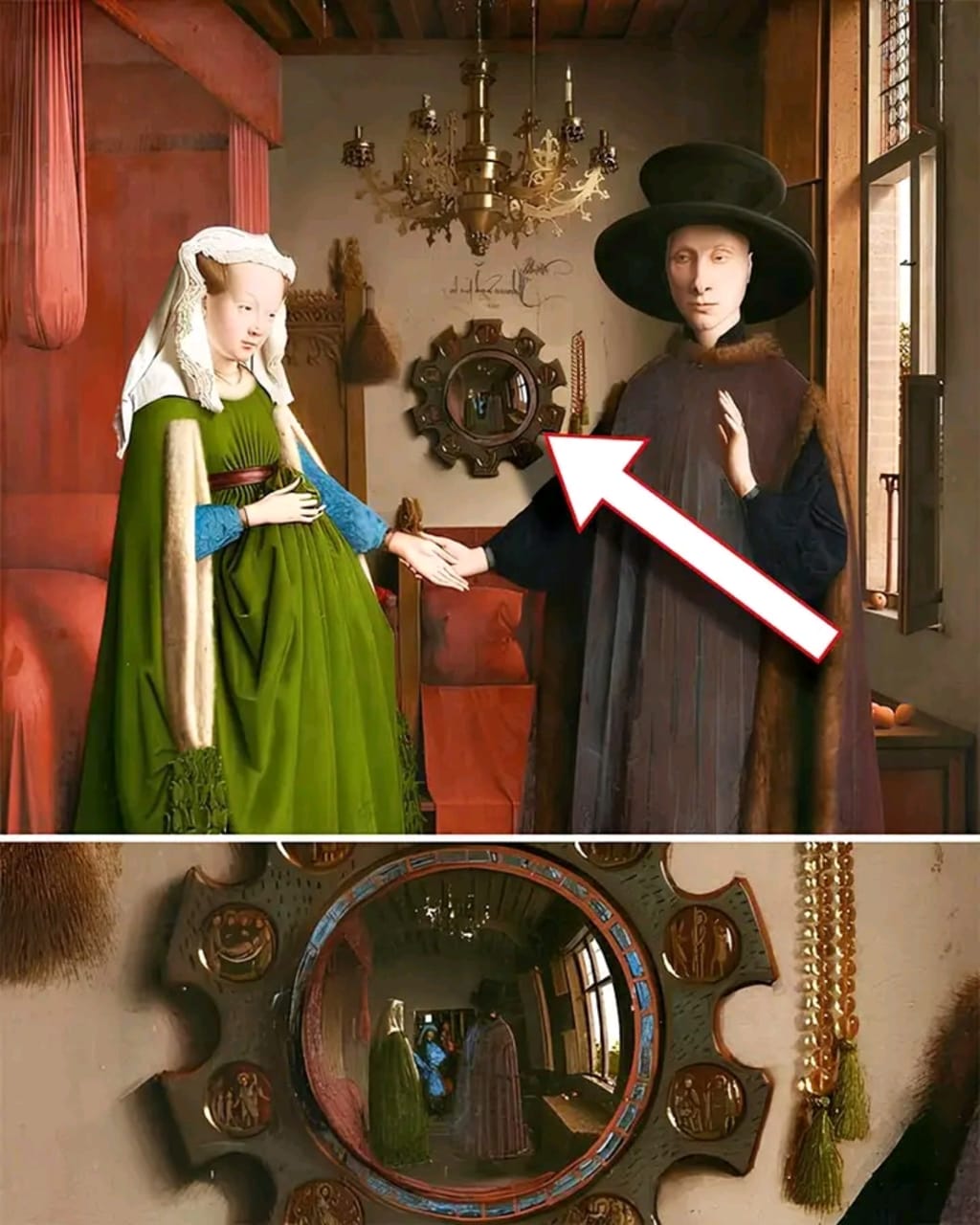
Jan van Eyck's The Arnolfini Portrait (1434) is one of the most celebrated and analyzed paintings in Western art history. It portrays Giovanni di Nicolao Arnolfini, a wealthy Italian merchant, and his wife in a richly detailed interior. While the couple at the painting’s center initially captures the viewer’s attention, it is the small, convex mirror in the background—measuring a mere three inches in diameter—that continues to mesmerize art enthusiasts and scholars alike. This tiny yet monumental element offers a masterclass in technical skill, narrative depth, and symbolic complexity, elevating the painting from a portrait to a portal of artistic genius.
The Convex Mirror: A Portal to the Scene
At first glance, the convex mirror in The Arnolfini Portrait might seem like a decorative detail. However, a closer inspection reveals its astonishing depth and purpose. Despite its small size, the mirror reflects the entire room, including the backs of the Arnolfinis and two additional figures standing in the doorway. One of these figures is believed to be Jan van Eyck himself, subtly inserting his presence into the artwork. His signature, inscribed above the mirror with the words "Jan van Eyck was here 1434," bolsters this interpretation and transforms the mirror into a witness of the moment, as well as a declaration of his artistry.
The mirror functions as a narrative tool, capturing a perspective unseen by the primary subjects of the painting. This not only draws the viewer deeper into the scene but also bridges the divide between the painted world and the real one. The reflection invites the audience to step into the room, becoming silent witnesses to the event unfolding in the portrait.
Symbolism Encircling the Mirror
Encircling the convex mirror are ten exquisitely detailed medallions, each depicting a scene from the Passion of Christ. These scenes—ranging from the Crucifixion to the Resurrection—infuse the painting with religious symbolism. The Passion cycle was a common theme in medieval art, reminding viewers of Christ's sacrifice and redemption. Its presence here could suggest themes of piety, marital fidelity, or even the sanctity of the couple’s union.
The inclusion of these medallions also speaks to van Eyck’s meticulous craftsmanship. Each tiny depiction, no more than a few millimeters wide, is rendered with astonishing precision, reflecting the painter’s unparalleled skill and attention to detail. The medallions serve as a symbolic frame for the mirror, emphasizing its central role in the painting’s layered narrative.
Technical Brilliance and Optical Illusion
The convex mirror showcases van Eyck’s extraordinary understanding of light, perspective, and optics. In an era long before the advent of photographic technology, van Eyck’s ability to depict the distorted yet accurate reflections seen in a convex surface was revolutionary. The mirror’s curvature subtly warps the room’s geometry, capturing details such as the wooden beams of the ceiling, the chandelier, and even the orange resting on the windowsill.
This feat of illusionism underscores van Eyck’s reputation as a pioneer of oil painting. His use of thin, translucent glazes allowed him to achieve an unmatched level of realism and luminosity. The mirror not only demonstrates his technical brilliance but also exemplifies his ability to integrate science and art seamlessly.
Layered Meanings and Interpretations
The convex mirror’s role in The Arnolfini Portrait extends beyond its technical and symbolic elements. It has been the subject of countless interpretations, ranging from religious allegory to commentary on social status. One popular theory suggests that the painting commemorates a wedding or betrothal, with the mirror serving as a witness to the vows exchanged. The two figures reflected in the mirror could represent witnesses required for legal validation of such an event.
Another interpretation focuses on the mirror as a metaphor for divine omniscience. In medieval theology, mirrors often symbolized the all-seeing eye of God, reflecting not just the physical world but also the moral and spiritual realms. By incorporating the Passion of Christ into the mirror’s frame, van Eyck reinforces this notion, suggesting that the couple’s actions are observed and judged within a divine context.
Alternatively, the mirror could be viewed as a statement of wealth and status. Convex mirrors were rare and expensive luxury items in the 15th century, and their inclusion in the painting reflects the affluence of the Arnolfini family. The meticulous rendering of the mirror, along with the other opulent details in the room, underscores their social standing and van Eyck’s ability to flatter his patrons through art.
Enduring Legacy of the Convex Mirror
More than six centuries after its creation, the convex mirror in The Arnolfini Portrait continues to captivate and inspire. Its multifaceted role as a narrative device, a symbol of piety and wealth, and a showcase of technical prowess ensures that it remains a focal point of scholarly debate and admiration.
Van Eyck’s mirror is a testament to the enduring power of art to transcend time and space. It draws viewers into its world, encouraging them to look closer, think deeper, and uncover new layers of meaning. In its small, reflective surface, we find a microcosm of the painting itself: a fusion of reality and symbolism, meticulously crafted to engage the mind and the soul.
As we gaze into this tiny mirror, we are reminded not only of van Eyck’s genius but also of the boundless potential of art to capture and reflect the complexities of human experience.Start writing...
About the Creator
Keep reading
More stories from Deji Akomolafe and writers in Art and other communities.
The Power of Gratitude: Lessons from a Simple Pair of Shoes
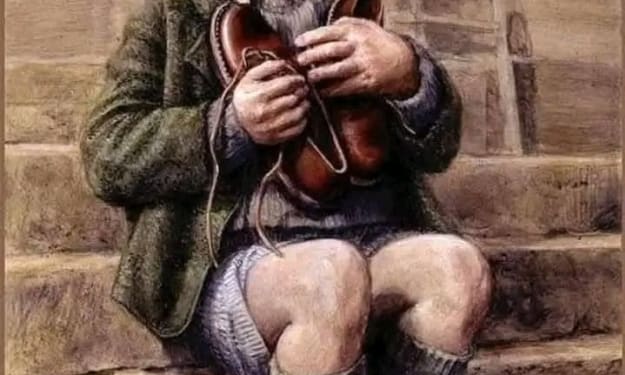
In 1946, a photograph captured a moment of pure, unfiltered joy. It was the face of Werfel, a six-year-old Austrian boy, holding his first pair of new shoes. Separated from his parents and living in an orphanage in post-war Vienna, Werfel’s life had been marked by loss and hardship. Yet, the gift of something as simple as new shoes, provided by the American Red Cross, brought a radiant smile to his face—a moment that still resonates with us today.
By Deji Akomolafeabout a year ago in Art
The River and the Drops
High in the mountains, where no one watched and no one applauded, tiny drops of water slipped from melting snow. Each drop was small, almost invisible, and carried a quiet fear within itself. They began their journey without knowing where they were going, only knowing that they were moving away from where they began.
By Sudais Zakwan7 days ago in Art
Rachel Reviews: The Spiral Archive by Pieter Hendrik
It's difficult for me to know where to start with a review of this book as it was, for me, an entirely unique experience and one that I'll probably never have again. I don't want that to be interpreted as unenjoyable but it has left me scratching my head a little and ruminating on its content, its themes and its characters.
By Rachel Deeminga day ago in BookClub



Comments
There are no comments for this story
Be the first to respond and start the conversation.