Deji Akomolafe
Bio
Stories (512)
Filter by community
Bonnie and Clyde: The Infamous Ambush That Marked the End of a Legendary Crime Duo
The names Bonnie Parker and Clyde Barrow have been forever etched in the annals of American criminal history. Their love story, set against the backdrop of the Great Depression, and their reckless crime spree across the United States, captured the imagination of the public and made them both notorious and romanticized figures. But their legacy, rooted in lawlessness and violence, ultimately came to a brutal end on May 23, 1934, when they were ambushed and gunned down by law enforcement officers in Bienville Parish, Louisiana. This bloody end to their reign of terror marked the conclusion of one of the most infamous criminal partnerships in American history.
By Deji Akomolafeabout a year ago in History
The Last Defender: A Portrait of Courage and Sacrifice
In the world of art, few images can capture the depth of human emotion and resilience quite like Andrey Shishkin’s painting The Last Defender. This evocative and powerful work tells a story not just of a young boy, but of an entire community, struggling against overwhelming odds. In a world filled with complex narratives and fleeting moments, The Last Defender stands out as a haunting reminder of the universal themes of sacrifice, courage, and the brutal cost of war.
By Deji Akomolafeabout a year ago in Art
The Oldest House in Salisbury: A Hidden Gem of Medieval Architecture
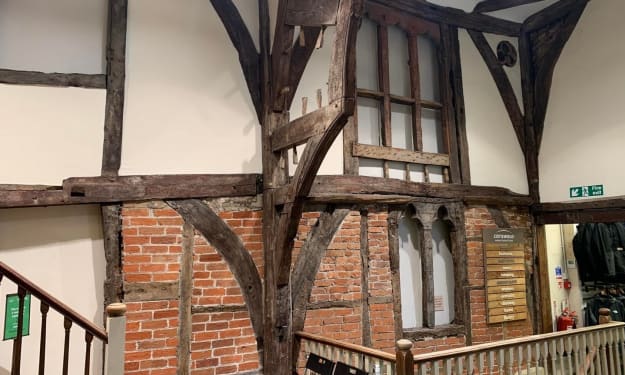
In the heart of Salisbury, Wiltshire, England, lies a fascinating piece of history that many may walk by without a second glance. At first glance, it might seem like just another charming building, but the oldest house in Salisbury is far more than just a relic of the past. Built in 1308, this historic structure offers a unique glimpse into medieval domestic life and architectural practices. But what’s truly captivating about this house is the way it challenges our expectations of age, design, and historical significance.
By Deji Akomolafeabout a year ago in History
The Pantheon: Rome’s Timeless Architectural Wonder
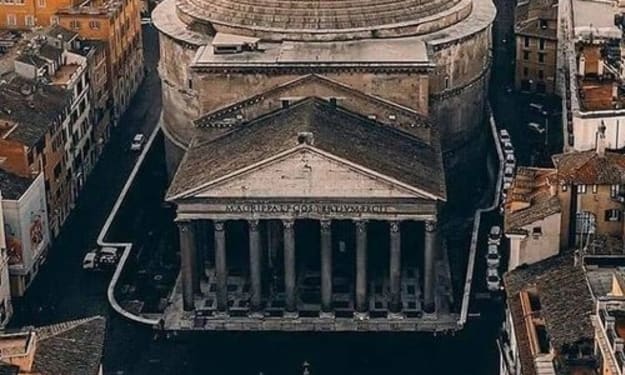
When we think of ancient Rome, towering structures like the Colosseum or the Roman Forum often come to mind. However, nestled in the heart of Rome, standing as a testament to Roman engineering and architectural brilliance, is the Pantheon. This iconic building, with its remarkable history, stunning design, and enduring influence, remains one of the best-preserved monuments from the Roman Empire. Even more astonishing is the fact that its dome, made of concrete, is still the largest unsupported dome in the world, nearly two thousand years after its construction.
By Deji Akomolafeabout a year ago in History
The Fascinating World of Dos-à-Dos Bookbinding: A Glimpse into Medieval Bookcraft
In the world of bookbinding, few techniques are as unique and intriguing as the dos-à-dos binding. This unusual style, which literally translates from French as "back-to-back," has roots in the medieval and early modern periods. It’s a method that combines both practicality and artistry, providing a space-efficient way to store multiple books in a single volume. Though rare today, this binding technique tells a story of its time—a time when books were precious commodities and the art of their creation was a specialized skill.
By Deji Akomolafeabout a year ago in History
The Inlaid Eye of the Seated Scribe: A Marvel of Ancient Egyptian Craftsmanship
The Seated Scribe, an iconic piece of ancient Egyptian art dating back to the Old Kingdom (circa 2600-2350 BCE), stands as one of the finest examples of Egyptian sculpture. While much of its allure lies in its realistic portrayal of a scribe in mid-action, one of its most remarkable features is the inlaid eye. Crafted from red-veined white magnesite and rock crystal, the eye is an extraordinary example of the intricate artistry and technical prowess achieved by ancient Egyptian craftsmen. This detailed feature not only enhances the lifelike quality of the figure but also offers a glimpse into the sophisticated artistic methods employed by ancient Egyptian sculptors.
By Deji Akomolafeabout a year ago in Art
The Mystery of Nan Madol: How Did Ancient Builders Transport 50-Ton Basalt Stones?
The Mystery of Nan Madol: How Did Ancient Builders Transport 50-Ton Basalt Stones? Located off the coast of Pohnpei in Micronesia, Nan Madol is a 900-year-old city built on artificial islets, constructed with massive basalt stones that weigh up to 50 tons. Once a ceremonial and political center for the Saudeleur Dynasty, this ancient city remains a mystery, not just because of its size and beauty, but also due to the unclear methods used to transport these enormous stones across open water. To this day, locals tell tales of magic, claiming that the stones were transported through sorcery. But what did the ancient builders really do to transport such colossal weights?
By Deji Akomolafeabout a year ago in History
A Remarkable Discovery: The Book of Hours in Holbein's Portrait of Thomas Cromwell
A Remarkable Discovery: The Book of Hours in Holbein's Portrait of Thomas Cromwell In the world of historical discovery, few events capture the imagination like the unearthing of an object from the past that connects us to a famous figure. Recently, historians at Hever Castle have made an extraordinary find: the very Book of Hours featured in the iconic portrait of Thomas Cromwell by Hans Holbein the Younger. This remarkable discovery is not only significant for its link to one of Tudor England’s most influential figures, but it is also the only known object to survive from any Tudor portrait to this day. History enthusiasts around the world are thrilled by this astonishing revelation, which has prompted the production of a documentary that will bring the story of this incredible find to life.
By Deji Akomolafeabout a year ago in Art
The Sutton Hoo Sword: A Symbol of Anglo-Saxon Power and Craftsmanship
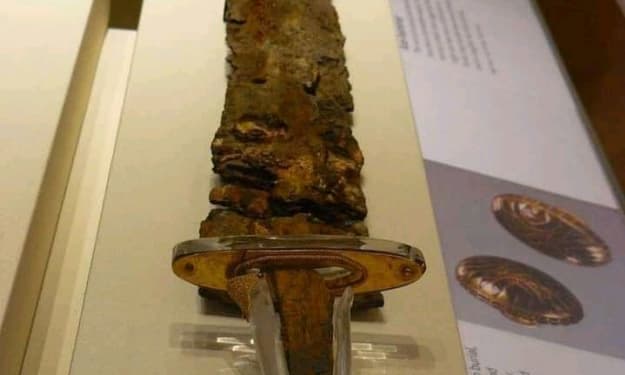
The Sutton Hoo Sword: A Symbol of Anglo-Saxon Power and Craftsmanship One of the most iconic and significant discoveries in British archaeology is the Sutton Hoo ship-burial, found in Suffolk, England. Dated to approximately AD 620, this burial site is believed to have belonged to an East Anglian king, possibly Raedwald, who ruled at the height of Anglo-Saxon England. Among the numerous treasures unearthed from this ancient royal burial was an extraordinary sword, whose craftsmanship and symbolism offer profound insights into the period’s warfare, social structure, and artistry. This sword, now housed at the British Museum, is more than just a weapon; it is a testament to the power and legacy of the Anglo-Saxon elite.
By Deji Akomolafeabout a year ago in History
Canaletto’s “View of the Ducal Palace in Venice”: A Masterpiece of Venetian Grandeur
Giovanni Antonio Canal, better known as Canaletto, is regarded as one of the most iconic Venetian painters of the 18th century. His skill in rendering architectural vistas, cityscapes, and landscapes with remarkable precision and clarity has earned him a prominent place in the art world. One of his most famous works, “View of the Ducal Palace in Venice”, painted during the 1750s, epitomizes Canaletto’s mastery in depicting Venice's majestic landmarks and its vibrant atmosphere. This masterpiece, which portrays one of the most famous buildings in Venice, offers a snapshot of the city’s grandeur, its political significance, and its role as a cultural hub during the 18th century.
By Deji Akomolafeabout a year ago in Art
Rajgad Fort: A Majestic Legacy of the Maratha Empire
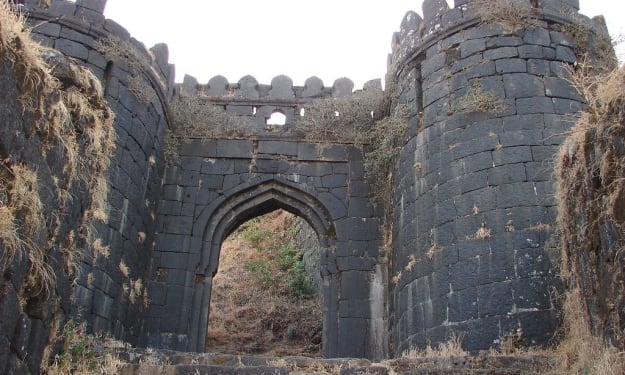
Nestled high in the Sahyadri mountain range in the western state of Maharashtra, Rajgad Fort stands as a silent sentinel to a glorious chapter in India’s history. With its strategic location and awe-inspiring architecture, this fort was once the capital of the Maratha Empire, serving as the nerve center of a vast kingdom during one of the most significant periods of Indian history. Today, Rajgad’s ruins tell the story of valor, resilience, and the strategic genius of the Marathas.
By Deji Akomolafeabout a year ago in History
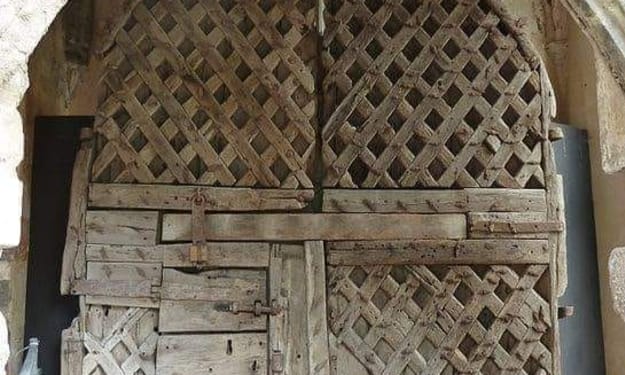
The Historic Gate of Chepstow Castle: A Link to the Past
Chepstow Castle, nestled on a dramatic cliff above the River Wye in southeastern Wales, is a fascinating testament to medieval military architecture and a rich historical legacy. One of the most remarkable features of the castle is its 12th-century wooden gate, which remains one of the oldest and best-preserved wooden gates in Europe. The gate, whose construction dates back to between 1159 and 1189, offers a rare glimpse into medieval craftsmanship and the strategic importance of Chepstow Castle throughout history.
By Deji Akomolafeabout a year ago in History