
Canaletto’s “View of the Ducal Palace in Venice”: A Masterpiece of Venetian Grandeur
History Art

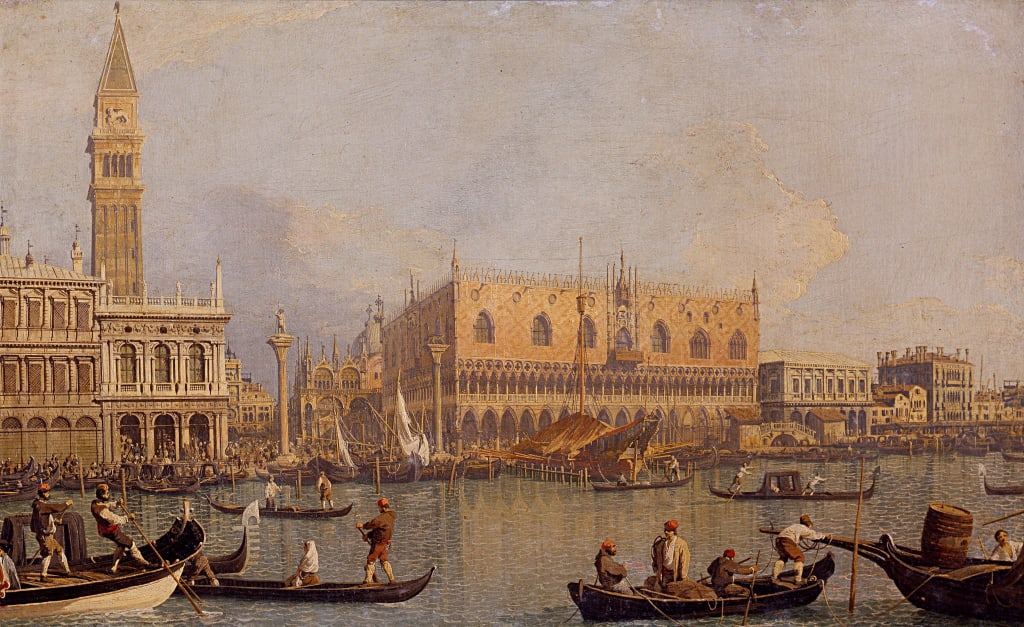
Giovanni Antonio Canal, better known as Canaletto, is regarded as one of the most iconic Venetian painters of the 18th century. His skill in rendering architectural vistas, cityscapes, and landscapes with remarkable precision and clarity has earned him a prominent place in the art world. One of his most famous works, “View of the Ducal Palace in Venice”, painted during the 1750s, epitomizes Canaletto’s mastery in depicting Venice's majestic landmarks and its vibrant atmosphere. This masterpiece, which portrays one of the most famous buildings in Venice, offers a snapshot of the city’s grandeur, its political significance, and its role as a cultural hub during the 18th century.
The Artist: Canaletto and His Style
Born on 18 October 1697, Canaletto was the son of a painter and printmaker, and he was exposed to art from an early age. He spent his early years studying at the Accademia di Belle Arti in Venice, which sharpened his technical skills. While his early works reflected the Baroque influence prevalent at the time, Canaletto soon became known for his unique approach to painting.
Unlike many of his contemporaries, who focused on religious and historical themes, Canaletto developed a specialty for painting cityscapes and architectural scenes of Venice. His ability to portray buildings and urban landscapes with meticulous attention to detail, often using perspective to create dramatic views, set him apart. In his works, Canaletto captured not just the physical beauty of Venice but its soul, encapsulating its vibrant public life, the hustle and bustle of its piazzas, and the elegance of its grand palaces and churches.
The artist’s paintings were often infused with a sense of light and color, carefully observing the play of sunlight across Venetian canals, squares, and facades. His precise use of perspective and the fidelity to the true shapes and sizes of buildings and streets made his works an invaluable historical record of 18th-century Venice. His work attracted the admiration of many contemporaries and collectors, including English aristocrats and travelers who were drawn to Venice during the Grand Tour.
The Ducal Palace: Symbol of Venetian Power
The Ducal Palace (Palazzo Ducale) is one of Venice’s most important landmarks, a building that symbolized the power and glory of the Venetian Republic. Located in Piazza San Marco, the Ducal Palace served as the residence of the Doge, the chief magistrate and leader of the Venetian Republic, as well as the seat of government. It was the hub of political life in Venice for centuries, a place where the city’s leaders held court and made decisions that influenced not only Venice but the broader Mediterranean world.
The architecture of the Ducal Palace is a stunning blend of Gothic and Renaissance styles, with ornate facades, intricate windows, and arches that showcase the wealth and power of Venice during its zenith. The elegant exterior of the palace, with its intricate carvings and stately columns, reflects Venice’s flourishing trade and wealth as a major maritime power. Canaletto’s painting of the Ducal Palace captures these architectural details with precision, while also conveying the lively atmosphere of the surrounding square, filled with people, boats, and light.
“View of the Ducal Palace in Venice”: The Composition and Technique
Canaletto’s “View of the Ducal Palace in Venice”, painted in the 1750s, is a breathtaking example of his ability to capture both architectural grandeur and the everyday life of Venice. The painting offers a highly detailed view of the Ducal Palace, showcasing its elegant exterior, the famous Piazza San Marco, and the lagoon in the distance. The composition is characterized by a perfect balance between the stately architecture and the bustling energy of the city, with people, gondolas, and carriages populating the scene, giving it a sense of life and movement.
One of the most striking aspects of the painting is Canaletto’s mastery of perspective. The diagonal lines of the palace and the square draw the viewer’s eye into the painting, creating a sense of depth and vastness. The buildings appear solid and monumental, while the sky above is bathed in a warm, golden light, reflecting the radiance of the Venetian sun. The reflections in the lagoon further enhance the sense of realism, adding to the feeling that the viewer is standing in the middle of the square, gazing at the grand structure.
In his meticulous rendering of the palace’s facade, Canaletto carefully details the Gothic windows, the ornate arches, and the columns, each carefully painted with a clear sense of texture and depth. This attention to architectural detail allows the viewer to appreciate the magnificence of the Ducal Palace, as well as the scale and proportion of its design. Canaletto was known for his use of light and shadow, and in this piece, he plays with the interaction of sunlight on the buildings, creating a vivid contrast between the stone facades and the soft shadows cast on the square.
Canaletto and the English Grand Tour
During the 18th century, Venice was a popular destination for wealthy English travelers on the Grand Tour, a cultural journey through Europe undertaken by the aristocracy to study art, architecture, and history. Canaletto’s paintings were highly sought after by these travelers, who wanted to bring home a piece of the Venetian experience. His meticulous cityscapes and views of Venice became prized possessions, capturing the beauty and drama of the city in a way that was both realistic and idealized.
“View of the Ducal Palace in Venice” is believed to have been painted for one of these English patrons, as many of Canaletto’s works were commissioned by foreign visitors. The painting not only offers a striking image of Venice’s architectural splendor but also acts as a visual souvenir, transporting the viewer back to the romantic and picturesque world of Venice, where time seemed to stand still amidst the palaces and canals.
Legacy and Influence
Canaletto’s influence on the art world cannot be overstated. His works inspired generations of artists, including J.M.W. Turner, who admired Canaletto’s use of light and his ability to convey a sense of drama through architecture and landscape. Canaletto’s paintings, including “View of the Ducal Palace in Venice”, continue to captivate audiences today, offering a glimpse into the beauty and complexity of 18th-century Venice. His works are held in prominent collections around the world, including the Royal Collection in London, the Hermitage Museum in St. Petersburg, and the National Gallery of Art in Washington, D.C.
Conclusion
“View of the Ducal Palace in Venice” is a masterpiece that captures the grandeur of one of Venice’s most important architectural landmarks, while also reflecting the city’s cultural vibrancy and political power during the 18th century. Canaletto’s precision in depicting the Palazzo Ducale, his use of light and perspective, and his ability to infuse the scene with life and movement have made this painting one of the definitive representations of Venice in the world of art. As we gaze upon it today, we are transported to a time when Venice was at the height of its glory, and Canaletto’s work continues to inspire awe and admiration for its brilliance.
About the Creator
Keep reading
More stories from Deji Akomolafe and writers in Art and other communities.
La Scapigliata: Leonardo da Vinci's Masterful Unfinished Portrait
Leonardo da Vinci, one of the most celebrated artists in history, left behind a legacy of remarkable works that forever changed the trajectory of art. While many of his masterpieces are finished and complete, some of his most captivating works remain unfinished, each carrying its own air of mystery. One such piece is La Scapigliata, an unfinished portrait of a woman, created around 1500. Known as "Head of a Woman" in English, this exquisite artwork is a testament to da Vinci's genius in capturing the subtleties of human emotion and form, despite being a work left incomplete. It offers an intriguing glimpse into the mind of the Renaissance master and stands as a remarkable example of his artistic prowess.
By Deji Akomolafeabout a year ago in Art
Why 316 stainless steel sculpture is the gold standard for coastal sculptures
If stainless steel sculptures are installed in coastal environments, corrosion caused by sea breezes becomes an important issue to consider. Salt in the air, high humidity, and frequent temperature changes can all accelerate surface deterioration if the material or finish is not suitable.
By Shenzhen Ruiheng Crafts6 days ago in Art
Wild Card Weekend Recap: What Happens Now?
I think I figured out why I love Wild Card Weekend so much. It's because it's the first playoff anything of the calendar year. The NFL season starts in the fall, and once upon a time, the champion was crowned either on or slightly before New Year's. The evolution of the NFL schedule has resulted in the playoffs starting just into the New Year, and currently, the final week of the season falls on the first weekend of the New Year, with Wild Card Weekend coming a week after that. So yes, chronologically, the NFL's Wild Card Weekend serves as the first playoff anything of the calendar year.
By Clyde E. Dawkins7 days ago in Unbalanced




Comments
There are no comments for this story
Be the first to respond and start the conversation.