
The Fascinating World of Dos-à-Dos Bookbinding: A Glimpse into Medieval Bookcraft
Ancient Book

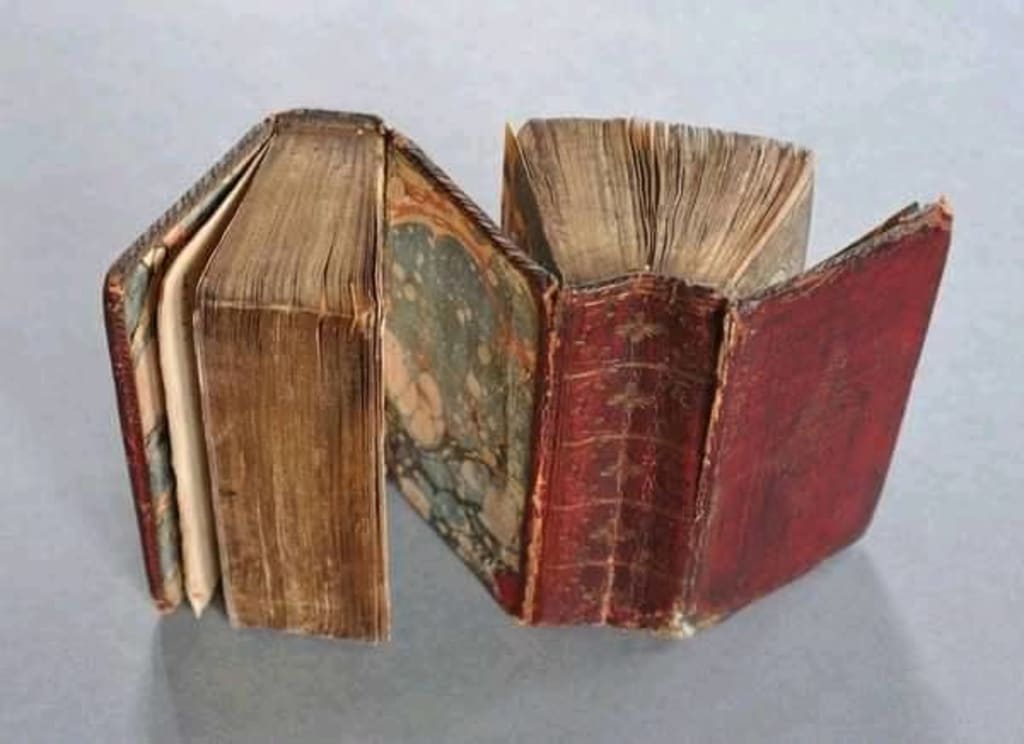
In the world of bookbinding, few techniques are as unique and intriguing as the dos-à-dos binding. This unusual style, which literally translates from French as "back-to-back," has roots in the medieval and early modern periods. It’s a method that combines both practicality and artistry, providing a space-efficient way to store multiple books in a single volume. Though rare today, this binding technique tells a story of its time—a time when books were precious commodities and the art of their creation was a specialized skill.
A Historical Necessity: The Birth of Dos-à-Dos Binding
During the Middle Ages, books were primarily reserved for the wealthy and the religious. Monasteries were the centers of learning, where monks copied manuscripts by hand, preserving religious texts and making them available only to a select few. The number of books was limited, and the interest in reading was not widespread, as most people were illiterate. Books were expensive to produce, both in terms of time and materials.
In such a context, practicality became key. As the need to store and manage these rare books grew, bookbinders began innovating ways to save space and reduce weight. This led to the creation of the dos-à-dos binding, a technique where two books were bound together so that their spines faced in opposite directions. The back covers of the books were joined together, and when placed on a shelf, the books were stacked in such a way that one book’s spine faced outward, while the other’s spine faced inward.
The dos-à-dos style was particularly common in the first half of the 17th century in England, where books like the New Testament and the Book of Psalms were often bound together. This binding method allowed the owner of the book to carry or store two different religious texts in a single volume, making it easier to transport or store them in limited space.
The Practicality of Dos-à-Dos
The dos-à-dos binding was as practical as it was ingenious. In an era when personal libraries were small, and books were valuable, being able to house two volumes in a single binding made sense. The design allowed for better organization on a shelf, as the dual spines helped distinguish between two works in one volume.
In addition to saving space, the dos-à-dos binding technique offered an added benefit: it reduced the overall weight of a book. Given that many medieval books were large and heavy, carrying multiple books was not always feasible. By binding two texts together, readers could transport more knowledge without the added burden of carrying extra volumes.
This binding style wasn't limited to just two books. Over time, some particularly ambitious bookbinders created chains of books, binding as many as seven volumes together. The spines were placed in alternating directions, creating a unique shelf display that was both functional and striking. While this practice eventually fell out of favor, it remained a part of bookbinding history for several centuries, serving as a testament to the creative problem-solving of bookbinders in earlier times.
The Art of the Bookbinder
Bookbinding, especially in the medieval period, was considered a highly specialized craft. The skills of a bookbinder were passed down from generation to generation, and the creation of a dos-à-dos binding required precision, expertise, and an understanding of the materials used.
The process itself involved meticulous planning. The bookbinder would carefully align the two books to ensure that their spines were perfectly positioned and that the shared back cover was securely attached. The covers had to be sturdy enough to protect the contents while maintaining the balance of the books when placed on a shelf.
In the years leading up to the mid-20th century, the dos-à-dos binding continued to be used, though it gradually became less common as modern printing and binding methods became more accessible. The introduction of mass-produced books, and the increase in literacy rates, meant that the need for such space-saving techniques diminished. However, the skills of the traditional bookbinders were not lost entirely; many of these artisans passed down their knowledge to new generations, preserving aspects of the craft.
A Modern Revival and Its Rarity Today
While dos-à-dos bindings are now a rarity, there was a brief resurgence of interest in this technique in the mid-20th century. Modern bookbinders, inspired by historical techniques, revived some aspects of the dos-à-dos method. However, this revival was short-lived, and today, finding a dos-à-dos bound book is an exceptional find. In the digital age, where books are often stored and read electronically, the art of traditional bookbinding—especially something as intricate and specific as dos-à-dos binding—is fading into obscurity.
Despite this, there are collectors, historians, and artisans who still seek out or recreate these bindings. For them, dos-à-dos books are more than just a method of storage—they are a piece of history. The craftsmanship involved is a testament to a time when books were not only vehicles of knowledge but also precious artifacts to be carefully crafted and cherished.
Conclusion: The Enduring Allure of Dos-à-Dos Binding
The dos-à-dos binding style represents the ingenuity and resourcefulness of past generations. It was born out of necessity, a way to make books more portable, organized, and efficient in an era when resources were scarce and books were treasured possessions. While it may no longer be common today, the dos-à-dos binding remains a fascinating piece of bookbinding history—a reminder of the times when the physical act of preserving and sharing knowledge was an intricate and artistic endeavor.
For those who appreciate the artistry of books, the dos-à-dos technique is a rare and beautiful relic of a bygone era. Whether in the form of a historical artifact or a modern revival, these back-to-back bindings are a testament to the creativity, practicality, and artistry of bookbinders from centuries past.
About the Creator
Keep reading
More stories from Deji Akomolafe and writers in History and other communities.
The Mystery of Nan Madol: How Did Ancient Builders Transport 50-Ton Basalt Stones?
The Mystery of Nan Madol: How Did Ancient Builders Transport 50-Ton Basalt Stones? Located off the coast of Pohnpei in Micronesia, Nan Madol is a 900-year-old city built on artificial islets, constructed with massive basalt stones that weigh up to 50 tons. Once a ceremonial and political center for the Saudeleur Dynasty, this ancient city remains a mystery, not just because of its size and beauty, but also due to the unclear methods used to transport these enormous stones across open water. To this day, locals tell tales of magic, claiming that the stones were transported through sorcery. But what did the ancient builders really do to transport such colossal weights?
By Deji Akomolafeabout a year ago in History
The Quiet Name on Maple Street
Kim Jong-un was born into a world unlike almost any other—a world sealed by borders, ideology, and secrecy. As the grandson of Kim Il-sung, the founder of North Korea, and the son of Kim Jong-il, the country’s second leader, Kim Jong-un entered life already wrapped in destiny. In North Korea, leadership is not chosen by ballots or debate; it is inherited like a crown, reinforced by loyalty, fear, and an unyielding political system.
By The best writer 3 days ago in History



Comments
There are no comments for this story
Be the first to respond and start the conversation.