
The Last Defender: A Portrait of Courage and Sacrifice
Story Portrait

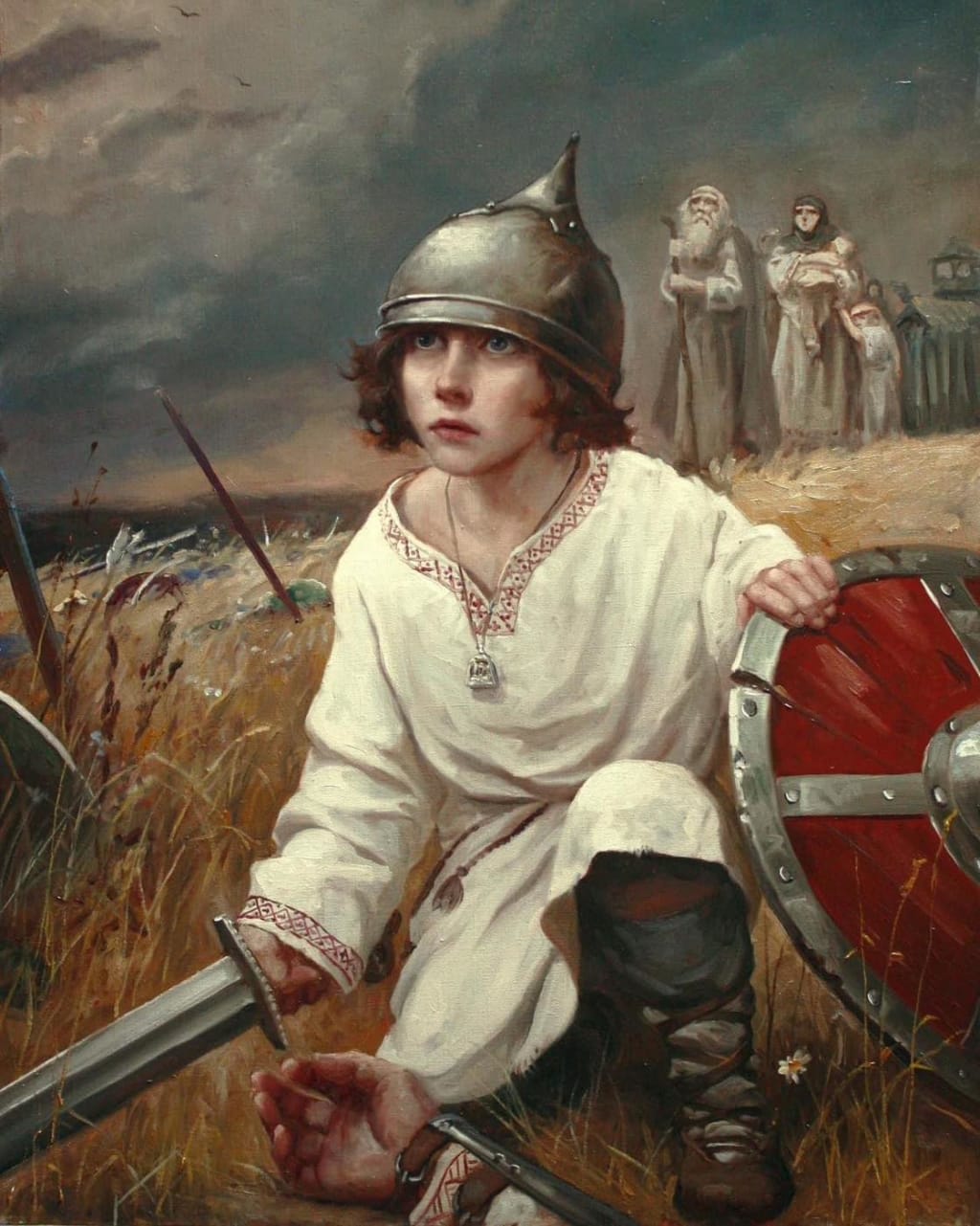
In the world of art, few images can capture the depth of human emotion and resilience quite like Andrey Shishkin’s painting The Last Defender. This evocative and powerful work tells a story not just of a young boy, but of an entire community, struggling against overwhelming odds. In a world filled with complex narratives and fleeting moments, The Last Defender stands out as a haunting reminder of the universal themes of sacrifice, courage, and the brutal cost of war.
A Glimpse Into the Scene
At first glance, The Last Defender might evoke a sense of melancholy, for it presents an image of a solitary child standing on the edge of catastrophe. The young boy is the last survivor of his village, a place that has been devastated by violence. His father, the previous protector of the village, lies lifeless at his feet. From the lifeless hand of his father, the boy has taken up the sword—a symbol of duty, strength, and legacy. Clad in armor and a helmet that are far too large for him, he seems almost dwarfed by the weight of the responsibility thrust upon him. His shield is mismatched, perhaps too heavy for his slight frame, yet he holds it with determination.
What makes The Last Defender so gripping is the juxtaposition of innocence and war. The boy’s expression is one of quiet resolve mixed with fear. His small face, barely touched by age, is framed by the oversized helmet, giving him a sense of fragility. Yet, in his hands, the sword is poised in readiness—an image of defiance against the brutal fate that awaits. In the background, the remnants of his village—the women, children, and elders—are seen, waiting and depending on him for their protection. There is no escape; only the stark reality that this young boy has become their last hope.
The Weight of Courage
Shishkin’s painting brings forward the overwhelming burden of courage that often falls on those least prepared to bear it. The boy, still on the precipice of adolescence, was never meant to fight a battle of this magnitude. His childhood has been stripped away by the violence surrounding him, and now he must step into the shoes of a warrior, his hands too small to truly hold the weight of the sword. His father’s death, symbolized by the abandoned weapon at his feet, signifies the passing of the torch. The child, although not yet ready, has no choice but to become the guardian of his people.
There is an undeniable contrast in the painting—the child’s small frame against the large, cumbersome armor—and this contrast intensifies the emotional weight of the moment. The young boy is both physically and emotionally unprepared for the fight that is before him. Yet, despite the fear that must have been overwhelming, his willingness to defend his people speaks to the deepest human instincts. His resolve transcends his fear. He is willing to make the ultimate sacrifice, to fight even if the odds are stacked against him, knowing that his survival alone will not be enough to save the others.
This central theme of sacrifice is portrayed so eloquently in Shishkin’s work. The boy is not just fighting to survive; he is fighting to protect those who cannot defend themselves—women, children, and the elderly. His heroism lies not in his ability to triumph in battle, but in his willingness to step up, despite knowing the dangers, to protect the most vulnerable. In this, Shishkin captures the essence of selflessness, portraying a courage that is not born of strength, but of love and responsibility.
The Heartbreaking Beauty of the Scene
What makes The Last Defender so heartbreaking is the undeniable sense of loss that permeates the image. The boy’s father is gone. His village has been ravaged. He is alone, left to face an impossible task. The entire scene is one of devastating beauty, as it combines the idea of youthful innocence with the grim reality of war. The emotions that flood from the painting are raw and powerful: grief, fear, and a sense of quiet resolve.
While the boy’s figure is central to the composition, his surroundings also carry significant weight. The empty streets of the village, the devastated homes, and the huddled figures of the remaining villagers all speak to the trauma of conflict. The villagers’ vulnerability is palpable, as they look to the young boy, who in turn looks outward, to the impending battle. There is no question about the outcome; he cannot save them all. Yet, he still stands ready, a beacon of hope in a world consumed by violence.
The heartbreaking beauty of the painting also lies in its universality. Though it might depict a specific moment in a fictional or historical setting, it echoes the many real-world instances where children are thrust into the horrors of war. It speaks to the countless young souls who have been asked to carry burdens far beyond their years. And it speaks to those moments when, despite overwhelming odds, individuals find the courage to stand and fight—not for themselves, but for the greater good.
Legacy of the Last Defender
Shishkin’s The Last Defender is not just a work of art; it is a poignant reminder of the sacrifices made in the name of survival and the protection of others. The painting compels the viewer to reflect on the cost of conflict, the loss of innocence, and the enduring strength of the human spirit.
What makes the painting particularly significant is how it transcends the individual story of the boy and speaks to the collective experience of humanity. The themes of loss, sacrifice, and courage are universal, resonating deeply with anyone who has faced hardship, fear, or loss. The boy in the painting becomes a symbol of all who have had to shoulder impossible burdens for the sake of others, and it asks us to consider what we would do in the face of such overwhelming odds.
The boy may be the last defender of his village, but in a broader sense, he represents the countless unsung heroes throughout history and today who rise to defend the vulnerable, even when they are ill-prepared or overwhelmed. Shishkin’s painting reminds us of the quiet power of courage and sacrifice—the quiet power of those who defend the helpless, even when their own survival seems uncertain.
In the end, The Last Defender is a testament to the enduring strength of the human spirit, a powerful tribute to the selflessness that can arise even in the darkest of times.
About the Creator
Keep reading
More stories from Deji Akomolafe and writers in Art and other communities.
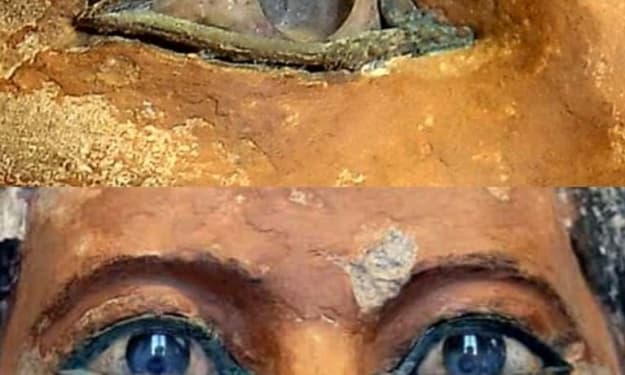
The Inlaid Eye of the Seated Scribe: A Marvel of Ancient Egyptian Craftsmanship
The Seated Scribe, an iconic piece of ancient Egyptian art dating back to the Old Kingdom (circa 2600-2350 BCE), stands as one of the finest examples of Egyptian sculpture. While much of its allure lies in its realistic portrayal of a scribe in mid-action, one of its most remarkable features is the inlaid eye. Crafted from red-veined white magnesite and rock crystal, the eye is an extraordinary example of the intricate artistry and technical prowess achieved by ancient Egyptian craftsmen. This detailed feature not only enhances the lifelike quality of the figure but also offers a glimpse into the sophisticated artistic methods employed by ancient Egyptian sculptors.
By Deji Akomolafeabout a year ago in Art
'Till Death We Do Art
There would be nothing divine in this world without art. Nature may surpass the divine to all intents and purposes, but like everything it absorbs and is absorbed by, it remains here, stuck on the surface of this world, ever-present, physically bound to the universe.
By Avocado Nunzella BSc (Psych) -- M.A.P 27 days ago in Art
The Front Seat
I found myself waking up in the front seat of the bus. My eyes were filled with the early morning darkness. I had been asleep, but I wasn’t sure for how long. I tried to wake up my body, but my head felt heavy, as though I had been sleeping for an eternity, although I couldn’t pinpoint how much time had passed.
By Aunty Sada4 days ago in Art
My First Time Skiing and I Got Lost, Alone, in the French Alps
Looking back, I can trace some of my life’s biggest adventures to a simple action from my sister. She’d introduced me to Tommy (a very long time ago), a colleague of hers, who had overshared his penchant for Italian-looking women, and I ticked that box.
By Chantal Christie Weiss3 days ago in Humans


Comments
There are no comments for this story
Be the first to respond and start the conversation.