
The Historic Gate of Chepstow Castle: A Link to the Past
Medieval Building

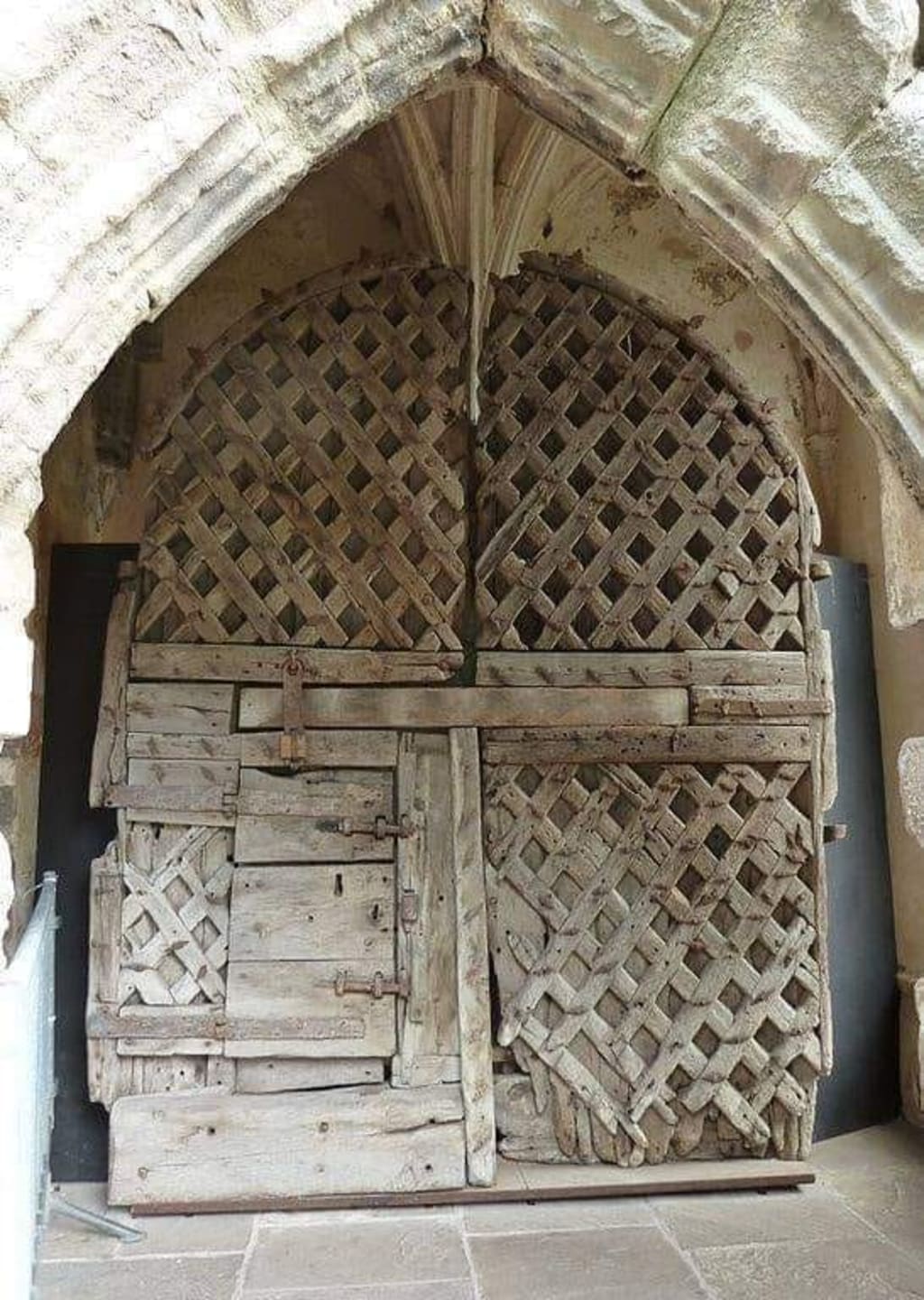
Chepstow Castle, nestled on a dramatic cliff above the River Wye in southeastern Wales, is a fascinating testament to medieval military architecture and a rich historical legacy. One of the most remarkable features of the castle is its 12th-century wooden gate, which remains one of the oldest and best-preserved wooden gates in Europe. The gate, whose construction dates back to between 1159 and 1189, offers a rare glimpse into medieval craftsmanship and the strategic importance of Chepstow Castle throughout history.
The Significance of Chepstow Castle
Chepstow Castle, known as Castell Cas-Gwent in Welsh, is located in a region that has long been a point of contention between England and Wales. The castle’s strategic position on the border, perched above the River Wye, made it a vital military stronghold. The location allowed for control over key routes into Wales, and the castle became an important symbol of Norman power after the conquest of England in 1066. The Norman Conquest saw a flood of new military constructions across Britain, many of them castles that symbolized the Norman ability to subjugate the Anglo-Saxon populace.
Construction of Chepstow Castle began soon after the conquest, in 1067 AD, under the direction of Lord William FitzOsbern, a trusted companion of William the Conqueror. FitzOsbern was given the lordship of the region, and he established Chepstow as the focal point of Norman control in the area. Over the next few centuries, the castle evolved, expanding into a formidable military fortress, fortified with stone walls, towers, and ramparts. It was designed to withstand both siege warfare and rebellion, with its location and construction style making it a symbol of Norman military prowess.
However, as the centuries passed and the political landscape shifted, Chepstow Castle’s importance waned. By the early 18th century, it had fallen into disuse and disrepair. Despite this decline, many of its key features, including the wooden gate, have survived remarkably well, allowing us to peer back into a medieval past that otherwise might have been lost.
The Remarkable Wooden Gate
What truly sets Chepstow Castle apart from other medieval fortresses is its 12th-century wooden gate—one of the oldest surviving wooden gates in Europe. This gate is not just an architectural curiosity, but also an essential historical artifact that provides insight into the techniques, materials, and craftsmanship of the time.
Dendrological examination (the study of tree rings) revealed that the wood used to build the gate dates back to the years between 1159 and 1189. This makes the gate not only a remarkable piece of history but also a rare artifact from the early medieval period. Wood was a common building material in the 12th century, but due to its susceptibility to decay over time, very few examples have survived. This makes the preservation of Chepstow's gate even more extraordinary.
The gate’s design and construction reflect the needs of a medieval fortress. It was built to be both functional and imposing, serving as the first line of defense against intruders. The heavy wooden structure, reinforced with metal fixtures, would have been a significant barrier to any would-be invaders, while also allowing defenders to monitor and control who passed through the gates. The gate’s robust construction is a reminder of the harsh realities of medieval warfare, where fortifications were a matter of life and death.
A Link to the Past: Chepstow’s Role in Welsh and English History
While the gate itself is a marvel, it is also a symbol of the tumultuous history of the region. Chepstow Castle’s position on the border between Wales and England made it a focal point for centuries of conflict between the two nations. During the 12th and 13th centuries, the Welsh Marches—the borderlands between England and Wales—were frequently a hotbed of rebellion. Castles like Chepstow were crucial to Norman control, acting as a means of enforcing English authority over Welsh territories.
During the reign of King Henry II in the late 12th century, when the wooden gate was built, the castle was a key part of England’s efforts to solidify its rule over Wales. However, the border was not easily controlled, and uprisings from Welsh lords were a frequent occurrence. Chepstow Castle witnessed several such uprisings, and its military strength was put to the test numerous times.
Despite the political unrest, the castle also played a role in shaping the cultural exchange between the two regions. The proximity of Wales to England meant that Chepstow became a center for trade, diplomacy, and even cultural influences. The wooden gate, while primarily a military structure, symbolizes the complex intersection of English and Welsh history that defined the region for centuries.
The Decline of Chepstow Castle
By the early 18th century, Chepstow Castle had fallen into disuse. The military significance of the castle had diminished as the political situation in the region stabilized. The decline of feudalism, along with the rise of newer forms of warfare, led to a shift in the castle’s purpose. It ceased to function as a military stronghold and was left to deteriorate.
Despite this, the wooden gate—along with other elements of the castle—remained relatively well-preserved. This is in part due to the relatively dry climate in the area, which helped protect the wooden structures. It was also due to the care taken by subsequent generations to maintain the gate, recognizing its historic value even as the castle fell into ruin.
Preservation and Legacy
Today, Chepstow Castle is a Grade I listed building, protected as a significant piece of Welsh and British heritage. The castle, and particularly the wooden gate, provides a tangible connection to the medieval past, showcasing the level of craftsmanship, ingenuity, and strategic thinking that went into its construction. The gate is not just a relic of the past; it’s a physical embodiment of the history of Chepstow, the Norman Conquest, and the struggle for control over Wales.
The gate is housed at the Chepstow Castle site and serves as a reminder of the enduring legacy of medieval architecture. Its preservation is an essential part of maintaining the history of the region, and it remains one of the finest examples of medieval wooden architecture in Europe. Visitors to Chepstow Castle are transported back in time as they stand before the ancient gate, imagining the life and times of the castle’s inhabitants.
Conclusion
Chepstow Castle and its remarkable 12th-century wooden gate are important symbols of medieval life, warfare, and the complex history of the English-Welsh border. The castle itself, built under the direction of Lord William FitzOsbern after the Norman conquest, is a stunning example of military architecture. The preservation of the wooden gate, dating back over 800 years, offers an invaluable link to the past, showcasing the craftsmanship and strategic thinking that defined the era. As one of Europe’s oldest surviving wooden gates, it is not just a structure—it’s a legacy of power, resilience, and the history of a pivotal region in the British Isles.
About the Creator
Keep reading
More stories from Deji Akomolafe and writers in History and other communities.
A Roman Luxury: The Multi-Function Utility Knife from 200-300 AD
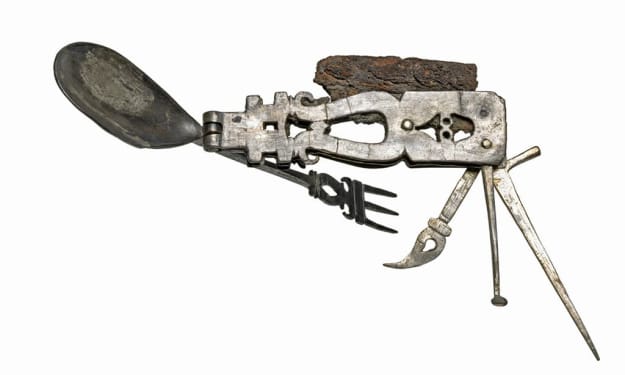
In the world of ancient artifacts, few items carry the same level of intrigue as the objects that combine both practicality and craftsmanship. One such discovery, found in the ruins of a Roman camp in England, is a remarkable multi-function utility knife that dates back to around 200-300 AD. This intriguing piece, which was unearthed during archaeological digs, offers a fascinating glimpse into the everyday lives of the wealthy in the Roman Empire. With its combination of tools, including a knife, spoon, fork, spike, spatula, and pick, this item is more than just a simple utility piece; it’s a testament to the luxurious lifestyle of elite Roman travelers and citizens.
By Deji Akomolafeabout a year ago in History
Ancient Roman Secrets: What Their Monuments Teach Us About Sustainable Construction
Across Europe and the Mediterranean, the remains of ancient Roman structures continue to amaze architects, engineers, and historians alike. Massive aqueducts still stretch across valleys, amphitheaters remain standing after centuries of earthquakes and wars, and the iconic Pantheon in Rome still boasts the world’s largest unreinforced concrete dome. These remarkable structures are more than just archaeological treasures; they hold important lessons for modern construction. Hidden within these monuments is a set of engineering secrets that could help today’s builders create stronger, longer-lasting, and more sustainable structures.
By Irshad Abbasi 6 days ago in History



Comments
There are no comments for this story
Be the first to respond and start the conversation.