
A Remarkable Discovery: The Book of Hours in Holbein's Portrait of Thomas Cromwell
Ancient Times

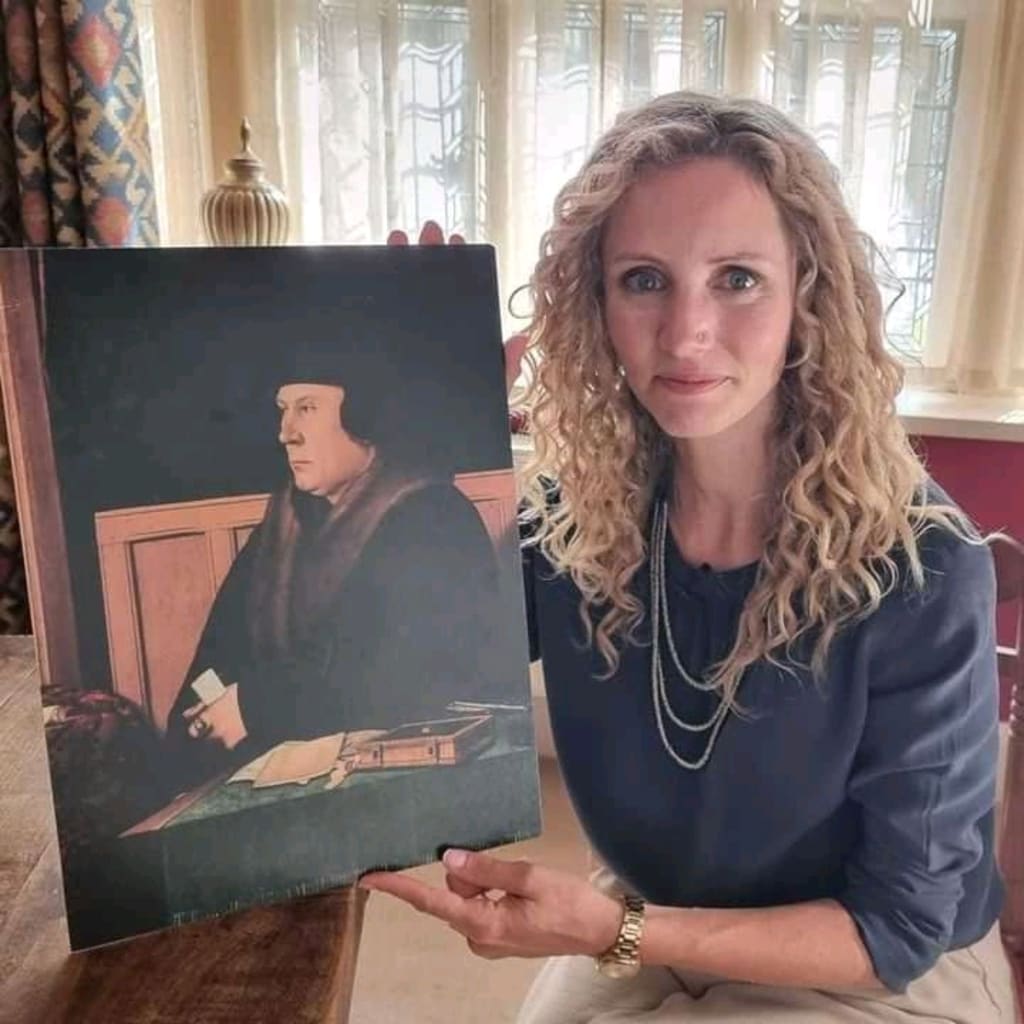
A Remarkable Discovery: The Book of Hours in Holbein's Portrait of Thomas Cromwell
In the world of historical discovery, few events capture the imagination like the unearthing of an object from the past that connects us to a famous figure. Recently, historians at Hever Castle have made an extraordinary find: the very Book of Hours featured in the iconic portrait of Thomas Cromwell by Hans Holbein the Younger. This remarkable discovery is not only significant for its link to one of Tudor England’s most influential figures, but it is also the only known object to survive from any Tudor portrait to this day. History enthusiasts around the world are thrilled by this astonishing revelation, which has prompted the production of a documentary that will bring the story of this incredible find to life.
The Portrait of Thomas Cromwell: A Snapshot of Power
To understand the significance of this discovery, we must first consider the portrait of Thomas Cromwell by Holbein. Painted in the mid-1530s, it is one of the most famous works by the German-Swiss artist, who is renowned for his depictions of the Tudor court. Cromwell, the powerful and controversial chief minister to Henry VIII, is shown in the portrait standing confidently, his gaze direct and assertive. His expression conveys the self-assurance of a man at the height of his power, serving as the king’s right hand during a period of religious upheaval and political maneuvering.
One of the most fascinating aspects of this portrait is the object in Cromwell’s hand: a richly decorated Book of Hours. These prayer books, which were commonly used by the wealthy during the medieval and early Renaissance periods, often contained prayers, psalms, and religious imagery. The inclusion of this object in Holbein’s portrait is no mere artistic flourish. The Book of Hours speaks to Cromwell’s social standing, his piety, and perhaps even his desire to present himself as a man of intellect and spirituality. It is a symbol of his education and his role in the intellectual and political currents of the time.
The Book of Hours: A Gateway to Tudor History
For historians, the discovery of the actual Book of Hours that appeared in Holbein’s painting is nothing short of extraordinary. It is believed to be the only object from any Tudor portrait to have survived the passage of time. Most objects depicted in Renaissance paintings have long since disappeared, and to find one so intimately connected with a famous figure like Cromwell is an unprecedented stroke of luck.
This particular Book of Hours was likely a highly valuable possession. The ornate decoration and the craftsmanship of such a book would have been beyond the reach of ordinary people. Its survival through centuries of upheaval—from the dissolution of the monasteries under Henry VIII to the English Civil War and the eventual decay of the Tudor monarchy—gives it an almost mythical status. The book has managed to outlive centuries of turmoil, including the eventual fall of Cromwell himself, who was executed in 1540 after falling out of favor with Henry VIII.
But this discovery also offers a deeper understanding of Cromwell’s life. Known for his ruthless political maneuvering and instrumental role in the English Reformation, Cromwell is often viewed as a pragmatic and calculating figure, willing to abandon traditional religious practices to secure his political power. Yet, the Book of Hours in his hand suggests a side of him that is more aligned with religious devotion and personal belief. This item challenges the often one-dimensional perception of Cromwell, offering a more nuanced view of the man who helped engineer the split between the Church of England and the Roman Catholic Church.
A Documentary Presentation: Professor Suzannah Lipscomb’s Exclusive Access
The discovery of the Book of Hours has sparked excitement within the academic community and beyond. To share this extraordinary find with the public, History Hit, the popular historical documentary platform, has been granted exclusive access to film a documentary on the discovery. This special documentary will be presented by Professor Suzannah Lipscomb, a renowned historian and expert on Tudor history, who has played an integral role in unearthing the secrets of the Tudor court.
Professor Lipscomb’s involvement in the documentary is particularly exciting, as she is known for her ability to bring history to life in an engaging and accessible way. Her deep knowledge of the period will be crucial in unraveling the story of the Book of Hours and exploring its significance within the context of Cromwell’s life and the turbulent times in which he lived. The documentary promises to be a fascinating exploration of Tudor history, blending expert analysis with the thrill of discovering a tangible link to the past.
In addition to Professor Lipscomb’s expert insights, the documentary will feature behind-the-scenes footage of the research and restoration work being done on the Book of Hours. Viewers will get a glimpse into the painstaking process of preserving and studying this rare artifact, which will be an invaluable resource for future scholars of Tudor England.
The Legacy of Cromwell’s Book of Hours
As the documentary unfolds, viewers will also witness how this discovery fits into the broader narrative of Tudor history. Cromwell’s role in shaping the English Reformation, his relationships with key figures such as Thomas More and Anne Boleyn, and his eventual fall from grace will all be examined through the lens of this remarkable find. The Book of Hours offers a tangible connection to a period of history that continues to fascinate and intrigue.
What makes this discovery so remarkable is not just the object itself, but the insights it provides into the life of a man who was instrumental in one of the most transformative eras in English history. The Book of Hours serves as a bridge between the past and the present, reminding us that even the most seemingly mundane objects can hold immense historical significance.
For anyone with an interest in Tudor history, the opportunity to explore this discovery through the lens of Professor Lipscomb’s documentary is not to be missed. As we continue to uncover the mysteries of the past, we are reminded of the enduring power of history to connect us with the people who shaped our world.
About the Creator
Keep reading
More stories from Deji Akomolafe and writers in Art and other communities.
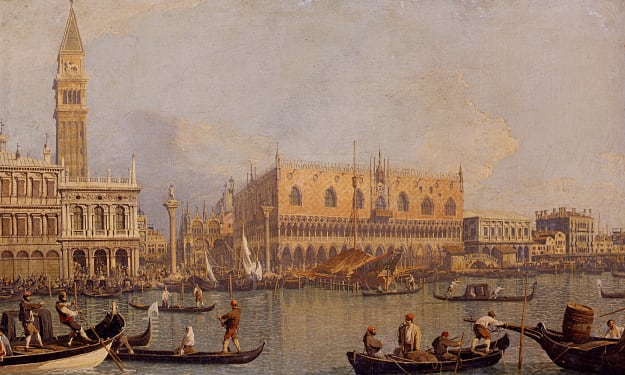
Canaletto’s “View of the Ducal Palace in Venice”: A Masterpiece of Venetian Grandeur
Giovanni Antonio Canal, better known as Canaletto, is regarded as one of the most iconic Venetian painters of the 18th century. His skill in rendering architectural vistas, cityscapes, and landscapes with remarkable precision and clarity has earned him a prominent place in the art world. One of his most famous works, “View of the Ducal Palace in Venice”, painted during the 1750s, epitomizes Canaletto’s mastery in depicting Venice's majestic landmarks and its vibrant atmosphere. This masterpiece, which portrays one of the most famous buildings in Venice, offers a snapshot of the city’s grandeur, its political significance, and its role as a cultural hub during the 18th century.
By Deji Akomolafeabout a year ago in Art
21 Freelancing Tips to Build a Successful Career (From Someone Who Actually Did It)
TL;DR version (60 seconds read time) + Paypal receipt at the end of the blog. I’ve made thousands of dollars with freelancing. See screenshots at the end of the post. Everything I say to you, I’ve tested it first on myself.
By Dena Falken Esqabout 11 hours ago in Art
Wild Card Weekend Recap: What Happens Now?
I think I figured out why I love Wild Card Weekend so much. It's because it's the first playoff anything of the calendar year. The NFL season starts in the fall, and once upon a time, the champion was crowned either on or slightly before New Year's. The evolution of the NFL schedule has resulted in the playoffs starting just into the New Year, and currently, the final week of the season falls on the first weekend of the New Year, with Wild Card Weekend coming a week after that. So yes, chronologically, the NFL's Wild Card Weekend serves as the first playoff anything of the calendar year.
By Clyde E. Dawkins7 days ago in Unbalanced



Comments
There are no comments for this story
Be the first to respond and start the conversation.