
Bonnie and Clyde: The Infamous Ambush That Marked the End of a Legendary Crime Duo
Notorious Couple

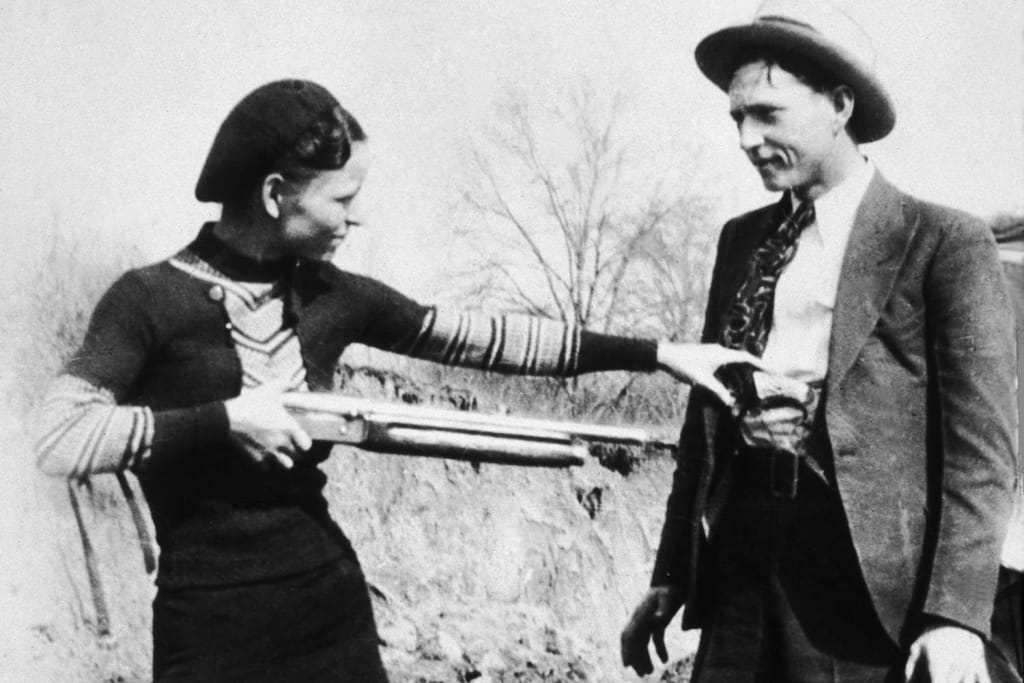
The names Bonnie Parker and Clyde Barrow have been forever etched in the annals of American criminal history. Their love story, set against the backdrop of the Great Depression, and their reckless crime spree across the United States, captured the imagination of the public and made them both notorious and romanticized figures. But their legacy, rooted in lawlessness and violence, ultimately came to a brutal end on May 23, 1934, when they were ambushed and gunned down by law enforcement officers in Bienville Parish, Louisiana. This bloody end to their reign of terror marked the conclusion of one of the most infamous criminal partnerships in American history.
The Rise of Bonnie and Clyde
Born in the early 1900s, Bonnie Parker and Clyde Barrow came from humble beginnings. Clyde, born in 1909 in Telico, Texas, grew up in a poor family and was introduced to crime early in life. He became involved in petty thefts, carjackings, and burglaries before escalating to armed robbery and violent crime. Bonnie, born in Rowena, Texas in 1910, was a bright but rebellious young woman. She had aspirations of becoming a writer, but after marrying young and experiencing personal setbacks, she was drawn into Clyde’s criminal world.
The two met in 1930, and Bonnie was immediately swept up by Clyde's charm and daring exploits. Their love affair soon became inseparable from their crime spree. The couple, along with a rotating cast of accomplices, embarked on a series of bank robberies, burglaries, and car chases, terrorizing small towns across Texas, Oklahoma, and beyond. As their crimes grew more audacious, so did their notoriety. They were often portrayed in the media as modern-day Robin Hoods, with a romanticized image of outlaws on the run from the law.
But the reality was far grimmer. Bonnie and Clyde’s criminal activities were far from noble; they left a trail of violence in their wake. Police officers, innocent bystanders, and fellow criminals alike were victims of the couple’s ruthless actions. Clyde was particularly ruthless, and as his crime spree continued, he became known for his violent outbursts and disregard for human life.
The Final Days of Bonnie and Clyde
By 1934, Bonnie and Clyde’s crime spree had begun to unravel. Law enforcement had been hot on their trail for months, and the FBI, led by the young and ambitious J. Edgar Hoover, had made capturing the duo a priority. Their activities had grown increasingly erratic, and their once-popular public image as charming outlaws had been overshadowed by their growing body count and the violence they left behind.
The couple’s final months were spent on the run. After a series of botched robberies and gunfights, Bonnie and Clyde found themselves cornered by law enforcement officers. The Barrow Gang, which had included several other outlaws over the years, had shrunk as arrests and betrayals took their toll. By the time of their death, it was just Bonnie and Clyde left to face the law.
On the morning of May 23, 1934, Bonnie and Clyde were ambushed by a group of heavily armed officers in Bienville Parish, Louisiana. The lawmen had received a tip-off from an informant, and they had carefully planned the ambush, positioning themselves along a rural road where the couple was known to travel. The officers, including Frank Hamer, a former Texas Ranger who had been tracking the couple for months, set up a blockade with their cars to trap Bonnie and Clyde.
As the couple’s car, a 1934 Ford V8, approached, they were met with a barrage of bullets. The officers fired more than 130 rounds at the car, hitting both Bonnie and Clyde with fatal accuracy. Clyde was struck first, and Bonnie was killed moments later. The car was riddled with bullets, and the couple died instantly in the hail of gunfire. They had been ambushed so thoroughly that there was little chance of escape. Bonnie and Clyde’s violent end left an indelible mark on the American public, as their lives and deaths seemed to embody the dark allure of the outlaw mythos.
The Aftermath: Legacy of Bonnie and Clyde
The deaths of Bonnie and Clyde sent shockwaves across the nation. For law enforcement, it was a victory in the fight against the crime wave that had gripped the nation during the Great Depression. The ambush was seen as a decisive end to the Barrow Gang’s reign of terror. Frank Hamer and the officers involved in the ambush were hailed as heroes for bringing the notorious couple to justice.
However, the public’s reaction was more complex. Bonnie and Clyde had become media sensations, their crimes often romanticized by newspapers and even by some members of the public. The couple’s daring robberies, dramatic chases, and the belief that they were victims of circumstance during a harsh economic period led many to view them as tragic figures rather than villains. Their deaths, caught in a flurry of gunfire, cemented their place in popular culture as antiheroes.
In the years that followed, Bonnie and Clyde were mythologized in films, books, and songs. Their story has been retold countless times, with different interpretations of their lives and actions. Some view them as victims of an unforgiving society, while others see them as cold-blooded criminals deserving of their fate. Regardless of how one chooses to interpret their legacy, the story of Bonnie and Clyde has remained an enduring symbol of defiance, love, and violence.
Conclusion: A Love Story Written in Blood
Bonnie and Clyde’s ambush and death in Bienville Parish, Louisiana, marked the tragic and violent end of one of the most infamous criminal partnerships in American history. Their story, full of romance, betrayal, and bloodshed, still resonates today. As both criminals and celebrities, they have become legends of the American outlaw tradition. Yet their deaths serve as a stark reminder of the destructive power of crime, and the ultimate cost of a life lived on the run. Bonnie and Clyde may have died young, but their legacy continues to live on, forever entwined with the myths of the American criminal frontier.
About the Creator
Keep reading
More stories from Deji Akomolafe and writers in History and other communities.
The Oldest House in Salisbury: A Hidden Gem of Medieval Architecture
In the heart of Salisbury, Wiltshire, England, lies a fascinating piece of history that many may walk by without a second glance. At first glance, it might seem like just another charming building, but the oldest house in Salisbury is far more than just a relic of the past. Built in 1308, this historic structure offers a unique glimpse into medieval domestic life and architectural practices. But what’s truly captivating about this house is the way it challenges our expectations of age, design, and historical significance.
By Deji Akomolafeabout a year ago in History
A woman from a vanished female dynasty was discovered buried with 270,000 beads.
In a Copper Age tomb close to Seville, Spain, the Montelirio bead assemblage contains over 270,000 beads that identify the ladies buried there as elites. The discovery is the biggest collection of beads ever
By Francis Dami5 days ago in History
The Ottoman Empire
In the late thirteenth century, when the great empires of the medieval world were beginning to crack under their own weight, few would have noticed a small Turkic tribe living on the edge of the collapsing Byzantine Empire. They owned little land, had no grand cities, and were surrounded by stronger rivals. Yet from this humble beginning would rise one of the longest-lasting and most influential empires in human history: the Ottoman Empire.
By The best writer 4 days ago in History



Comments
There are no comments for this story
Be the first to respond and start the conversation.