politics
Politics does not dictate our collective cultural mindset as much as it simply reflects it; We've got to look in the mirror sometimes, and we've got one.
The Questions Trump Must Ask Before Striking Iran. AI-Generated.
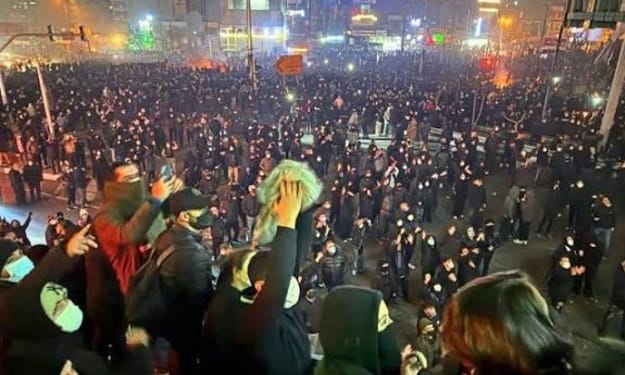
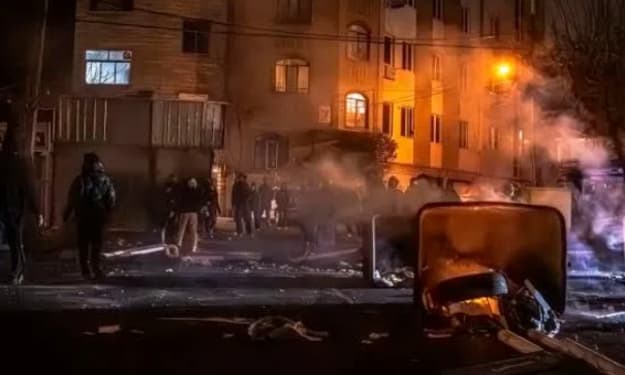
Why any decision to use force must navigate strategy, law, and unintended consequences As tensions rise between the United States and Iran against the backdrop of sweeping protests and violent crackdowns inside Tehran, speculation has grown that U.S. President Donald Trump may order military action against Iran. Statements from the White House suggest Trump is prepared to consider “very strong options” that could include military force if Iran continues to violently suppress dissent or threatens U.S. interests abroad. Yet before any decision to strike, there are crucial questions that must be asked — and answered — about the risks, legality, and ultimate effectiveness of such action. � The Guardian +1 1. What Is the Objective of a Strike? Leaders contemplating military force must first define clear goals. Is the aim to deter Tehran from killing protesters, to degrade Iran’s missile or nuclear capabilities, or to instigate regime change? Without a specific goal, military action risks becoming an open‑ended conflict with no clear end point. Historical operations — such as the U.S.-Israeli strikes on Iranian nuclear sites — were narrowly framed around undermining nuclear infrastructure, not restructuring Iran’s political system. � DAWN If the objective is solely humanitarian — to protect demonstrators — policymakers must consider whether strikes would actually ease repression or instead strengthen the government’s narrative of foreign interference. If Iran’s leadership portrays foreign strikes as unprovoked aggression, it could unify segments of the population behind the regime, counteracting U.S. intentions. 2. Is Military Action Legal Under International Law? Any military strike must withstand scrutiny under both U.S. constitutional law and the rules of international engagement. Under the U.S. Constitution’s Article II, the president has authority over the armed forces but does not have unlimited power to begin hostilities — especially if they escalate into war. There are legal interpretations suggesting that substantial military campaigns may require Congressional authorization, particularly if U.S. forces are at risk over a prolonged period. � pbs.org International law also matters. The United Nations Charter prohibits the use of force except in self‑defense or with Security Council approval. If a strike cannot be justified as immediate self‑defense — for example, if Iran has not attacked U.S. territory — then it could be viewed as a breach of international norms, with diplomatic fallout lasting decades. � LinkedIn 3. What Are the Risks of Regional Escalation? Iran’s military capabilities, including thousands of ballistic missiles and proxy forces across the Middle East, remain significant. A U.S. strike could prompt retaliation not just from Iran directly but through allied militias in Iraq, Syria, Yemen, and Lebanon. Even if Tehran’s leadership is internally weakened by protests, its military apparatus is capable of responding unpredictably. Arab Gulf states, including Saudi Arabia, have publicly cautioned against military action, warning that it could destabilize regional security, disrupt global oil markets, and generate unintended chaos. � wsj.com 4. How Would Civilian Populations Be Affected? Proportionality and civilian protection are essential under the laws of armed conflict. Striking military targets in Iran — a country with civilian infrastructure and major urban areas — could result in significant noncombatant casualties if not carefully planned. The principles of proportionality under humanitarian law require that incidental loss of civilian life not be excessive relative to the anticipated military advantage. This calculation must be made before action is taken, not after. � Just Security If civilians are harmed, the humanitarian rationale for intervention collapses, turning international sympathy against the United States and potentially fueling further regional instability. 5. Are There Viable Alternatives to Military Action? Before resorting to force, diplomatic or economic avenues must be fully explored. Reports suggest that calls for negotiations between the U.S. and Iranian officials remain on the table — though Trump has signalled a hardening position, the possibility of talks has not completely disappeared. � Anadolu Ajansı Economic pressure, such as tariffs on nations doing business with Iran, was already enacted by the U.S. as a way to isolate Tehran and increase leverage without resorting to violence. � AP News Non‑military options, including intensified sanctions, cyber operations against specific military assets, or diplomatic coalition building, should be weighed for their potential to achieve strategic objectives without broad conflict. 6. What Happens After the First Strike? Perhaps most importantly, policymakers must consider what comes after the first bomb drops. Military action rarely ends conflicts; it often shifts them into new phases. An airstrike could provoke prolonged tit‑for‑tat responses from Iran or its proxies, draw in regional powers, and entangle the U.S. in years of instability. This was seen in other prolonged Middle Eastern conflicts where initial tactical strikes did not achieve strategic peace. Conclusion — More Questions Than Answers The choice to strike Iran is not one to be made lightly. Unlike a narrowly scoped unilateral missile attack on a specific target, a significant military operation against a sovereign nation involves deep legal, moral, strategic, and humanitarian considerations. Before committing to force, Trump and his advisors must weigh what success looks like, how legitimacy will be maintained under international law, how to minimize civilian harm, and whether non‑military tools have been fully exhausted. In the high‑stakes world of international geopolitics, military action may be one option — but whether it is the right one depends on answering these tough questions honestly, comprehensively, and with the long‑term interests of global stability in mind.
By Fiazahmedbrohi 2 days ago in The Swamp
With Crackdown on Protests, Iran’s Government ‘Is Only Buying Time’. AI-Generated.
How violent repression may fail to stop the deeper crisis shaking the Islamic Republic Iran is once again at a critical juncture. What began as an outcry against economic hardship has grown into a sweeping nationwide protest movement challenging the authority of the Islamic Republic’s leadership. Rather than addressing the structural causes of public anger — spiralling inflation, currency collapse, and widespread frustration with corruption and mismanagement — the government has opted for a forceful crackdown. Yet analysts argue that this strategy may do little more than buy time for a regime under mounting pressure, rather than providing a lasting solution to the country’s deep crises. �
By Fiazahmedbrohi 2 days ago in The Swamp
ECC Approves Over Rs. 7 Billion Funds for Armed Forces: What It Means for National Security and the Economy. AI-Generated.
Pakistan’s Economic Coordination Committee (ECC) has approved over Rs. 7 billion in additional funds for the armed forces, a move that underscores the government’s continued focus on national security amid evolving regional and internal challenges. While defense spending often sparks debate, this latest approval reflects broader realities related to preparedness, modernization, and the economic pressures faced by security institutions in a changing geopolitical environment. Understanding the ECC’s Role The Economic Coordination Committee, a key body within Pakistan’s federal government, is responsible for approving major financial decisions, particularly those that fall outside the scope of the annual budget. ECC approvals typically address urgent or unforeseen expenditures, making this allocation especially significant. According to official briefings, the newly approved funds are meant to cover operational requirements, logistical needs, and critical expenditures faced by the armed forces. These allocations are not unusual, particularly in times when inflation, currency depreciation, and rising global costs increase the financial burden on state institutions. Why Additional Funding Was Needed Several factors contributed to the need for this supplementary funding: Rising operational costs due to inflation and higher fuel prices Maintenance and logistics expenses for equipment and infrastructure Border security and counterterrorism operations, which require sustained financial support Welfare and allowances for military personnel affected by economic pressures Defense analysts note that while Pakistan’s defense budget is allocated annually, economic volatility often creates gaps that must be filled through ECC intervention to avoid disruptions in critical operations. Regional Security Environment The approval comes at a time when regional security dynamics remain complex. Tensions in South Asia, instability in neighboring regions, and global conflicts have reshaped military planning worldwide. For Pakistan, maintaining readiness across land, air, and maritime domains remains a strategic priority. Security experts argue that adequate funding is essential not just for combat readiness, but also for intelligence coordination, disaster response, and peacekeeping commitments. Pakistan’s armed forces frequently play a role in humanitarian relief efforts, from flood response to earthquake recovery, which also require financial resources. Economic Concerns and Public Debate Defense spending in Pakistan often raises questions, especially during periods of economic strain. Critics argue that funds should be prioritized for healthcare, education, and social welfare, while supporters counter that national security is a prerequisite for economic stability. Economists emphasize that ECC approvals do not necessarily mean a permanent increase in defense spending. Instead, they often serve as short-term financial adjustments to ensure continuity. Transparency in how these funds are utilized will be key in maintaining public trust. Impact on Civil-Military Balance The ECC’s decision also reflects the institutional relationship between civilian leadership and the military. Budgetary approvals through civilian forums reinforce constitutional processes and demonstrate oversight mechanisms at work. Observers note that such approvals, when handled transparently, can strengthen democratic governance by ensuring that defense needs are met within a structured financial framework, rather than through ad-hoc arrangements. Broader Implications Beyond immediate military needs, the funding decision has broader implications: Defense preparedness may enhance deterrence and stability Local defense industries could benefit if funds support procurement or maintenance International partners and lenders will watch closely, as defense spending often factors into economic assessments Balancing defense requirements with fiscal responsibility remains a delicate task, especially as Pakistan navigates IMF commitments and economic reforms. Looking Ahead The approval of over Rs. 7 billion for the armed forces highlights the constant balancing act between security and economic management. As Pakistan moves forward, policymakers will face continued pressure to justify defense-related expenditures while addressing public concerns over inflation, employment, and development. For now, the ECC’s decision signals that the government views security readiness as non-negotiable, even in challenging economic times. The real test will lie in how effectively these funds are utilized and whether long-term planning can reduce the need for repeated supplementary approvals.
By Fiazahmedbrohi 2 days ago in The Swamp
Tensions Are High as Vance and Rubio Prepare to Meet Danish and Greenlandic Officials. AI-Generated.
Things are heating up in the Arctic. U.S. Vice President J.D. Vance and Secretary of State Marco Rubio are preparing to meet officials from Denmark and Greenland at the White House. The talks come amid growing tension over U.S. interest in Greenland — a self-governing part of the Kingdom of Denmark. With the island’s strategic location and rich resources, this meeting is attracting global attention.
By Aqib Hussain2 days ago in The Swamp
‘They Want to Break Us’: Russian Energy Grid Strikes Give Freezing Kyiv Some of Its Darkest Days. AI-Generated.
Kyiv is facing one of its coldest winters in recent memory—and Russian attacks on Ukraine’s energy grid have plunged the city into literal and figurative darkness. With freezing temperatures, residents are coping without electricity, heat, or hot water, as a deliberate campaign targets the city’s infrastructure.
By Aqib Hussain2 days ago in The Swamp
Why the Massive Iran Protests Haven’t Toppled Its Clerical Establishment. AI-Generated.
In late 2025, Iran witnessed another wave of massive protests that swept across its cities. Sparked by economic hardship, political frustration, and a growing anger at the clerical establishment, these demonstrations drew international attention. Yet, despite the size, passion, and determination of the protesters, Iran’s leadership has not toppled. Why is that? Let’s break it down.
By Aqib Hussain2 days ago in The Swamp
Access to Elon Musk’s Starlink Internet Service Is Now Free in Iran as Regime Continues Brutal Crackdown on Protests. AI-Generated.
As Iran faces one of the most intense waves of protests in its modern history, the government has responded with force, fear, and an all-too-familiar tactic: shutting down the internet. But in a surprising twist, access to Elon Musk’s Starlink satellite internet service is now reportedly free in Iran, offering protesters and civilians a rare way to stay connected with the outside world amid a brutal crackdown.
By Aqib Hussain2 days ago in The Swamp
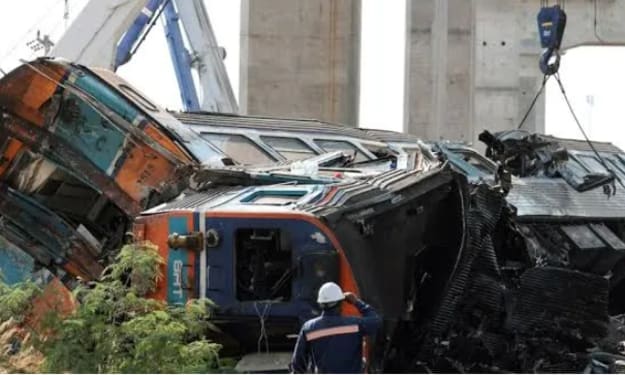
At Least 31 Killed After Crane Falls on Train in Thailand. AI-Generated.
A devastating rail disaster in Thailand has left at least 31 people dead and dozens more injured after a construction crane collapsed onto a moving passenger train. The tragic incident, which occurred in the northeastern province of Nakhon Ratchasima, has shocked the nation and raised serious concerns about construction safety and infrastructure oversight.
By Aqib Hussain2 days ago in The Swamp