
At Least 31 Killed After Crane Falls on Train in Thailand
Deadly Rail Tragedy Sparks National Mourning and Urgent Safety Questions
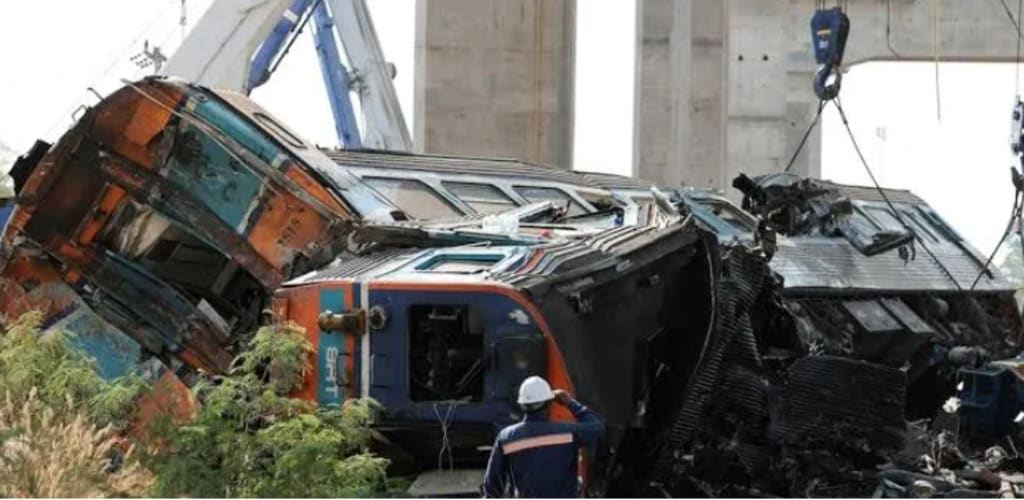
A devastating rail disaster in Thailand has left at least 31 people dead and dozens more injured after a construction crane collapsed onto a moving passenger train. The tragic incident, which occurred in the northeastern province of Nakhon Ratchasima, has shocked the nation and raised serious concerns about construction safety and infrastructure oversight.
The accident took place during daylight hours as the train was traveling from Bangkok to Ubon Ratchathani, carrying nearly 200 passengers. As the train passed beneath an active construction site linked to a high-speed rail project, a massive crane suddenly toppled, crashing directly onto several train carriages. The force of the impact caused multiple coaches to derail, triggering fires and trapping passengers inside twisted wreckage.
Moments of Horror on the Tracks
Survivors described scenes of chaos and terror. Passengers reported hearing a loud explosion-like sound followed by violent shaking as the crane slammed into the train. Some carriages were crushed almost instantly, leaving little chance for those inside to escape. Screams filled the air as smoke and flames spread through the damaged compartments.
Emergency responders arrived quickly, but the scale of destruction made rescue efforts extremely difficult. Firefighters worked to extinguish flames while rescue teams used cutting equipment to free trapped victims. Medical personnel treated the injured at the scene before transferring them to nearby hospitals, many suffering from severe trauma, burns, and fractures.
Rising Death Toll and Ongoing Rescue Efforts
Thai health authorities confirmed that 31 people have died, though officials warned the number could rise as rescue operations continue and critically injured victims remain hospitalized. More than 60 people were reported injured, several of them in life-threatening condition.
Bodies were recovered from mangled train cars throughout the day, a grim task that highlighted the severity of the collapse. Officials stated that identification of victims is ongoing, and counseling services have been offered to families and survivors affected by the tragedy.
High-Speed Rail Project Under Scrutiny
The crane involved in the accident was part of Thailand’s ambitious high-speed rail development, a project aimed at improving regional connectivity and boosting economic growth. While such projects are seen as symbols of modernization, this incident has cast a dark shadow over construction practices and safety standards.
Preliminary reports suggest the crane was lifting heavy materials when it lost balance and collapsed. Authorities have not yet confirmed whether mechanical failure, human error, or inadequate safety procedures were to blame. Engineers and safety inspectors have been deployed to conduct a full investigation.
The construction contractor responsible for the site has expressed condolences to the victims’ families and pledged full cooperation with the investigation. Compensation packages are reportedly being prepared, though many families are demanding accountability rather than financial settlements alone.
Government Response and National Grief
Thailand’s government has declared the incident a national tragedy. Senior officials, including the transport minister, have visited the crash site and ordered an immediate review of safety protocols across all rail and construction projects nationwide.
The prime minister extended condolences to the families of the victims and assured the public that those responsible would be held accountable. Flags were lowered in some areas, and memorial services began appearing near the crash site as citizens paid tribute to the lives lost.
Social media platforms quickly filled with messages of grief, anger, and calls for reform. Many users questioned how such a catastrophic failure could occur on an active rail line and demanded stricter enforcement of construction safety regulations.
A History of Safety Concerns
Thailand’s rail system has faced criticism in the past for safety shortcomings, including outdated infrastructure and insufficient oversight during construction near active lines. While large-scale development projects promise long-term benefits, experts argue that safety must never be compromised in the pursuit of progress.
This tragedy has intensified calls for improved coordination between rail authorities and construction firms, better training for workers, and stricter inspection regimes. Public safety advocates stress that modern infrastructure must be built with rigorous safeguards to protect both workers and the traveling public.
Lives Forever Changed
Beyond statistics and investigations, the human cost of the disaster is immeasurable. Families are mourning loved ones who left home expecting an ordinary journey and never returned. Survivors face long recoveries, both physical and emotional, as they struggle to process the trauma of the event.
Counseling services and financial assistance programs have been made available, but many victims’ families say true justice will only come with systemic change to prevent such tragedies from happening again.
Looking Ahead
As Thailand continues its recovery, the crane collapse serves as a painful reminder of the risks associated with large infrastructure projects when safety fails. The outcome of the investigation will be closely watched, not only by the Thai public but also by international observers involved in similar developments worldwide.
For now, the nation mourns the 31 lives lost, honors the bravery of first responders, and waits for answers. The hope remains that this tragedy will lead to meaningful reforms—ensuring that progress does not come at the cost of human life.
About the Creator
Keep reading
More stories from Aqib Hussain and writers in The Swamp and other communities.
At Least 22 People Killed When Crane Falls on Train in Northeast Thailand
A normal train ride turned into a horrifying nightmare when a massive construction crane collapsed onto a moving passenger train in northeast Thailand, killing at least 22 people and injuring dozens more. The tragic incident has shaken the nation, raising urgent questions about construction safety, infrastructure planning, and accountability.
By Aqib Hussain2 months ago in The Swamp
The Forsyth House Fire
Since 1851, Forsyth House has stood on the corner of Union Street and Gordon Street in the heart of Glasgow. Its iconic, or was... because on Sunday 8th of March, 2026, a fire broke out in a small, seemingly un-named shop in the building and tore all that history down. As I write, the rubble is still unsettled and the street is still blocked off. Central Station is quiet on the upper level, and around 30 small businesses have quite literally gone up in smoke.
By S. A. Crawford2 days ago in The Swamp
US Military Prepares Explosive Ordnance at UK Air Base
The presence of United States military forces at key allied installations has long been a cornerstone of Western defense cooperation. Recently, attention has focused on preparations taking place at the Royal Air Force base at RAF Fairford, where American personnel were seen preparing explosive ordnance as part of heightened military activity. The developments highlight the strategic importance of the base and the growing tension surrounding ongoing conflicts in the Middle East. Witnesses and media reports observed U.S. military ground crews and technical specialists handling and positioning explosive ordnance at the air base in Gloucestershire. The preparations reportedly involved loading munitions and readying aircraft for potential missions. These activities took place shortly after senior U.S. defense officials signaled that upcoming operations could represent one of the most intense phases of ongoing military actions in the region. The activity at RAF Fairford coincides with the deployment of several heavy American bombers to the United Kingdom. Among the aircraft spotted at the base were B-1 Lancer and B-52 strategic bombers, both capable of carrying large payloads of conventional weapons. These aircraft are often used for long-range strike missions and deterrence operations due to their extended range and advanced targeting systems. Their presence indicates a significant buildup of operational capability at the base. RAF Fairford has a long history as a strategic site used by the United States Air Force during joint operations with NATO allies. The base’s runway—one of the longest in the United Kingdom—makes it particularly suitable for operating large bomber aircraft that require extensive takeoff and landing distances. Over the years, it has hosted numerous American deployments during international crises and major military exercises. The latest developments come after the British government granted permission for U.S. forces to use certain UK bases for what officials described as “limited defensive purposes.” The decision followed growing concerns about missile threats in the Middle East and the need to strengthen defensive measures against potential attacks. According to government statements, the goal of the authorization is to help prevent missile launches and protect allied countries in the region. At the same time, the move has sparked political debate within the United Kingdom. Some lawmakers and analysts have expressed concern that allowing American military operations from British territory could draw the country deeper into international conflicts. Others argue that cooperation with the United States is essential for maintaining collective security and supporting NATO commitments. Military experts say the preparation of explosive ordnance at RAF Fairford does not necessarily indicate an immediate strike but rather demonstrates operational readiness. Preparing weapons systems and aircraft is a standard procedure whenever forces are placed on heightened alert. Ground crews typically conduct extensive checks on munitions, aircraft systems, and support equipment before any mission is authorized. The presence of heavy bombers and munitions has also attracted public interest from local communities near the base. Residents have reported increased aircraft activity, including takeoffs and landings by large military planes. While such movements are not unusual for a facility that regularly hosts international forces, the scale of recent operations has been noticeably higher. Defense analysts note that RAF Fairford remains one of the few bases in Europe capable of supporting strategic bombers on short notice. This capability makes it a critical asset for the United States and its allies when rapid deployment is required. The base has previously supported missions in the Middle East, Eastern Europe, and other regions where NATO forces have been involved in security operations. As geopolitical tensions continue to evolve, the activity at RAF Fairford illustrates the close military cooperation between the United States and the United Kingdom. Whether used for deterrence, defensive operations, or broader strategic planning, the base remains a key hub in the network of allied defense infrastructure. While officials have not disclosed the precise missions connected to the ordnance preparations, the developments signal a period of heightened readiness among Western forces. In an era of rapidly shifting global security challenges, installations like RAF Fairford continue to play a central role in projecting power and supporting allied military coordination.
By Fiaz Ahmed 4 days ago in The Swamp


Comments
There are no comments for this story
Be the first to respond and start the conversation.