
Trump Renews Threat on Greenland Before Meeting at the White House
Former president’s remarks revive debate over sovereignty, diplomacy, and Arctic geopolitics

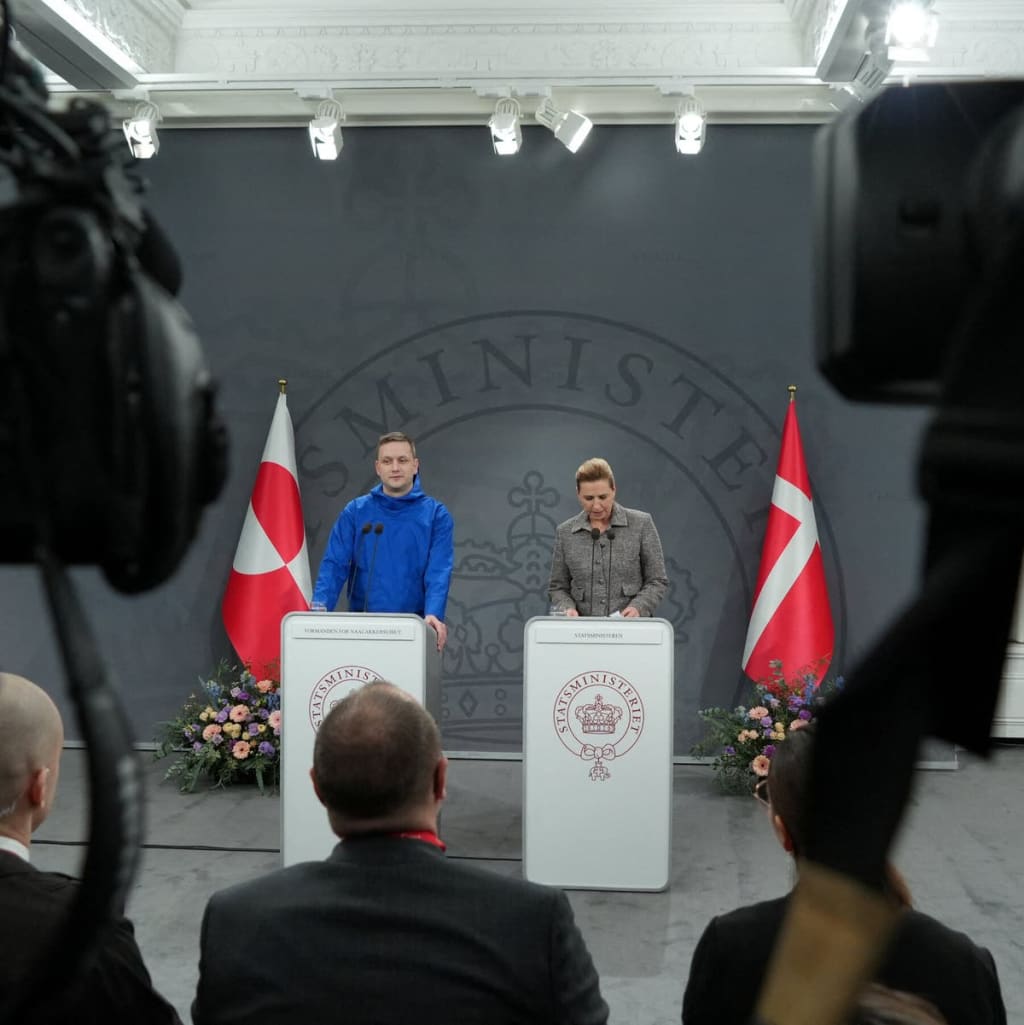
Former U.S. President Donald Trump has once again stirred international debate after renewing his controversial rhetoric regarding Greenland, just ahead of a high-profile meeting at the White House. The remarks have reignited global discussion about sovereignty, diplomacy, and the strategic importance of the Arctic region, an area increasingly central to great-power competition.
Although Trump is no longer in office, his statements continue to influence political discourse both domestically and abroad, particularly when they touch on sensitive international issues.
A Controversial Idea Resurfaces
Trump first made headlines years ago when he openly floated the idea of the United States acquiring Greenland, an autonomous territory of Denmark. At the time, the proposal was widely dismissed by Danish and Greenlandic officials, who firmly stated that the island was not for sale.
By renewing strong language around Greenland before a White House meeting, Trump has revived memories of that episode—raising questions about whether the remarks were symbolic, strategic, or aimed at energizing his political base.
Timing Ahead of a White House Meeting
The timing of Trump’s comments has drawn particular attention. Issued shortly before a meeting at the White House, the remarks have been interpreted by analysts as a deliberate attempt to influence headlines and shape the political narrative.
While the meeting itself may not have been directly related to Greenland, Trump’s renewed focus on the territory underscores his tendency to link foreign policy rhetoric with domestic political moments. This approach has often blurred the line between diplomacy and political messaging.
Why Greenland Matters Strategically
Greenland holds growing importance in global geopolitics. Its location in the Arctic Circle places it along key air and maritime routes that are becoming more accessible due to climate change. The island also hosts critical military infrastructure and is rich in rare earth minerals, making it strategically valuable in an era of technological competition.
For the United States, Greenland has long been important for defense and early-warning systems. However, strategic interest does not translate into ownership, a distinction emphasized repeatedly by Denmark and Greenland’s own government.
Strong Reactions From Denmark and Greenland
Any renewed rhetoric regarding Greenland inevitably draws firm responses from Danish and Greenlandic leaders. Past statements from officials have made it clear that Greenland’s future will be decided by its people, not foreign powers.
Greenland has steadily increased its autonomy over the years, with many residents focused on economic development and self-determination rather than external control. As such, Trump’s remarks are widely viewed in the region as dismissive of Greenlandic sovereignty and democratic rights.
Diplomatic and Ethical Implications
Renewing threats or aggressive rhetoric toward a territory governed by another nation raises ethical and diplomatic concerns. In the modern international system, territorial acquisition through pressure or negotiation without public consent is widely seen as unacceptable.
Critics argue that such statements risk undermining long-standing alliances and eroding trust among partners. Supporters, however, claim Trump’s blunt approach reflects a realist view of international politics, where strategic interests take precedence.
Domestic Political Calculations
Some observers believe Trump’s renewed comments on Greenland are aimed primarily at a domestic audience. By revisiting controversial foreign policy ideas, he reinforces his image as a leader willing to challenge norms and disrupt traditional diplomacy.
This strategy has proven effective with segments of his political base, even when the proposals themselves face overwhelming international opposition.
Global Reactions and Broader Context
International reactions have ranged from concern to dismissal. Many analysts see the remarks as rhetorical rather than actionable, given legal, political, and financial barriers. Still, the comments come at a time when the Arctic is becoming a focal point of competition among major powers, including the United States, China, and Russia.
In that context, even symbolic statements can carry weight, shaping perceptions and diplomatic relationships.
Conclusion
Trump’s renewed rhetoric on Greenland ahead of a White House meeting has once again thrust the Arctic island into the global spotlight. While the idea of acquiring Greenland remains firmly rejected by Denmark and Greenland’s people, the comments highlight ongoing tensions between strategic ambition and respect for sovereignty.
As geopolitical competition intensifies in the Arctic, the episode serves as a reminder that words—especially from influential political figures—can have lasting diplomatic consequences. Whether viewed as political theater or strategic signaling, Trump’s remarks ensure that Greenland remains part of a broader conversation about power, diplomacy, and the future of international relations.
About the Creator
Asad Ali
I'm Asad Ali, a passionate blogger with 3 years of experience creating engaging and informative content across various niches. I specialize in crafting SEO-friendly articles that drive traffic and deliver value to readers.
The Forsyth House Fire
Since 1851, Forsyth House has stood on the corner of Union Street and Gordon Street in the heart of Glasgow. Its iconic, or was... because on Sunday 8th of March, 2026, a fire broke out in a small, seemingly un-named shop in the building and tore all that history down. As I write, the rubble is still unsettled and the street is still blocked off. Central Station is quiet on the upper level, and around 30 small businesses have quite literally gone up in smoke.
By S. A. Crawford3 days ago in The Swamp
Success uncertain, but Israelis continue to back ‘heroic’ war with Iran
Tens of thousands of Israelis continue to express strong support for their country’s military campaign against Iran, even as doubts grow about the war’s ultimate objectives, costs and outcomes. According to a March 2026 poll by the Israel Democracy Institute, roughly 82 – 93 % of Israelis — particularly Jewish Israelis — support the ongoing conflict with Iran, a level of consensus that crosses traditional political divides. That backing includes many who have historically opposed Prime Minister Benjamin Netanyahu’s government, who now describe the campaign as a necessary defence against Tehran’s long‑standing threats. A Nation Rallying Around the Flag The war, which escalated after a series of Israeli strikes deep inside Iranian territory, has largely united public opinion behind the government. Within Israel, many citizens view the campaign not only as a defence of national security but as a “heroic” initiative to dismantle Iran’s capabilities and prevent future threats. Mainstream political parties, including many in the centre and moderate right, now publicly support the war effort — often with little political dissent. Political analysts describe this phenomenon as a classical “rally‑round‑the‑flag” effect, where public opinion consolidates during wartime irrespective of the government’s overall popularity. Within Israeli society, foreign policy and security threats — particularly those tied to Iran’s nuclear and missile programmes — have long dominated the national consciousness. In Tel Aviv, veteran activist Alon‑Lee Green of the Palestinian‑Jewish advocacy group Standing Together noted that efforts to protest the war were met with rapid police intervention, reflecting both the high level of public support and a sensitive atmosphere around dissent during active conflict. Leadership Frames War as Existential and Historic Prime Minister Netanyahu, speaking from Jerusalem, has repeatedly framed the operation against Iran as not just a tactical military endeavour but a defining moment in Israel’s history. In public addresses, he has described the campaign as one that will be “recorded in the annals of Israel” and one fought for the security of future generations. In these speeches, the struggle against Iran is often placed in existential terms — as defending the nation from decades of hostile rhetoric and regional interference. Netanyahu’s messaging resonates particularly strongly among older generations who remember repeated threats from Iran’s leadership and proxy militias. For many Israelis, memories of past wars and missile attacks from Lebanon and Gaza inform their acceptance of expansive military action. Uncertainty and the Lack of Clear Endgame Despite overwhelming public support, there is growing unease — among experts and some politicians — about the lack of a well‑defined strategy for achieving long‑term goals in Iran. Even within Israeli security circles, questions have emerged about how a prolonged campaign, focused on airstrikes and targeted operations, might lead to meaningful regime change in Tehran, or whether the country could instead become entrenched in a drawn‑out conflict with unpredictable regional consequences. Israeli officials themselves acknowledge that success is not guaranteed. While military operations have reportedly degraded Iran’s nuclear and missile‑related infrastructure, analysts point out that dismantling these capabilities entirely — let alone securing the collapse of Iran’s political leadership — remains uncertain. Iranian authorities, despite suffering high‑profile losses, including the killing of Supreme Leader Ali Khamenei in late February, have maintained internal control and continued retaliatory operations. More broadly, strategic analysts say that Tehran’s decentralised defence doctrine — designed to absorb shocks from heavy bombardment and stay operational — makes it unlikely that short‑term military actions will achieve decisive victory. Instead, these analysts argue that Iran may be prepared for a long, attritional conflict that external military force alone cannot quickly resolve. Political and Regional Implications The domestic political landscape in Israel has also shifted. Opposition figure Yair Lapid has publicly said that he no longer intends to pursue no‑confidence motions against Netanyahu’s government amidst the war, reflecting how national security concerns have overshadowed traditional partisan disputes. Regionally, the conflict has triggered broader instability. Israel’s ongoing military activities have overlapped with fighting in Lebanon, where the militant group Hezbollah has escalated hostilities, and tensions continue across the Middle East as neighbouring states grapple with the conflict’s ripple effects. Internationally, leaders have responded with mixed messaging. While the United States, under President Donald Trump, has expressed support for Israel’s actions and claimed progress in degrading Iran’s capabilities, several European leaders have urged a return to diplomacy to avoid a wider regional conflagration. A War Without a Clear Ending in Sight For ordinary Israelis, the war’s human and economic costs — compounded by global energy market volatility and regional civilian casualties — are often viewed through the prism of long‑term national security. Yet beneath widespread support lies a complex calculus: a recognition that decisive victory may be elusive and that the path to a stable Middle East might require more than military force. As the campaign continues, both the government and the public are left to weigh short‑term achievements against the uncertainties of an open‑ended war, where the outcome is not predetermined and the consequences echo far beyond Israel’s borders.
By Fiaz Ahmed 2 days ago in The Swamp
Babbling Dixie
The short form of tomorrow is never the whole story. Abbreviations mean nothing when we are born to die and we all are aren't we? Being spoken for before birth is something we're not supposed to remember like some kind of karma after effect. Still here we are spending our lives looking for each other.
By Canuck Scriber Lisa Lachapelleabout 6 hours ago in Fiction



Comments
There are no comments for this story
Be the first to respond and start the conversation.